

Choosing between open-hole and closed-hole flutes can feel overwhelming for new musicians. Open-hole flutes have small holes in certain keys, while closed-hole flutes feature solid keys. This guide will help you understand the key differences, benefits, and which flute type is best for your first purchase.
Understanding Your First Flute Decision
You’re standing in a music store, excited to start your flute journey. But suddenly, you face a big decision: should you buy an open-hole or closed-hole flute? The choice between open-hole vs. closed-hole flutes is one of the most common questions beginners ask.
This comprehensive guide breaks down everything you need to know about both flute types. You’ll discover the real differences, advantages, and disadvantages of each option. By the end, you’ll know exactly which flute to buy first based on your age, skill level, and musical goals.

Quick Comparison Summary
Closed-hole flutes are usually best for young beginners. They work well for ages 8–12 and for smaller hands. They also cost less, usually about $300–$800 for student models. They are easier to start on, so beginners often progress faster with less frustration. They have solid keys that fully cover the holes, so any hand size can play them comfortably. They are also simpler to maintain, with fewer adjustments. They can still sound very good. However, many students upgrade after about 2–3 years.
Open-hole flutes are usually best for teens, adults, and serious long-term students. They cost more, often $1,000–$3,000 or more. They can be harder at first, because finger placement must be more exact. They have holes in several keys (like D, E, F, G, and A). So they often feel better for larger hands, and small hands may strain. They also allow more advanced effects, like glissandos and other modern techniques. They can sound very good too, and the material matters more than the holes. They are more sensitive and may need more frequent adjustments. If you are switching from beginner level, you can use plugs at first to make it easier.
What Are Closed-Hole Flutes?
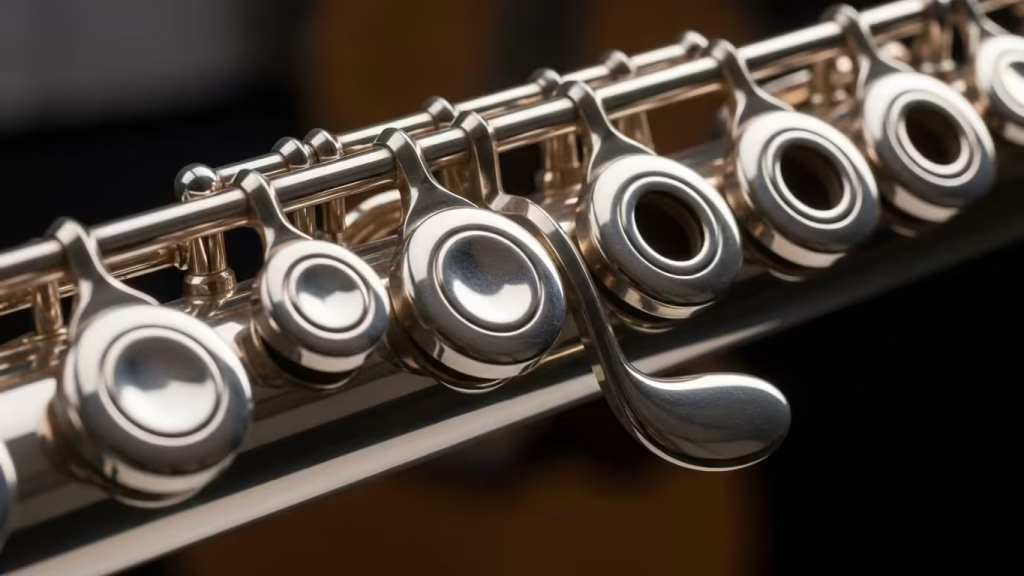
Closed-hole flutes are the most common choice for beginners. These instruments feature solid keys that completely cover the tone holes. You simply press down on each key, and the entire hole gets covered. No gaps, no worries.
Many people call closed-hole flutes “plateau flutes” or “closed-key flutes.” The names all mean the same thing. The keys look smooth and solid. There are no visible holes in the key cups.
Who Uses Closed-Hole Flutes?
Closed-hole flutes are perfect for young students between the ages 8 and 12. Most elementary and middle school band programs use them. Adult beginners also benefit from starting with closed-hole instruments.

But here’s something many people don’t know: some professional flutists prefer closed-hole flutes. The idea that you must play open-hole to be serious is simply wrong. Many successful musicians play closed-hole flutes throughout their entire careers.
Casual players and hobbyists often choose closed-hole flutes, too. If you play for fun and relaxation, there’s no reason to make things harder than necessary.
Visual Characteristics
Closed-hole flutes have a clean, simple appearance. The keys shine with no interruptions. Everything looks complete and polished. Young students often find this design less intimidating than open-hole flutes.
What Are Open-Hole Flutes?

Open-hole flutes feature small holes cut into the center of certain keys. You can see right through these keys to the mechanism below. Most open-hole flutes have holes in five keys: D, E, F, G, and A.
People also call these “French model flutes” or “perforated key flutes.” The design originated in France, hence the name. You’ll typically find open-hole keys on intermediate to professional instruments.
Who Uses Open-Hole Flutes?
Intermediate and advanced students make up the primary users of open-hole flutes. High school students often upgrade to open-hole instruments around their second or third year of playing. College music programs usually expect students to play open-hole flutes.

Professional flutists and orchestral players commonly use open-hole instruments. These flutes allow special techniques that contemporary music often requires. If you’re serious about advancing your skills, you’ll eventually consider an open-hole flute.
Visual Characteristics
Open-hole flutes have a more complex and sophisticated look. The visible holes in the key centers catch your eye immediately. This design signals a higher level of playing. However, appearances shouldn’t drive your decision—functionality matters most.
Key Differences Between Open-Hole and Closed-Hole Flutes

Physical Differences
The most obvious difference is the presence of holes in certain keys. Closed-hole flutes have zero holes in the keys. Open-hole flutes have five perforated keys. This changes how you place your fingers.
Weight differences are minimal between the two types. You won’t notice a significant change in how the instrument feels. The key mechanism is slightly more complex on open-hole flutes, but this rarely affects daily playing.
Playing Technique Differences
Open-hole flutes demand precise finger placement. Your fingers must cover the holes completely, or air will leak out. This creates squeaks and airy sounds. Closed-hole flutes forgive small positioning errors.
Hand position and posture requirements are stricter with open-hole flutes. You can’t cheat by sliding your fingers around. Your technique must be solid from day one. This builds excellent habits but creates a steeper learning curve.
Sound Quality Differences
Here’s the truth many music stores won’t tell you: the sound quality difference between open-hole and closed-hole flutes is mostly a myth. Both types can produce professional, beautiful tones.
Sound quality depends much more on the flute’s material, headjoint design, and your playing technique. A skilled player makes a closed-hole flute sound amazing. A beginner struggles on even the most expensive open-hole instrument.
Open-hole flutes do offer slightly more tonal color options. Advanced players can manipulate the holes to create subtle variations. But for standard playing, the difference is negligible.
Price Differences
Closed-hole flutes typically cost between $300 and $800 for student models. These prices make them accessible for most families and school programs.
Open-hole flutes usually start around $1,000 and can exceed $3,000 for intermediate models. Why the price jump? Open-hole flutes often come with better materials like sterling silver. The higher cost reflects overall quality, not just the holes.
Budget matters when choosing your first flute. A quality closed-hole instrument beats a cheap open-hole flute every time.
Advantages of Closed-Hole Flutes
Closed-hole flutes offer several important benefits, especially for beginners. Let’s explore why these instruments remain so popular.
Easier for Beginners to Learn
Starting on a closed-hole flute means faster progress. You don’t struggle with finger placement from day one. Notes come out clearer with less effort. This builds confidence quickly.
Young students experience less frustration with closed-hole flutes. They can focus on reading music, breathing properly, and developing embouchure. Adding finger precision challenges can wait until basic skills are solid.
Better for Small Hands
Children and younger students benefit enormously from closed-hole flutes. Small hands don’t need to stretch uncomfortably. Finger positioning feels natural and relaxed.
Less hand stretching means less physical strain. Students can practice longer without discomfort. This leads to better progress and more enjoyment. Happy students stick with music longer.
Lower Initial Cost
Affordability is a huge advantage for closed-hole flutes. A $500 closed-hole instrument offers excellent quality for beginners. You don’t need to spend $2,000 to get started.
The lower cost reduces financial risk if your child decides music isn’t for them. Many students try instruments before discovering their true passion. Starting affordably makes sense.
Budget-friendly options help schools and families participate in music programs. Cost shouldn’t prevent anyone from experiencing the joy of playing flute.
Fewer Maintenance Issues
Closed-hole flutes are more forgiving mechanically. Small finger positioning errors don’t cause air leaks. The solid keys handle daily wear and tear well.
Cleaning is simpler with closed-hole flutes. You don’t worry about gunk building up inside key holes. Regular swabbing and wiping keep the instrument in good shape.
Professional maintenance costs are similar for both types. However, closed-hole flutes need adjustments less frequently. This saves money over time.
Still Produces Professional Sound
Don’t let anyone tell you closed-hole flutes sound “less professional.” Many professional musicians play closed-hole instruments by choice. The sound quality is identical when materials and craftsmanship are equal.
You can express every musical idea on a closed-hole flute. All standard repertoire sounds beautiful. The only limitation is extended techniques, which most players never use anyway.
Advantages of Open-Hole Flutes
Open-hole flutes offer unique benefits that appeal to advancing musicians. Here’s why many students eventually upgrade to open-hole instruments.
Improves Finger Technique and Accuracy
Open-hole flutes force proper finger placement from day one. You can’t fake it or get sloppy. Immediate feedback teaches you correct hand position naturally.
This develops better long-term technique. Students who learn on open-hole flutes often have superior finger control. The discipline carries over to other aspects of playing.
Your finger awareness increases dramatically with open-hole flutes. You become conscious of every movement. This mindfulness improves overall musicianship.
Enables Extended Techniques
Extended techniques are special effects used in contemporary music. Quarter tones, glissandos, and multiphonics all require open holes. These techniques add color and expression to modern compositions.
Jazz flutists love open-hole instruments for their flexibility. World music styles often use pitch bending and special effects. Open holes make these techniques possible.
If you’re interested in experimental or contemporary music, open-hole flutes are essential. Many college-level pieces require extended techniques. You’ll need an open-hole instrument to play them.
Prepares You for Advanced Repertoire
College music programs often expect open-hole flutes. Some programs require them for admission. Getting familiar with open-hole instruments in high school makes the transition easier.
Professional orchestras and ensembles mostly use open-hole flutes. If you have serious career aspirations, you’ll eventually need one. Starting earlier gives you more time to adjust.
Advanced solo literature sometimes requires extended techniques. Having an open-hole flute opens doors to challenging, rewarding music.
May Improve Intonation Awareness
Open-hole flutes provide immediate feedback on finger placement. When your fingers aren’t perfectly centered, you hear it instantly. This sharpens your pitch awareness.
Better intonation awareness carries over to ear training and general musicianship. You learn to listen more carefully. This makes you a better musician overall.
The connection between finger position and pitch becomes clearer with open-hole flutes. This understanding helps with intonation control across all registers.
Resale Value and Longevity
Quality open-hole flutes hold their value well. The investment often pays off if you eventually sell or upgrade. The market for used intermediate flutes is strong.
You won’t outgrow an open-hole intermediate flute as quickly. These instruments can last through high school and college. This saves money compared to buying multiple instruments.
The longevity of open-hole flutes makes them smart long-term investments for committed students.
Disadvantages of Closed-Hole Flutes
Closed-hole flutes aren’t perfect for everyone. Here are the potential drawbacks to consider.
May Need to Upgrade Sooner
Students often outgrow closed-hole flutes after 2-3 years of serious study. When you’re ready for intermediate repertoire, you might want more capabilities. This means purchasing a second instrument.
The cost of upgrading can add up. Buying a closed-hole flute, then an open-hole flute later, costs more than starting with an open-hole instrument (if you’re ready for it).
Some students feel frustrated when their instrument limits their musical exploration. If you develop quickly, a closed-hole flute might feel restrictive.
Limited Technique Options
Extended techniques are impossible on closed-hole flutes. You can’t perform quarter tones, glissandos, or multiphonics. Contemporary pieces using these effects are off-limits.
For most players, this limitation doesn’t matter. Standard classical, jazz, and popular music don’t require extended techniques. But if you’re interested in experimental music, closed-hole flutes won’t work.
Potential Stigma
Some advanced musicians view closed-hole flutes as “beginner instruments only.” This perception is unfair and inaccurate, but it exists. You might face occasional judgment in competitive settings.
However, this stigma is fading. More professionals are speaking out about their preference for closed-hole flutes. The idea that holes equal quality is finally being challenged.
Don’t let stigma drive your decision. Choose what works best for your playing and goals.
Disadvantages of Open-Hole Flutes
Open-hole flutes present their own challenges. Consider these drawbacks carefully before purchasing.
Steeper Learning Curve
Open-hole flutes are genuinely harder for beginners. The first few weeks can feel frustrating. Notes squeak, air leaks out, and progress feels slow.
This difficulty can discourage young students. Some give up on music entirely because they started on an instrument that was too challenging. The emotional impact matters.
More practice time is required to achieve basic proficiency on open-hole flutes. Busy students might struggle to keep up.
Finger Placement Must Be Perfect
Perfect finger centering isn’t optional with open-hole flutes. Even slight positioning errors cause problems. Your fingers must cover the holes completely every single time.
This demands constant attention to hand position. You can’t relax or get lazy with technique. For some players, this feels exhausting. Others appreciate the discipline it creates.
Squeaky and airy notes frustrate players when finger placement slips. These sounds are embarrassing in group settings like band class.
Not Ideal for Small Hands
Children with small hands struggle physically with open-hole flutes. The reach between keys feels too big. Fingers can’t comfortably cover the holes.
This can cause hand tension and pain. Some students develop bad habits trying to compensate. Poor technique learned early is hard to fix later.
If hands haven’t grown to full size, open-hole flutes might cause more harm than good. Wait until physical readiness matches musical readiness.
Higher Cost
The initial investment for open-hole flutes is significantly higher. A quality intermediate instrument costs $1,500 to $2,500 typically. For many families, this creates financial strain.
The higher cost increases the risk if a student quits music. Losing interest after spending $2,000 hurts more than losing interest after spending $500.
Consider your family’s budget realistically. Musical growth shouldn’t cause financial stress.
Maintenance Considerations
Open-hole flutes require slightly more careful maintenance. The exposed holes collect dirt and finger oils more easily. Keys may need adjustment more frequently.
Professional maintenance costs are similar for both types. However, open-hole flutes might need attention more often. This adds up over time.
Cleaning takes more attention with open-hole instruments. You need to carefully clean around and inside the perforated keys.
The Role of Plugs in Transitioning Between Flute Types
Flute key plugs offer a clever solution for students who want open-hole instruments but aren’t quite ready. These small rubber or silicone pieces fill the open holes temporarily.
What Are Flute Key Plugs?
Plugs are simple inserts that make open-hole flutes function like closed-hole instruments. They’re inexpensive (usually $10-$20 for a set). Most intermediate flutes include plugs with purchase.
Each plug fits snugly into a key hole. They don’t fall out during normal playing. You can remove them easily when you’re ready.
Benefits of Using Plugs
Plugs create a bridge between closed-hole and open-hole flutes. Students can buy a quality open-hole instrument early without the overwhelming challenge. This prevents needing to purchase two separate instruments.
The transition becomes gradual and manageable. You remove one plug at a time over weeks or months. This builds confidence slowly. There’s no scary “all at once” moment.
Parents appreciate plugs because they make open-hole instruments accessible sooner. The long-term investment pays off without short-term frustration.
How to Use Plugs Effectively
Start with all five holes plugged. Play normally and build fundamental skills. When you feel comfortable, remove one plug—usually the D key first.
Practice with four plugs until notes sound clear consistently. Then remove another plug. Continue this process at your own pace. Some students complete the transition in weeks. Others take months. Both approaches work fine.
Your teacher should guide the timeline. Don’t rush the process. Solid technique matters more than speed.
When to Remove Plugs Completely
Remove all plugs when your finger placement is consistent and automatic. Notes should sound clear without squeaks or air leaks. You should feel comfortable and confident.
Teacher recommendation carries significant weight here. They observe your technique objectively. Trust their guidance on timing.
Personal comfort matters too. If removing plugs causes stress or backsliding, keep them longer. There’s no deadline. Progress at your own pace.
Which Flute Should Beginners Buy First?
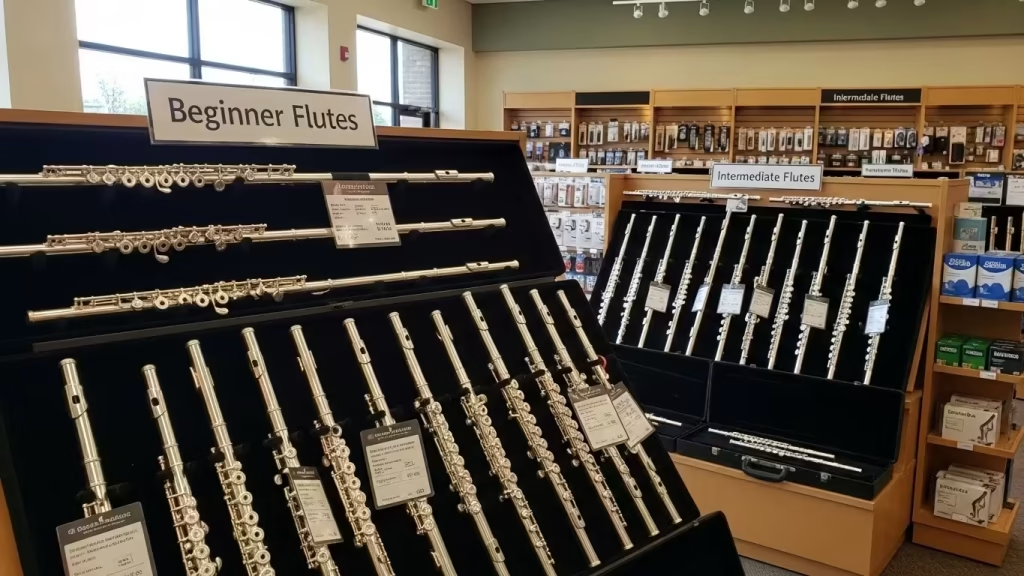
The “right” first flute depends on several factors. Let’s break down recommendations by age and situation.
For Young Beginners (Ages 8-12)
Recommendation: Closed-hole flute
Young children benefit most from closed-hole instruments. Hands are still growing. Learning is challenging enough without adding finger placement complications.
Focus on fundamentals first: reading music, breath control, tone production, and basic technique. Master these skills before worrying about open holes.
Plenty of time exists for upgrading later. Most young students play for 2-4 years before considering an intermediate instrument. Starting closed-hole makes complete sense.
The lower cost also matters for this age group. Many students try several instruments before finding their passion. A $400-$600 closed-hole flute is a smart, low-risk investment.
For Teen Beginners (Ages 13-17)
Recommendation: Consider open-hole with plugs
Teen beginners have a different situation. Hands are larger or close to full size. Physical readiness isn’t usually an issue.
If you’re serious about music and plan to continue through high school, an open-hole flute with plugs makes sense. You won’t outgrow it quickly. The instrument grows with you as you remove plugs gradually.
This approach saves money long-term. One quality purchase beats buying twice. A $1,200-$1,800 open-hole intermediate flute can last through high school and beyond.
However, if budget is tight or commitment is uncertain, a closed-hole flute works perfectly well. You can always upgrade later if passion and skill develop.
For Adult Beginners
Recommendation: Open-hole with plugs OR quality closed-hole
Adult beginners have the most flexibility. Hand size isn’t an issue. You can handle the discipline of open-hole instruments if you choose.
Your goals should drive the decision. Planning serious study? Choose open-hole with plugs. Want casual enjoyment and hobby playing? A quality closed-hole flute is perfect.
Budget matters for adults too. Don’t overspend on your first instrument. Even a $600 closed-hole flute provides years of enjoyment. You can upgrade later if your passion grows.
Adult learners often appreciate the immediate progress that closed-hole flutes offer. Starting with success builds confidence and motivation.
Budget Considerations Guide
Here’s a simple guide based on budget:
Under $500: Closed-hole is the practical choice. Look for student models from reputable brands like Yamaha, Pearl, or Gemeinhardt.
$500-$1,500: Consider open-hole with plugs if you’re committed to serious study. Brands like Yamaha (YFL-382 or similar), Pearl (PF-665), or Azumi (AZ2) offer excellent options.
Over $1,500: Open-hole intermediate instrument makes sense. You can afford quality materials like silver headjoints or bodies.
Rent-to-own programs offer another option. Many music stores let you apply rental payments toward purchase. This reduces upfront costs and financial risk.
When Should You Upgrade from Closed-Hole to Open-Hole?

Knowing when to upgrade is as important as choosing your first flute. Several factors indicate readiness for an open-hole instrument.
Skill Level Indicators
Playing consistently for 2-3 years suggests readiness for an upgrade. By this point, fundamental technique should be solid. You’ve mastered basic fingerings, tone production, and music reading.
Intermediate repertoire requires a better instrument. When you’re playing Level 3-4 solo pieces or challenging ensemble music, your closed-hole student flute might hold you back.
Your teacher’s recommendation carries the most weight. They observe your progress objectively. If they suggest upgrading, take it seriously.
Musical Goals Matter
Planning to continue through high school or college makes upgrading worthwhile. If music is a serious part of your future, invest in a better instrument.
If you want advanced techniques, modern music, or jazz, open-hole flutes can help. These styles use what open holes can do.
Also, advanced groups like honor bands or youth orchestras often expect better instruments. So an open-hole flute can fit well in those settings.
Physical Readiness
Hand growth is complete or nearly complete. You can comfortably reach all keys without strain. Finger strength and control have developed through practice.
Good hand position habits are established. You maintain proper posture and finger curvature naturally. These fundamentals make the transition to open-hole easier.
No physical discomfort occurs during practice sessions. Your hands feel relaxed and capable. This indicates readiness for the demands of open-hole playing.
Financial Readiness
Can your family afford $1,000-$3,000 comfortably? Musical instruments are investments, but they shouldn’t create financial hardship.
Commitment to continuing lessons is important. Without ongoing instruction, even the best instrument won’t improve your playing. Make sure lesson costs fit your budget too.
This isn’t a temporary interest anymore. You’ve proven sustained dedication over years. The financial investment matches your personal investment in music.
What About Other Flute Features to Consider?
The open-hole vs. closed-hole debate isn’t the only decision you’ll face. Several other features affect playability and cost.
Offset vs. Inline G Keys
Most student flutes feature offset G keys. The G key sits slightly forward, creating a more comfortable hand position. This ergonomic design reduces reach and strain.
Inline G keys align in a straight row with other keys. This traditional design looks elegant but requires more hand stretching. Professional players are split on preference.
Recommendation for beginners: Choose offset G keys. The comfort advantage matters more than tradition. You can find excellent open-hole flutes with offset G keys. Function beats appearance.
Split E Mechanism
The split E mechanism helps produce the high E note more easily. This note is notoriously difficult on flute. The mechanism splits one key into two separate pieces.
Benefits include clearer high E production and less “squeaking.” Young students especially appreciate this feature. It builds confidence on a challenging note.
The mechanism adds $50-$150 to the cost typically. It’s not essential but genuinely helpful. Many intermediate flutes include it as standard.
C Foot vs. B Foot Joint
The foot joint is the bottom section of the flute. C foot joints are standard on student instruments. They end at low C. These joints are lighter and more manageable for beginners.
B foot joints extend lower, allowing low B. This expands your range by one note. B foot joints are heavier and more expensive. Professional and advanced instruments typically feature B foot joints.
Recommendation for first flute: C foot joint. The weight difference matters for younger students. The extra note rarely appears in beginner or intermediate music. Upgrade to B foot when you reach advanced repertoire.
Material Considerations
Most student flutes are nickel-plated brass. This affordable material produces good tone and resists tarnishing. It’s perfect for beginners.
Silver-plated flutes offer slightly warmer tone. They cost $100-$300 more typically. The improvement is subtle but real.
Solid silver headjoints or bodies create richer, more resonant tone. These upgrades push prices into the $1,500-$3,000+ range. Advanced players appreciate the tonal differences.
Important truth: Material affects sound quality more than open vs. closed holes. A solid silver closed-hole flute sounds better than a nickel-plated open-hole flute. Don’t confuse holes with quality.
Expert Recommendations and Professional Perspectives
What do music educators and professionals actually recommend? Their advice might surprise you.
What Band Directors Say
Most band directors recommend closed-hole flutes for first-time students. They’ve seen thousands of students start music. Experience shows that closed-hole instruments produce better early results.
The typical recommendation timeline looks like this:
- Years 1-2: Closed-hole student model
- Years 2-3: Consider upgrading based on progress and commitment
- Year 3+: Open-hole intermediate instrument if continuing seriously
Band directors emphasize proper technique over equipment. A student with excellent technique sounds great on any flute. Poor technique sounds bad even on expensive instruments.
Don’t rush the transition to open-hole. Build solid fundamentals first. Advanced equipment can’t substitute for good teaching and practice.
What Professional Flutists Say
Professional opinions are surprisingly mixed on open-hole flutes. Many top players use closed-hole instruments by choice. Personal comfort and preference matter more than convention.
Several famous flutists have publicly stated they prefer closed-hole flutes. The idea that professionals “must” play open-hole is marketing hype. Quality and playability trump hole design.
That said, most professionals acknowledge that open-hole flutes offer advantages for extended techniques. If contemporary music interests you, open-hole instruments provide more options.
The consensus: Focus on quality construction and materials first. The hole design is a secondary consideration.
What Music Store Experts Advise
Reputable music store professionals take a balanced approach. They recommend trying both types before buying. What feels comfortable matters enormously.
Consider where you’ll be in 3-5 years. Buying with foresight prevents needing multiple instruments. However, don’t buy equipment you’re not ready to use effectively.
Invest in quality regardless of flute type. A well-made closed-hole flute beats a cheap open-hole instrument every time. Construction quality, materials, and setup matter most.
Don’t overspend on a first instrument. Even professionals started on student models. You can always upgrade later when skill and budget align.
Common Myths About Open-Hole vs. Closed-Hole Flutes
Let’s bust some persistent myths about flute types. Understanding the truth helps you make better decisions.
Myth: Open-Hole Flutes Sound Better
Truth: Sound quality depends primarily on materials, construction quality, and player technique. The presence of holes makes minimal difference to basic tone.
Most listeners cannot tell the difference between open-hole and closed-hole flutes by sound. Also, the flute’s material affects tone more than the holes do. For example, nickel, silver-plated, and solid silver can change the sound more.
Skill matters most. An advanced player can make almost any good flute sound great. But a beginner can struggle even on an expensive flute. So the holes in the keys are not the main thing.
Myth: You Must Play Open-Hole to Be Serious
Truth: Many professionals use closed-hole flutes. Seriousness comes from practice and musicianship, not equipment. This “rule” is often pushed by marketing. So don’t assume you need a more expensive flute to be real.
Myth: You Can’t Play Classical Music on Closed-Hole Flutes
Truth: You can play almost all classical music on closed-hole flutes. Mozart, Bach, and Debussy work fine. The main difference is modern “special effects” in newer music. Some pieces after about 1960 may need open holes for techniques like glissandos or quarter tones. But for most classical repertoire, closed-hole works great.
Myth: Open-Hole Flutes Are Always More Expensive
Truth: Price depends on overall quality and materials, not just holes. Some closed-hole flutes are very expensive. Some open-hole flutes are cheaper student models. Often, open holes show up on higher models, but those models cost more because of better build and materials.
How to Test Flutes Before Buying
Never buy a flute without testing it first. Here’s how to evaluate instruments effectively.
What to Look For
Comfortable hand position tops the priority list. Your fingers should reach all keys naturally. No stretching or strain should occur. Play for 10-15 minutes to assess real comfort.
Key response should feel smooth and quick. Press each key individually. Nothing should stick or feel sluggish. Mechanical problems reveal themselves through touch.
Tone production should feel easy across all registers. Play low, middle, and high notes. None should feel stuffy or difficult. Good instruments respond evenly throughout their range.
Check for air leaks by playing softly. Any hissing or resistance indicates problems. Test all fingerings, not just the easy ones.
Questions to Ask the Salesperson
- Can I try both closed-hole and open-hole instruments side by side? Direct comparison reveals true differences better than anything else.
- What is your return or exchange policy? Reputable stores allow 30-day returns or exchanges. This protects your investment if the instrument doesn’t work out.
- Is maintenance included with purchase? Many stores include the first annual cleaning and adjustment (COA). This $75-$150 value matters.
- What warranty comes with this instrument? Quality manufacturers offer 1-5 year warranties. This indicates confidence in their products.
- Do you offer rent-to-own options? These programs reduce financial risk and allow trying the instrument long-term before committing.
Play Test Tips
Find a quiet testing space in the store. Background noise interferes with hearing tone quality. Most stores have practice rooms for serious buyers.
Play scales you know well. Familiar patterns let you focus on how the flute feels and sounds. Don’t try to impress anyone—focus on evaluation.
Test all registers systematically. Play low notes (C to middle C), middle register (D to A), and high register (B to high C or beyond). Each range should feel balanced.
Assess comfort after 10-15 minutes of playing. Initial impressions can mislead. Real comfort reveals itself over time. Your hands, arms, and embouchure should feel relaxed.
Trust your instincts. If something feels wrong, it probably is. Your body knows what works for you. Don’t let salespeople pressure you into ignoring discomfort.
Buying Guide: Where to Purchase Your Flute
Where you buy matters almost as much as what you buy. Consider these options carefully.
Local Music Stores
Pros: You can try flutes before you buy. Also, you can get help in person. Then you can take the flute home right away. Returns can be easier too. Plus, you can build relationships for repairs and advice later.
Cons: The selection may be smaller than online. Also, prices can be higher. Sometimes, sales pressure can happen.
Best for: First-time buyers, parents who need guidance, and students who want to test options. If you can, visit a few stores. Then compare both the flutes and how helpful the staff are.
Online Retailers
Pros: You get more choices and often better prices. Also, you can read reviews. And you can shop from home.
Cons: You cannot test the flute first. Shipping can damage instruments. Returns can be harder. Also, you do not get face-to-face help.
Best for: People who already know what they want, or who live far from good stores. Stick with well-known retailers like Musician’s Friend, Woodwind & Brasswind, or Flute World. Also, avoid random sellers unless they truly specialize in instruments.
Rent-to-Own Programs
Pros: The monthly cost is low, often $20–$40. So you can try flute without a big commitment. Also, payments can go toward buying it. If something is wrong, exchanges are usually easy.
Cons: Over time, renting can cost more than buying. Also, choices are limited, usually to student models. Contracts and paperwork are required.
Best for: New students, families unsure about long-term plans, and anyone on a tight budget. Many school band programs offer rentals. However, add up the total cost first. Because renting for 3+ years often costs more than buying.
Used Flutes
Pros: Used flutes can cost 30–60% less than new. So you may afford a better-quality instrument. Also, reusing is better for the environment.
Cons: There can be hidden problems. There may be no warranty. Also, you may need repairs right away.
Best for: Buyers on a budget who have teacher help. This is also good for students upgrading to a better flute.
Always have used flutes professionally evaluated before buying. A $50-$100 inspection by a repair technician can save you from expensive problems. Your teacher can also help assess whether a used flute is worth the price.
Caring for Your Flute (Open-Hole or Closed-Hole)

Proper maintenance extends your instrument’s life and keeps it playing beautifully. These practices apply to both flute types.
Daily Maintenance Routine
Swab your flute after every single playing session. Use a cleaning rod with a soft, lint-free cloth. Insert the rod into each section and pull the cloth through. This removes moisture that causes corrosion and pad damage.
Wipe down all keys and tubing with a soft cloth. Fingerprints and oils tarnish silver and nickel plating. A quick wipe takes 30 seconds but makes a huge difference.
Handle your flute with clean, dry hands. Wash hands before practice. Oils, lotions, and dirt damage pads and finish. This simple habit prevents many maintenance problems.
Store your flute in its case properly. Each section should fit snugly in its designated spot. Never leave your flute on music stands or chairs. Most flute damage happens from falls and accidents, not playing.
Weekly Care
Perform a deeper cleaning once weekly. Use a bore cleaner or gauze on your cleaning rod. This removes buildup that daily swabbing misses.
Polish the exterior gently with appropriate polish. Use silver polish for silver-plated or solid silver instruments. Use gentle metal polish for nickel-plated flutes. Never use harsh chemicals or abrasives.
Check for loose screws or keys. Gently test each key’s movement. Everything should feel smooth and tight. If anything feels loose or wobbly, visit a repair technician before it worsens.
Clean your case interior. Vacuum out dust and debris. Wipe down the lining. A clean case protects your clean flute.
Professional Maintenance
Schedule annual professional cleaning and adjustment (COA) services. This costs $75-$150 typically. A technician completely disassembles, cleans, and adjusts your flute.
Annual maintenance prevents major repairs. Small problems caught early stay small. Ignored problems become expensive. Think of COA as preventive medicine for your instrument.
More frequent service may be needed if you play heavily. Serious students playing 1-2 hours daily might need adjustments every 6 months. Discuss this with your teacher and technician.
Never attempt repairs yourself. Flute mechanisms are delicate and complex. DIY repairs usually cause more damage. Professional technicians have special tools and training. Trust their expertise.
Special Care for Open-Hole Flutes
Open-hole flutes need extra attention to key hole cleanliness. Dirt and oils accumulate in the perforations more easily. Use specialized key cleaners or soft brushes weekly.
The exposed holes are more sensitive to finger oils. Wipe keys thoroughly after each use. Consider washing hands mid-practice during long sessions.
Open-hole flutes may need adjustments more frequently than closed-hole instruments. The additional openings create more opportunities for leaks. Stay alert to changes in response or sound quality.
If using plugs, keep them clean too. Wash plugs with mild soap and water monthly. Dirty plugs transfer grime into your key holes. Store clean plugs in a small bag or container.
Final Verdict: Which Flute Should You Buy First?
After exploring every angle, let’s summarize clear recommendations for your first flute purchase.
Choose a Closed-Hole Flute If:
- You are a young beginner under 12
- Your hands are small and still growing
- Your budget is under about $600–$700
- You want the easiest path to early success
- You’re trying music for the first time
- You want to build confidence through simpler learning
- You don’t care about special modern effects
Closed-hole flutes are a common beginner choice. They keep things simple, so you can focus on basics. Many successful musicians started this way.
Choose an Open-Hole Flute If:
- You are a teen or adult with larger hands
- You plan to study long-term
- Your budget is $1,000 or more
- Your teacher recommends it
- You want to avoid upgrading in 2–3 years
- You’re interested in modern techniques and experimental music
- You’re willing to work through initial difficulty
Open-hole flutes are best for students with clear long-term goals. If you are serious and you can afford it, they can be a good value.
The Best Compromise: Open-Hole with Plugs
For many students, open-hole flutes with plugs provide the ideal solution. You get a quality instrument that grows with you. Start with all holes plugged. Remove them gradually as skills develop.
This approach offers:
- Investment in one quality instrument instead of two
- Gradual transition that builds confidence
- Flexibility to progress at your own pace
- Access to better materials and construction
- No equipment limitations as you advance
The compromise works especially well for teen beginners and adults. You’re buying for where you’ll be in 2-4 years, not just today.
Conclusion
Choosing between open-hole and closed-hole flutes doesn’t have to feel overwhelming. Both types produce beautiful music in the right hands. Your decision should match your current situation, future goals, and personal circumstances.
Open-hole vs. closed-hole is not the most important thing. Flute quality, good teaching, and regular practice matter more. A hardworking student can sound great on any good flute. So do not depend on gear instead of effort.
Start where you are. Young beginners benefit from closed-hole simplicity. Serious students with resources and commitment do well with open-hole instruments and plugs. Casual players find joy with closed-hole flutes throughout their musical lives.
Visit local music stores and test both types yourself. Feel the difference in your own hands. Talk with teachers and experienced players. Their real-world experience provides invaluable guidance that no article can fully replace.
Your musical journey is unique. Trust yourself to make the right choice for your situation. Whether you choose open-hole or closed-hole flutes, what matters most is that you’re making music. Pick up your instrument, practice consistently, and enjoy the beautiful sounds you create. The flute you choose is just the beginning of an incredible musical adventure.
Frequently Asked Questions
Can I switch from closed-hole to open-hole flutes later?
Yes, absolutely! This is one of the most common upgrade paths for flute students. Most players transition after 2-3 years of consistent playing. The switch feels challenging at first, but most students adjust within a few weeks. Using plugs makes the transition even easier—you remove them one at a time until you’re playing fully open-hole. Your teacher should guide the timing of this transition based on your technique and readiness.
Do professional musicians use closed-hole flutes?
Yes, many professionals choose closed-hole flutes. So open-hole is not “required” for pros. Comfort and personal preference matter a lot. Also, sound quality depends mostly on the player and the flute’s overall build. It does not depend only on holes in the keys.
Will open-hole flutes actually help me play better?
Open-hole flutes can improve finger accuracy. This is because they require precise finger placement. However, they do not automatically make you a better musician. They are tools, not magic. Real improvement comes from good teaching and steady practice.
Are open-hole flutes harder to maintain?
They can be a little more sensitive. Finger oils and small leaks can show up faster. However, the maintenance difference is not huge. Both types need regular swabbing and wiping. Also, both need yearly professional service. Open-hole flutes may help you notice problems sooner.
How much should I spend on my first flute?
Your budget depends on age and goals:
- Beginners, especially kids: Plan about $300–$700 for a good closed-hole flute
- Serious students with long-term goals: Plan about $1,000–$2,000 for an intermediate open-hole flute
- Avoid flutes under $200, because they often play poorly and frustrate students
Quality matters more than price alone. A good, well-maintained $500 flute can be better than a weak $800 flute. So stick with trusted brands like Yamaha, Pearl, Gemeinhardt, or Azumi.
If you are ready to buy, try flutes in a music store. Test both types if you can. Also, bring your teacher or band director if possible. Choose the flute that feels comfortable, fits your budget, and makes you want to practice. Sign up for a free trial lesson.