

Small halls usually sound better than big ones. They give clear, rich sound for acoustic music sources. Learn the simple science behind why size matters in concert hall acoustics.
Why small halls sound better
A piano sounds fuller in a small hall. Sound travels a shorter distance. Echo stays short and clear. Musicians and audience sit closer. You hear details and dynamics in ways that large auditoriums simply cannot match.
Quick reference
Reverberation: small halls ~1.5–2.0 seconds. Reverberation: large halls ~2.5–4+ seconds. Clarity: small halls ~85–95% easy to understand. Clarity: large halls ~60–75% harder to hear. Listener distance: small = 30–80 feet. Listener distance: large = 100–300+ feet. Sweet spot: small = almost every seat. Sweet spot: large = mostly center only. Amplification: small = rarely needed. Amplification: large = usually needed through sound systems. Dynamic range: small = full and natural. Dynamic range: large = compressed and dull. Ticket value: small = higher cost, better sound. Ticket value: large = cheaper, weaker sound.
Understanding Basic Acoustic Principles
What Are Acoustics?
Room acoustics describe how sound behaves inside enclosed spaces. Think of it as the personality of a room when music plays. Every venue has unique acoustic characteristics that shape what reaches your ears. Acousticians have spent decades studying these properties to understand what creates optimal listening conditions.
Sound waves bounce off walls, absorb into surfaces, and blend together. This creates the sonic environment you experience. Good acoustics make music clear and enjoyable. Poor acoustics muddy the sound and frustrate listeners, creating acoustic disturbances that interfere with the auditory experience.
🎭 Find Your Perfect Seat
Click any seat to see its sound quality rating!
How Sound Travels in Enclosed Spaces
Sound begins at the instrument or voice. It travels outward in waves, moving at about 1,130 feet per second. Some sound reaches you directly in a straight path. Other sound bounces off walls, ceilings, and floors before arriving at your ears, creating sound reflections that professional acoustical engineers carefully manage.
This creates two types of sound: direct sound and indirect sound. Direct sound arrives first and sounds clearest. Indirect sound comes later and adds richness or confusion depending on the space. The balance between these two determines sound quality and the overall acoustic impact.
Your brain processes both types together through complex auditory mechanisms. In good acoustic spaces, reflections enhance the music. In poor spaces, reflections create chaos and make everything blur together, raising the noise floor and degrading audio quality.

Three Key Factors That Affect Sound Quality
Room Volume: Smaller spaces concentrate acoustic energy better. Sound doesn’t have to travel far before reaching listeners. This keeps the music powerful and clear. Large room volumes spread sound thin, weakening what you hear.
Reverberation Time: This measures how long sound lingers after stopping. Too little reverberation sounds dead and flat. Too much turns music into mush. The sweet spot sits between 1.5 and 2.0 seconds for most acoustic performances, creating the ideal acoustic environment.
Sound Clarity and Definition: Can you hear individual notes distinctly? This clarity separates good venues from great ones. Small halls excel because sound reflections arrive quickly and support the direct sound instead of fighting it. Acoustical performance depends heavily on this balance.

Why Small Recital Halls Deliver Superior Sound
The Intimacy Advantage
Picture sitting just 50 feet from a cellist or orchestra concert. Every bow stroke comes through with stunning detail. You hear the instrument’s wood resonating and strings vibrating. This closeness creates an emotional connection that large auditoriums cannot provide, offering a comfortable auditorium experience.
Small recital halls typically place listeners within 30 to 80 feet of performers. At these distances, actual sound arrives strong and clear. Musicians don’t need sound equipment to push harder to fill the space. Natural dynamics work perfectly without acoustic noise interference.
Research by acousticians shows optimal listening distance for acoustic instruments ranges from 40 to 60 feet. Small halls place most seats within this golden zone for hearing performance. Everyone gets a front-row experience regardless of their ticket location.
Perfect Reverberation Times
Small concert halls naturally achieve reverberation times between 1.5 and 2.0 seconds. This range suits chamber music, solo performances, and vocal recitals beautifully. Sound has time to bloom and develop richness without becoming muddy—the hallmark of comprehensive room acoustics.
Think of reverberation as the room’s voice singing along with performers. Too much reverberation drowns out the music. Too little leaves it bare and lifeless. Small halls hit the perfect balance naturally, creating what acoustical reasons would predict.
Vienna’s famous Brahms Hall demonstrates this principle. Its 1.8-second reverberation time has made it a reference standard since 1870 in the acoustics world. Musicians report feeling the room support their playing without overwhelming it.
Controlled Sound Reflections
Fewer surfaces mean fewer chances for chaotic sound bounces. Small halls feature carefully angled walls that direct reflections productively. These surfaces send sound to listeners at helpful angles and times, utilizing acoustic strategies developed over centuries.
Ceiling height matters enormously too. Small halls typically have ceilings 30 to 45 feet high. This provides helpful early reflections without excessive delay. Sound from the ceiling arrives just milliseconds after direct sound, reinforcing it beautifully and contributing to total sound quality.
Every seat receives balanced sound in well-designed small venues. There are no dead zones where certain frequency sounds disappear. No hot spots where sound becomes overwhelming. Just consistent, beautiful music throughout the space—the result of careful acoustic measurements.
Natural Sound Amplification
Acoustic instruments produce limited sound energy. A violin generates perhaps one-tenth of one watt. Yet in a small hall, this sounds magnificent. The room naturally amplifies without changing the instrument’s acoustic character.
This happens because sound energy concentrates in smaller volumes. Less space means more sound pressure reaches your ears. No electronic sound equipment changes the tonal quality. You hear pure, unaltered musical sound without the need for a loudspeaker.
Classical musicians strongly prefer this authenticity. Electronic amplification always colors the sound somewhat. Small halls preserve the composer’s and performer’s intentions perfectly. What you hear matches what the musician creates, maintaining acoustic quality throughout.

Consistent Listening Experience
Try different seats across multiple visits to a quality small hall. You’ll notice remarkably similar sound quality everywhere. Front row, center, sides, back—all deliver excellent experiences in a good-sounding auditorium. This consistency comes from the room’s proportions and materials.
Large venues always have bad seats in comparison. Way up in the balcony, sound arrives weak and distant. Far to the sides, you miss important reflections, creating a bad-sounding auditorium experience. Small halls eliminate these problems through better acoustic geometry and room sound distribution.
This means every ticket buyer gets value for their money. No one draws the short straw acoustically. Democracy in action through physics and applied acoustics principles.
Enhanced Dynamic Range
Can you hear a soprano’s gentle whisper followed by a powerful climax? Small recital halls preserve these delicate gradations. Soft passages remain audible without strain. Loud sound moments arrive with impact but not pain.
Large spaces compress dynamic range. Quiet sounds disappear before reaching distant seats, lost in background noise. Loud sounds either overwhelm nearby listeners or get lost in the volume. Small halls keep everything in proportion, managing sound levels naturally.
Musicians can express full emotional range knowing the audience hears every nuance. This freedom transforms performances from good to transcendent, creating amazing music moments.
The Acoustic Challenges of Large Auditoriums
Size-Related Sound Problems
Solo piano likes 1.5–1.8 seconds. Small hall is ~1.6 s. Good. Large hall is ~2.8 s. Not good.
String quartet likes 1.6–1.9 seconds. Small hall is ~1.7 s. Good. Large hall is ~3.0 s. Not good.
Symphony orchestra likes 2.0–2.3 seconds. Small hall is too short. Not good. Large concert hall is ~2.5 s. Okay for orchestras.
Opera likes 1.3–1.6 seconds. Small hall is ~1.6 s. Good. Large hall is ~2.8 s. Not good.
Speech/theater likes 0.8–1.2 seconds for lecture presentations. Small hall is ~1.6 s. So-so. Large hall is ~2.5 s. Not good.
Physics dictates that sound intensity drops with the square of distance. Double the distance and sound becomes one-quarter as strong. In large halls, back row seats might be 200 feet from the stage. Compare that to 50 feet in a small hall—sound arrives sixteen times weaker, creating sound challenges.
This creates vastly different experiences depending on seat location. Front row guests enjoy reasonable sound. Back row attendees strain to hear clearly through the acoustic background noise. It’s almost like attending different concerts.
Excessive Reverberation Issues
Large spaces naturally create reverberation times of 2.5 to 4 seconds or more. While this sounds impressive initially, it quickly becomes problematic for a noisy auditorium. Each musical phrase lingers too long, blending with the next phrase unpleasantly.
Imagine singing “Happy Birthday” in a massive grand theater. The first words still echo when you reach the end. Now imagine performing Beethoven’s fastest passages. Individual notes blur into sonic mud. Sonic clarity disappears completely.
Modern pop music and conversational style lectures suffer even more. Fast rhythms become incomprehensible. Spoken words overlap themselves creating confusion and raising background noise levels. This explains why large venues rely heavily on sound systems to improve speech heard.
Echo and Delay Problems
Sound traveling 300 feet takes about one-quarter second. That’s enough delay to create noticeable echoes. In large auditoriums, sound bounces off distant rear walls and returns as distinct echoes that sound specialists recognize as problematic.
These echoes interfere with direct sound destructively. Your brain struggles to combine them into coherent music through normal auditory processing. Instead of enhancement, you get confusion. Particularly fast passages become impossible to follow clearly without sound absorption.
Stadium concerts often feature this problem severely. You might hear the amplified sound from loudspeakers, then seconds later hear a faint echo from the far wall. It creates a disorienting listening experience and problematic sound environment.
Uneven Sound Distribution
Large venues have acoustic hot spots and dead zones scattered throughout. Certain seats receive strong sound. Others get almost nothing. This happens because of complex reflection patterns impossible to fully control, even with acoustic devices.
Balcony seats often suffer worst. They’re far from the stage and positioned poorly for helpful reflections. Side seats miss critical sound entirely. Even expensive tickets sometimes offer terrible acoustic experiences in a bad auditorium.
Engineers try to compensate with speaker systems and acoustic treatment. But electronic distribution creates its own problems. Multiple speakers at different distances cause phase cancellation and further confusion, creating separate sounds that don’t blend well.
Need for Electronic Amplification
Almost all large venues require sound reinforcement systems and professional sound contractors. Microphones capture sound, electronics process it, speakers broadcast it. This changes the fundamental nature of acoustic performances and introduces sound equipment dependencies.
Amplification alters tonal quality inevitably. Even the best sound systems add coloration. The sound becomes artificial to some degree, creating a boxy sound that purists notice immediately and prefer authentic acoustic experiences in a professional sound environment.
Speaker placement creates artificial sound sources as secondary sound sources. Music appears to come from boxes on poles rather than actual instruments. This breaks the visual-acoustic connection and reduces engagement, affecting the overall listening environment.
Difficult Acoustic Design Challenges
Architects face nearly impossible tasks creating good acoustics in massive spaces. Standard acoustic optimization strategies that work in small halls fail completely. Expensive acoustic treatment helps but cannot overcome physics and acoustic limitations.
Many large venues prioritize seating capacity over quality. Revenue drives decisions more than sonic excellence. The result: lots of mediocre acoustic experiences for maximum ticket sales in a large conference room atmosphere.
Even purpose-built concert halls costing hundreds of millions struggle. Famous examples include halls that underwent expensive acoustic renovations and soundproofing shortly after opening. Getting large space acoustics right is extraordinarily difficult, requiring comprehensive room acoustics expertise.
Comparing Small Recital Halls and Large Auditoriums Side-by-Side
Room Dimensions and Volume
Small recital halls typically contain 10,000 to 50,000 cubic feet affecting room volume. A representative example might measure 80 feet long, 50 feet wide, and 35 feet tall. This creates an intimate, controlled acoustic environment with manageable room acoustics fundamentals.
Large auditoriums range from 500,000 to over 2,000,000 cubic feet. Some stadiums exceed 10,000,000 cubic feet. That’s a 200-fold difference compared to small halls. Sound behaves completely differently at these scales, demonstrating room size impact.
Visual comparison helps: imagine a cozy music room versus an aircraft hangar. The physics simply don’t scale linearly. Small multiplied by ten doesn’t equal big—it equals fundamentally different acoustic behavior and sound wave development.
Seating Capacity Differences
Typical small recital halls seat 100 to 500 people in intimate sounding rooms. This limited capacity means fewer people experience each performance. However, those who attend enjoy vastly superior sound quality and optimal listening experience.
Large auditoriums accommodate 2,000 to 20,000 or more attendees. Some stadium venues hold 50,000+. This democratizes access but sacrifices individual experience quality significantly, often creating varied auditory experience levels.
The trade-off comes down to values: quantity versus quality. Do we want many people hearing okay sound, or fewer people experiencing excellent sound? Both approaches have merit depending on goals and presentation needs.
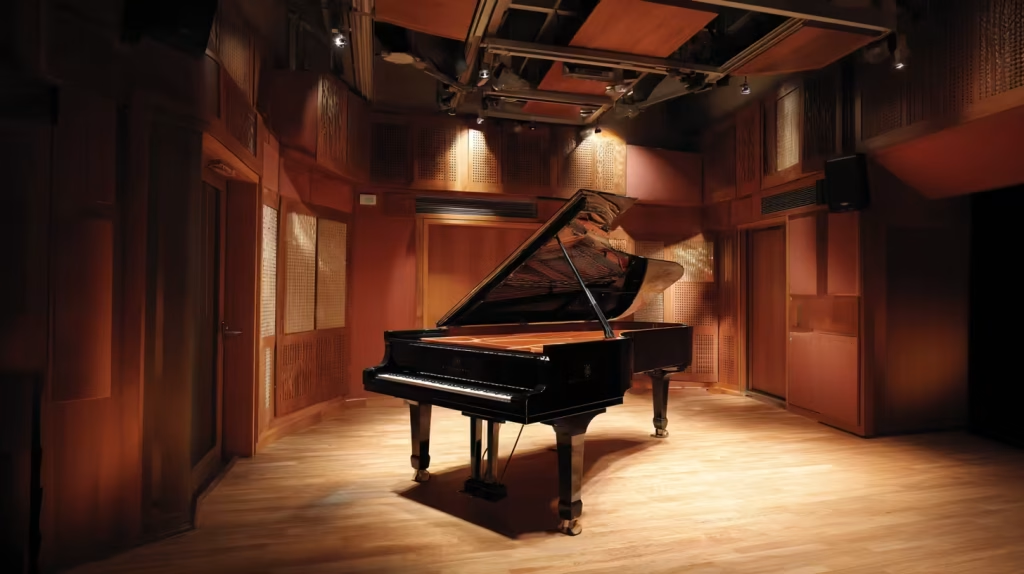
Reverberation Time Comparison
Here’s how reverberation varies by venue type and music genre:
Solo piano likes 1.5–1.8 seconds. Small hall is ~1.6 s. Good. Large hall is ~2.8 s. Not good.
String quartet likes 1.6–1.9 seconds. Small hall is ~1.7 s. Good. Large hall is ~3.0 s. Not good.
Symphony orchestra likes 2.0–2.3 seconds. Small hall is too short. Not good. Large hall is ~2.5 s. Okay.
Opera likes 1.3–1.6 seconds. Small hall is ~1.6 s. Good. Large hall is ~2.8 s. Not good.
Speech/theater likes 0.8–1.2 seconds. Small hall is ~1.6 s. So-so. Large hall is ~2.5 s. Not good.
Small halls excel for chamber music and soloists. Large halls sometimes work for full orchestras but fail for most other uses acoustically, showing acoustical reasons for careful venue selection.
Sound Clarity Measurements
Acoustic engineers measure speech intelligibility as a proxy for overall sound quality. Small venues typically score 85 to 95 percent. This means listeners accurately hear nearly every word and note with audible difference.
Large venues struggle to achieve 60 to 75 percent clarity even with excellent design and sound absorption works. Some poorly designed spaces score below 50 percent. At these levels, music becomes frustrating rather than enjoyable, requiring constant filtering of extraneous noise.
These numbers translate directly to listener experience and high-quality audio experience. High clarity means effortless understanding. Low clarity means constant mental strain to decipher sounds. Over two hours, this difference becomes exhausting and affects the listening experience.
Cost Per Seat Analysis
Small halls cost more to build per seat. Construction might run $3,000 to $8,000 per seat depending on acoustic sophistication and sound-absorbing materials. High-end halls exceed $10,000 per seat. This seems expensive initially.
Large venues achieve economies of scale. Cost per seat drops to $500 to $2,000 in a sized studio approach. However, acoustic compromises mean each seat delivers less value to occupants. Cheap seats offering poor experiences aren’t bargains.
For serious music lovers, small hall tickets offer better value despite higher prices. Superior acoustic experiences justify premium costs in a good auditorium. You remember great concerts for years. Mediocre large venue shows fade from memory quickly.
Famous Examples of Exceptional Small Recital Halls
Wigmore Hall (London)
Opened in 1901, Wigmore Hall seats just 550 people. Yet it’s considered the global reference standard for recital hall acoustics. Musicians from around the world dream of performing there, making it one of the great concert halls.
What makes its sound special? Perfect proportions, Renaissance-style coffered ceiling, and careful material choices. Walls combine plaster and wood paneling, creating natural sound absorption. The room breathes musically, supporting performers beautifully with balanced sound.
Countless legendary performances have graced this stage. The hall’s reputation attracts top artists, who in turn enhance its prestige. This positive cycle has continued for over 120 years of great music.
Carnegie Hall’s Weill Recital Hall (New York)
It has 268 seats. It was built for solos and small groups. The acoustics are excellent. Pianos sing clearly. Strings resonate well. Voices sound natural without needing a sound system. Reverb is about 1.7 seconds. That is ideal for solo music and creates clear sound.
Young artists debut here often. Famous players return for the sound. Many careers started in this room, experiencing the acoustic quality that defines exceptional concert hall sound.
Pierre Boulez Saal (Berlin)
It opened in 2017. It seats 682 people. The hall uses a “vineyard” design. The audience partly surrounds the stage. This makes the room feel close and warm. The acoustics are clear and intimate, representing new sound approaches.
Advanced computer modeling optimized every surface during design using acoustic measurements. Yet the results sound natural and organic, not calculated. This demonstrates how technology can enhance tradition rather than replace it.
The hall features adjustable acoustics elements. Curtains and acoustic panels can modify reverberation slightly for different repertoire. This flexibility makes one space work beautifully for varied programming and presentations.
What These Venues Have in Common
All three halls share certain proportions in their room acoustics. Length roughly doubles width. Height falls between width and length. These ratios prevent problematic standing waves and room resonant frequencies.
Material choices matter too. Wood provides warmth. Plaster adds brightness. Fabric absorbs excess energy selectively through sound absorption. The combination creates balanced frequency response across the audible spectrum and specific sound frequencies.
Most importantly, all three prioritize acoustic excellence above other concerns. Sight lines, comfort, and aesthetics matter—but never at sound quality’s expense. This unwavering focus on acoustical performance explains their success.
The Science Behind Optimal Room Size for Music
The Physics of Sound Decay
Sound energy diminishes following the inverse square law. This means doubling distance reduces intensity to one-quarter. Triple the distance drops intensity to one-ninth. The mathematics are unforgiving for acoustic energy distribution.
In a small hall, the farthest seat is about 50 feet. Sound stays strong in most seats with minimal loss of lower frequency sounds.
In a big room, the back row is 250 feet away. Sound fades with distance according to physics. Back seats get about 4% of the front-row sound. That’s why the back sounds weaker and creates little noise issues.
No amount of acoustic treatment or necessary sound-proofing fully compensates for this physical reality. Distance kills sound intensity inevitably. Smaller spaces simply work better for acoustic music because physics demands it.
Critical Distance Concept
Critical distance marks where direct sound equals reflected sound in strength. Closer than this, you hear mainly direct sound. Farther away, reflections dominate your experience in the sound environment.
In small halls, critical distance typically occurs 15 to 30 feet from the source. Most seats fall within this zone, receiving strong direct sound. This creates clarity and presence without stray sound issues.
In large halls, critical distance might be 40 to 100+ feet out. Many seats exceed this, hearing mainly reflections. Direct sound arrives weakened. This creates the distant, disconnected feeling common in big venues and large rooms.
Frequency Response and Room Modes
Different frequencies behave uniquely in enclosed spaces. Low bass sounds and lower frequency sounds have long wavelengths—sometimes 30 feet or more. These create standing waves and room modes that boost or cancel certain notes.
Small rooms control bass better because dimensions don’t allow complex mode patterns. Large rooms develop dozens of problematic modes. Some bass notes boom unnaturally creating harsh sound quality. Others disappear completely depending on seat location, affecting how sound behaves.
High frequency sounds reflect more sharply off surfaces. In large halls, this creates harsh, brittle sound character. Small halls balance high-frequency reflections better, maintaining natural warmth and avoiding acoustic anomalies.
The “Goldilocks Zone” for Concert Venues
Acoustic research consistently identifies 200 to 600 seats as optimal for acoustic performances. Below 200 sounds too dry and confined even with soundproofing materials. Above 600, problems multiply rapidly in the acoustic environment.
This range allows close listener proximity while maintaining reasonable capacity. It permits proper volume for adequate reverberation without excess. Everything scales appropriately at these sizes for room acoustics fundamentals.
Many halls have 400–500 seats. This size sounds best. It also fits budgets. Ticket sales work well. Bigger rooms need trade-offs in a good room design. So 400–500 is the sweet spot in home listening room terms.
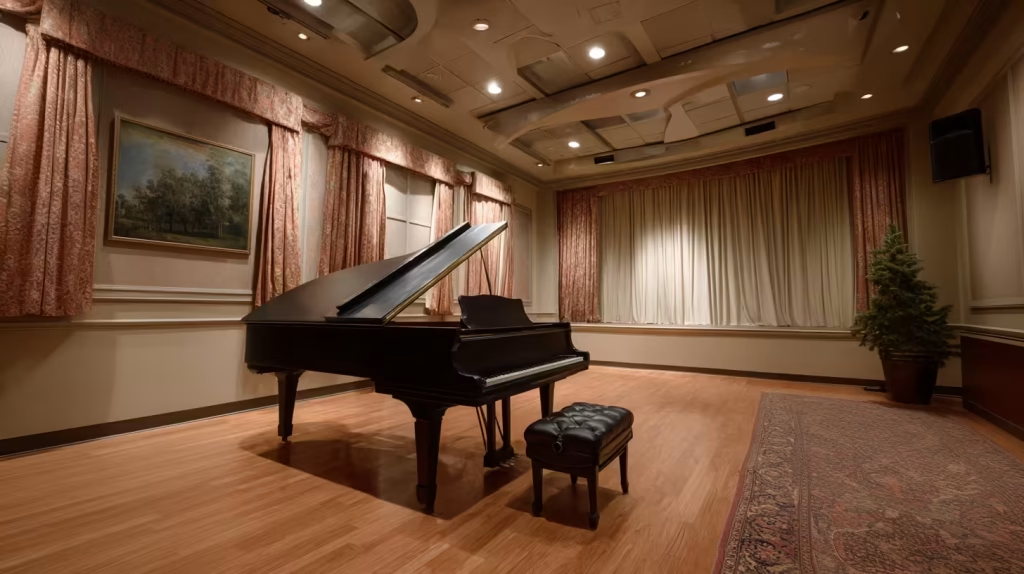
What Musicians Say About Small Venue Acoustics
Enhanced Performance Feedback
Musicians rely on hearing themselves clearly. In small halls, their sound bounces back quickly from nearby surfaces. This acoustic feedback helps them adjust dynamics and intonation instantly without encountering old sound delays.
Large halls create problematic delays in sound-related activities. Sound travels far before returning. By the time musicians hear themselves, they’ve already played several more notes. This lag makes precise performance difficult.
Chamber musicians particularly value small hall acoustics. Ensemble members hear each other easily, enabling tight coordination. String quartets achieve perfect balance naturally rather than through struggle with sound isolation issues.
Audience Connection
Visual intimacy combines with acoustic closeness in small venues. Performers see audience faces clearly. They sense reactions in real-time. This creates emotional energy flowing both directions, separate from loud speaker amplification.
Musicians report feeling audience engagement viscerally. A collective held breath before a climax. Spontaneous gasps at beautiful passages. This connection elevates performances beyond technical execution to shared experiences of modern music.
Large venues create disconnection. Performers squint into darkness seeing no one clearly. They project sound toward an anonymous mass. The relationship becomes one-directional: performance at people rather than with people.
Reduced Performance Stress
Acoustic instruments weren’t designed for large spaces. Pushing them too hard creates strain for musicians and ugly tone for listeners. Small halls eliminate this pressure on conversational sound levels.
Pianists needn’t pound keys violently creating louder sounds. String players avoid excessive bow pressure. Singers don’t force volume to overcome background noise –since the space supports them. Natural, relaxed technique produces beautiful results. Everyone benefits—performers and audience alike.
Physical strain over two-hour concerts adds up significantly. Small venues allow musicians to sustain energy better on stage flooring. This leads to better performances, especially in demanding repertoire.
How to Recognize Good Acoustics in Any Venue
Listen for Sound Clarity
Can you distinguish individual notes in fast passages? This is the primary clarity test in any venue. Complex music should sound organized, not muddled. Each instrument should occupy distinct sonic space without acoustic disturbances.
Try this simple test: clap your hands once sharply. Listen to what happens. A single clear echo indicates good acoustics. Multiple overlapping echoes suggest problems. Flutter echoes (rapid repetitions) reveal serious issues with sound wave patterns.
Quality acoustics make listening effortless. Poor acoustics require concentration to understand what you’re hearing. Your brain shouldn’t work hard—it should simply enjoy without filtering little noises.
Check Reverberation Quality
Good reverberation sounds smooth and musical. The sound blooms naturally after starting, then fades gracefully through sound vibrations. It enhances music without overwhelming it.
Poor reverberation sounds harsh or muddy with louder reverb levels. It might flutter, echo distinctly, or die too quickly. These characteristics reveal acoustic problems. Reverberation should feel like a warm blanket wrapping the music, not a confusing hall of mirrors.
Listen during quiet moments between pieces. How does applause sound? Clean and warm suggests good acoustics. Boomy and chaotic indicates problems with sound distribution.
Notice Tonal Balance
All frequencies should be present proportionally. Bass should sound full but not boomy in a boomy sound profile. Midrange should be clear and present. Highs should sparkle without harshness through proper sound absorption.
Some venues emphasize certain frequency ranges problematically. Boomy bass drowns out detail. Weak bass sounds thin and unsatisfying. Harsh highs create listener fatigue. Balance is key for final sound quality.
Quality halls let you hear double bass and piccolo equally well. Each occupies its sonic territory without fighting. This balance comes from careful acoustic design and acoustical band-aid avoidance.
Evaluate Audience Noise
Ironically, acoustically sensitive halls amplify everything—including audience sounds. Coughs, rustling programs, and candy wrappers become quite audible, creating self-generated audience noise. This actually indicates excellent acoustics.
Halls with poor acoustics mask audience noise because sound dies quickly. Better halls reveal everything, good and bad with enough noise sensitivity. This is why quiet, attentive audiences matter more in quality venues to avoid people-generated noise.
Don’t mistake audience noise amplification for an acoustic flaw or acoustical doghouse. It’s actually evidence of acoustic sensitivity and proper reverberation showing the direction sound travels.
The “Anywhere Sounds Good” Test
Visit the same hall multiple times sitting in different locations. Front, back, center, sides, balcony. How consistent is sound quality across these positions in the professional auditory environment?
Great halls sound excellent everywhere. Maybe slight character differences, but always enjoyable. Poor halls have obvious sweet spots and terrible seats. This inconsistency reveals acoustic compromise and creates a bad auditorium experience.
If you need expert advice on specific seat selection, the hall has acoustic problems. If the usher says “anywhere is fine,” that’s a good sign of a comfortable auditorium.
When Large Auditoriums Make Sense
Mass Accessibility
Large venues serve important cultural functions. They allow thousands to attend single performances. Popular artists can reach more fans. Communities experience shared cultural moments together in a grand concert hall setting.
Not everyone can attend intimate 300-seat venues. Limited capacity means limited access. Large auditoriums democratize culture by expanding availability. This social benefit outweighs acoustic compromises for many events and lectures.
Economic realities matter too. Some performances only become viable with large audiences. Ticket revenue needs to cover costs. Huge productions require huge venues financially and stage flooring infrastructure.
Amplified Music Doesn’t Require Perfect Acoustics
Amplified genres don’t need pure room acoustics. Sound already goes through mics and speakers. Big-venue acoustic problems matter less. Stadium shows focus on volume and visuals through sound equipment.
Scale and energy create the hype. Sound contractors and engineers tune the mix for each space. Electronics fix many issues through audio processing. It’s not perfect, but it works well for commercial office sounds and modern presentations.
Multi-Purpose Flexibility
Large venues host many events beyond music. Sports, graduations, and conventions need space. Perfect concert acoustics would limit other uses. Cities can’t build a special hall for everything from lecture to orchestra performances.
Arenas make economic sense. They are good enough for many needs. They optimize nothing acoustically, but serve the community across varied needs and sound-related activities.
The Reality of Building Costs
Great acoustic halls are expensive to construct. Small halls cost millions. Huge halls cost hundreds of millions. Public money is limited, requiring careful allocation.
Leaders must choose: Build a perfect 400-seat hall with excellent acoustics, or Build a 4,000-seat hall for more people in a large studio format. Wider access often wins political support. Both types are useful. Compromise is normal in public funding.
Future of Concert Hall Design — Return to Intimate Spaces
Growing Preference for Quality Over Quantity
Smaller halls are coming back in architectural trends. Audiences prefer better sound and high-quality audio experience. Great acoustics build loyalty. New small halls are being built worldwide. Live music needs quality spaces for acoustic music sources.
Good rooms make shows memorable. Investment continues in this direction.
Examples
Elbphilharmonie small hall (about 550 seats). Harpa recital hall (about 200 seats). Many new university halls worldwide. Investment in sound quality and comprehensive room acoustics continues.
Adjustable Acoustic Technology
Modern venues increasingly feature variable acoustics and adjustable acoustics systems. Motorized curtains, movable walls, and adjustable ceiling elements modify reverberation time. One space serves multiple purposes better with acoustic optimization strategies.
These systems let halls optimize for chamber music, then reconfigure for lectures. Reverberation might vary from 1.3 to 2.2 seconds through acoustic devices. This flexibility maximizes utility while maintaining quality.
Technology assists rather than replaces good fundamental design in room acoustics. The basic space still needs proper proportions and materials. Variable elements fine-tune rather than fix problems, avoiding acoustical misconceptions.
Computer Modeling Advances
Acoustic simulation software has improved dramatically. Architects can predict sound behavior before construction begins using acoustic measurements. Multiple design iterations happen virtually, avoiding expensive mistakes.
This technology has made excellent acoustics more achievable. Designers understand cause and effect better in new hall projects. They optimize systematically rather than relying purely on intuition and tradition from the acoustics world.
However, computer models have limits. They calculate predictable factors well but miss subtle interactions. Experienced acoustic designers and acousticians still blend science with art. The best results come from combining both approaches.
Hybrid Approaches
Some new cultural centers feature large halls with intimate sub-spaces. A 2,000-seat main hall might include a 300-seat recital room. This provides flexibility for different programming needs and varied sound environments.
Best of both worlds: capacity when needed, quality for acoustic performances. These complexes serve diverse audiences and artistic genres appropriately. They acknowledge one size doesn’t fit all in professional sound environment creation.
This approach costs more initially but serves communities better long-term. Different performances find appropriate venues. Audiences experience events in optimal settings avoiding acoustical anomalies.
Practical Tips for Music Lovers
Choosing Tickets for Best Sound
In small recital halls, relax—most seats sound excellent in a good auditorium. Avoid just the first two rows if you want balanced perspective. Otherwise, choose based on sight lines and personal preference.
In large halls, strategy matters more. Center orchestra, rows 10-20, usually offers best sound in the optimal listening experience. Avoid extreme sides, very front, and high balcony. These locations suffer significant acoustic compromise.
If you’re serious about sound quality, spend extra for better seats in large venues. The acoustic difference justifies cost. Cheap seats often deliver poor experiences making the entire investment questionable in terms of signal to noise ratio.
Finding Great Small Venues in Your Area
University music schools often feature excellent small recital halls with good acoustics. Many welcome public attendance for free or low cost. Check local college websites for concert calendars and presentation schedules.
Historic theaters sometimes include intimate performance spaces with applied acoustics. Community concert series often use smaller venues for acoustic performances. Research local chamber music organizations—they prioritize good acoustics.
Churches can offer surprisingly good acoustics for acoustic music, especially for choral and solo performances. Many host concert series in their sanctuaries. Explore options beyond obvious commercial venues and large studios.
Supporting Quality Acoustic Venues
Attend performances at well-designed halls regularly. Ticket sales ensure their survival. Quality venues face financial challenges because limited capacity restricts revenue in small studio rooms.
Consider memberships and donations if you value these spaces. Many operate as nonprofits requiring philanthropic support. Your contributions directly enable acoustic excellence to continue in the acoustics world.
Spread the word about great venues. Post reviews, tell friends, share experiences on social media. Building awareness helps these spaces attract audiences needed for sustainability and continued investment in acoustical performance.
Educating Your Ears
Actively compare venues experiencing varied acoustic environments. Notice what sounds better and why. This education enhances appreciation for excellent acoustics through direct audible difference experiences.
Listen to the same piece in different halls if possible. Direct comparison teaches more than abstract descriptions. Your ears learn to recognize quality through repeated exposure to various sound environments.
Share your knowledge with other music lovers. Help friends understand why certain venues sound better through acoustical reasons. Collective appreciation builds support for acoustic excellence in communities.
Conclusion
Small halls usually sound better. Halls with 200–600 seats are ideal for acoustic music. Shorter echoes help clarity and sonic clarity. Sitting closer helps you hear details with clear sound.
Big halls still matter. They fit more people but lose clarity. Long echoes blur the sound. Amplification can change the tone through sound systems and loudspeakers.
Both hall types are useful. Big halls give wide access. Small halls keep pure, natural sound. Cities need both types of venues for different sound-related activities.
Design is improving. New halls focus on great acoustics. Movable acoustic panels add flexibility. Computer models using acoustic sciences help builders plan better rooms through comprehensive room acoustics fundamentals.
Try a small hall yourself. Listen for clarity and warmth. Notice the short echo and close feel. You will hear the difference in audio quality and room sound.
Support good venues that prioritize acoustical performance and exceptional concert hall acoustics in your community.