
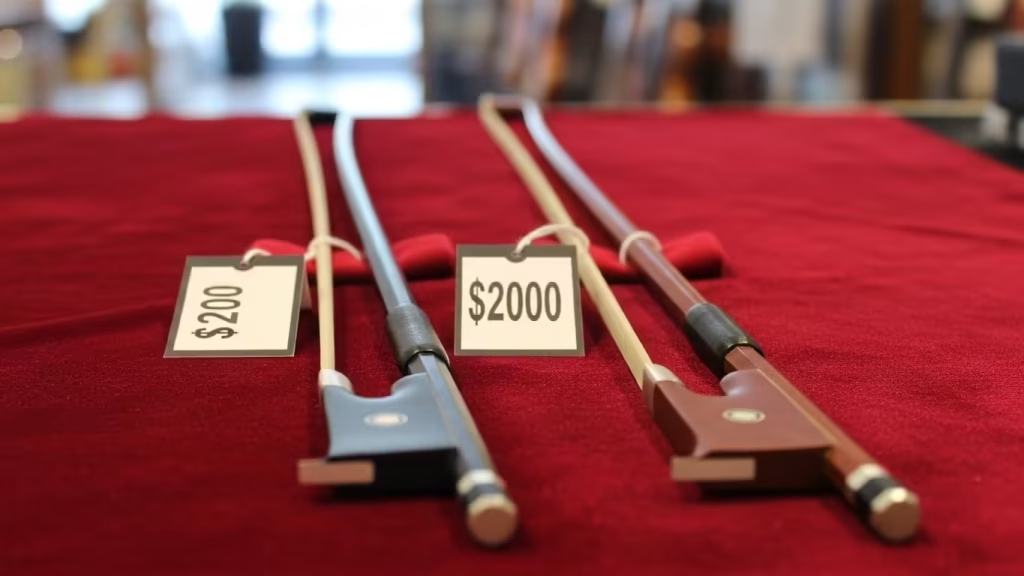
You may hold two bows that feel similar, but the materials can change your sound, cost, and long-term use. One bow is Pernambuco wood, and the other is carbon fiber. So, choosing between them can affect your playing for years.
This guide helps you choose based on your needs and your budget. It works for beginners buying their first good bow, and for advanced players adding another bow. We will compare sound, durability, price, and real-world use. Then you can spend your money more wisely.
Quick Overview:
- Price Range: Expect to invest $100–$2,000+ for carbon fiber options, while Pernambuco begins around $300 and can reach $50,000 or more for master-crafted pieces. Budget-conscious players will find carbon fiber more accessible.
- Tonal Character: The bright, articulate clarity of carbon fiber provides consistent performance across all conditions. Pernambuco delivers warmth and tonal complexity with nuanced overtones that many advanced players prize.
- Environmental Resilience: Weather changes, temperature fluctuations, and humidity variations barely affect carbon fiber bows. Pernambuco wood responds to environmental conditions and requires careful climate management.
- Care Requirements: Minimal upkeep makes carbon fiber ideal for players seeking convenience. Pernambuco demands regular seasonal adjustments and monitoring to maintain optimal conditions.
- Longevity: With appropriate care, both materials deliver decades of reliable service. Pernambuco achieves this lifespan only when owners commit to proper maintenance protocols.
- Investment Value: Depreciation is typical for carbon fiber bows in the resale market. Quality Pernambuco instruments often retain their purchase price and may appreciate significantly over time.
Key Decision Points:
- If you’re spending under $500, a carbon fiber bow tends to give the best value.
- With a budget of $1,500 or more, it’s worth testing both carbon fiber and wood bows in person to see which feels right in your hands.
- Owning more than one bow can also be practical, since each material has its own character and advantages.
- For travel or outdoor performances, carbon fiber remains the most reliable and durable choice.

Music Lessons in San Diego with K&M Music School
1 Expert Music Lessons
We offer Piano, Violin, Cello, Guitar, Ukulele, Saxophone, Bassoon, Harp, Voice, and Toddler group lessons for students of all ages and skill levels.
2 Why Choose Us?
- 🎶 Boosts focus and self-discipline
- 🎵 Strengthens cognitive skills
- 🎼 Enhances cultural understanding
- 🎤 Builds confidence through recitals
3 We Welcome Adults Too!
What Makes Carbon Fiber and Pernambuco Different?
Understanding bow materials helps you make smart purchasing decisions. These two materials come from completely different origins. Each offers unique advantages and challenges.
The History of Pernambuco Wood Bows
Pernambuco wood comes from Brazil. The scientific name is Paubrasilia echinata. This tree grows along Brazil’s Atlantic coast in limited areas. Bow makers have used this wood since the 18th century.
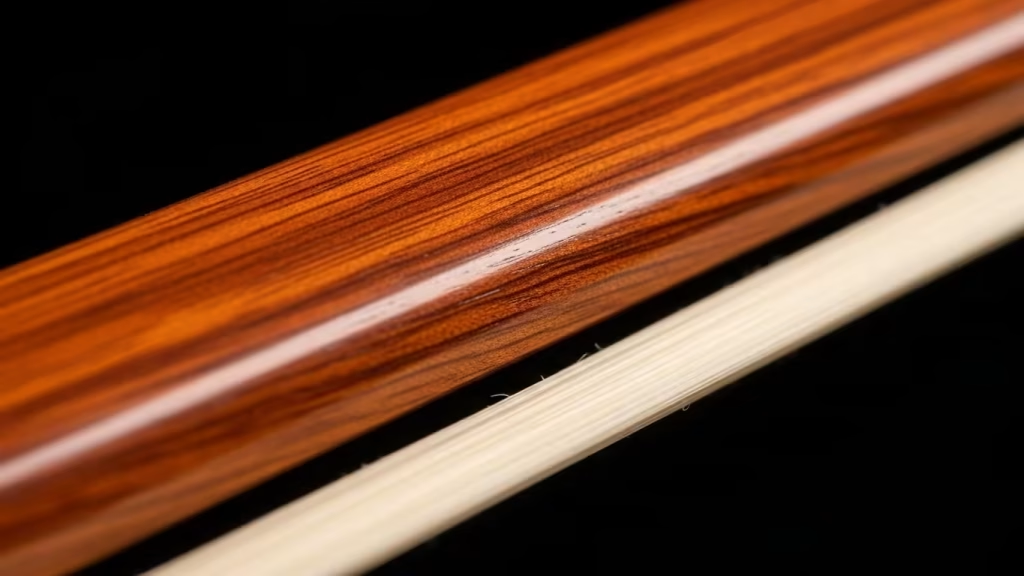
François Tourte perfected the modern bow design in the 1700s and 1800s. He chose Pernambuco for its perfect balance of strength and flexibility. The wood became the gold standard for string instrument bows. Master craftsmen hand-select each piece of wood for grain quality and density.
Traditional bow making is an art form. Each Pernambuco bow carries centuries of craftsmanship tradition. This heritage connects modern players to classical music history. The wood’s natural properties create the warm, complex tone musicians love.
The Rise of Carbon Fiber Bows
Carbon fiber bows entered the market in the 1990s. Material scientists and engineers developed these bows using aerospace technology. The goal was creating a stable, durable alternative to endangered Pernambuco wood.
Early carbon fiber bows faced resistance from classical musicians. Many players dismissed them as inferior or “plastic-sounding.” However, manufacturing techniques improved dramatically over the past 30 years. Modern carbon fiber bows can rival good Pernambuco bows in sound quality.
Today, professional orchestras include musicians who use carbon fiber bows. Recording studios accept them without question. The stigma has largely disappeared. Carbon fiber now represents a legitimate choice for serious musicians at all levels.
Material Properties Comparison
Pernambuco wood has natural density variations that create complex harmonics. Each piece of wood is unique. The wood responds to bow hair tension with slight flexibility. This creates a feeling players describe as “alive” or “responsive.”
Carbon fiber offers perfect consistency. Every carbon fiber bow from the same model performs identically. The material doesn’t change with humidity or temperature. It maintains exactly the same weight distribution and flexibility year after year.
Density affects how bows transfer energy to strings. Pernambuco’s natural density creates certain tonal characteristics. Carbon fiber’s engineered density can be adjusted during manufacturing. This allows makers to target specific playing characteristics.
Both materials require proper maintenance. However, carbon fiber tolerates neglect better than wood. Pernambuco needs careful humidity control and seasonal adjustments. Carbon fiber performs consistently regardless of environmental conditions.
How Carbon Fiber vs. Pernambuco Bows Affect Your Sound
Sound quality drives most purchasing decisions. The bow affects your tone as much as your instrument does. Understanding these sonic differences helps you choose wisely.
Tone Quality and Warmth
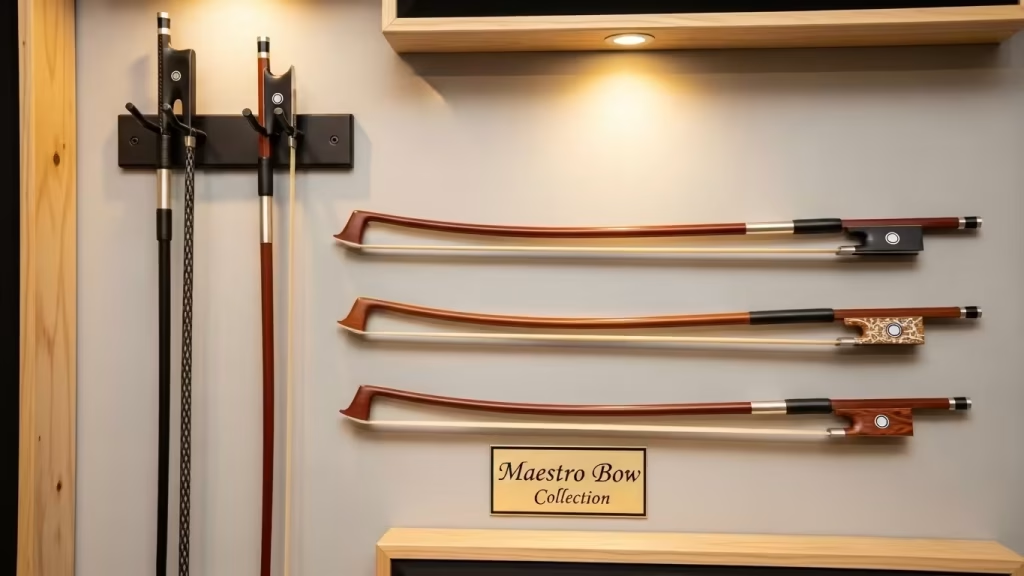
Pernambuco bows produce warm, rich tones with complex overtones. The wood’s natural properties create subtle harmonic variations. Many players describe Pernambuco’s sound as “woody,” “warm,” or “singing.” This warmth suits romantic repertoire and solo performances beautifully.
Carbon fiber bows create clear, bright, focused tones. The sound is more direct and articulate. Some players find this clarity perfect for baroque music and precise technical passages. Others miss the warmth they associate with traditional materials.
Sarah Chang has used both carbon fiber and Pernambuco bows in recordings. In blind tests, many people cannot tell the difference between a top carbon fiber bow and a Pernambuco bow. So, the difference can be small when both bows are high quality.
Projection varies between materials too. Carbon fiber often projects well in large concert halls. The focused sound carries efficiently. Pernambuco’s warmth can fill a space with rich color. Neither material universally projects better than the other.
Responsiveness and Control
Responsiveness describes how quickly a bow reacts to your technique. Pernambuco bows often feel more responsive to subtle pressure changes. The wood’s natural flexibility creates a “give” that players use for expression. Advanced techniques like spiccato and sautillé can feel more natural with Pernambuco.

Carbon fiber responds consistently but sometimes feels less forgiving. The material’s stiffness provides excellent control for clean articulation. Beginners often find carbon fiber easier to control. The bow does what you tell it to do without unexpected behavior.
Bow bounce differs between materials. Pernambuco’s natural spring creates specific bounce characteristics. Carbon fiber can be engineered for similar bounce, but it feels different. Many players adapt to either material within a few weeks of regular use.
Playing feel is highly personal. Some musicians immediately prefer one material. Others find both equally comfortable. Your technique and playing style interact with bow materials in unique ways.
Sound Differences Across Instruments
Violin bows show the most noticeable differences between materials. The smaller, more delicate violin responds to subtle bow variations. Carbon fiber violin bows work excellently for students and travel. Pernambuco violin bows offer maximum tonal variety for advanced players.
Viola bows benefit from carbon fiber’s strength. Violas require more pressure than violins. Carbon fiber handles this stress without breaking or warping. However, professional violists often prefer Pernambuco for its warmth and complexity.
Cello bows are larger and heavier. Carbon fiber excels here because it maintains perfect balance. The material won’t warp under the tension required for proper cello technique. Many professional cellists own both types and choose based on repertoire.
Bass bows face enormous physical stress. Carbon fiber has become extremely popular for bass players. The durability and consistent performance outweigh any tonal differences. Some jazz bassists prefer carbon fiber’s bright, clear attack.
Which Bow Lasts Longer: Carbon Fiber or Pernambuco?
Durability affects long-term value. A bow that lasts decades costs less per year of use. Understanding lifespan helps you calculate true investment value.
Carbon Fiber Durability Advantages
Carbon fiber resists temperature changes perfectly. You can leave a carbon fiber bow in a hot car without damage. The material won’t warp, crack, or change shape. This stability is revolutionary for traveling musicians.
Humidity has no effect on carbon fiber. Players in humid climates avoid many problems by using carbon fiber. Dry desert climates don’t cause issues either. The bow performs identically in Florida and Arizona.
Breaking a carbon fiber bow requires extreme force. They’re virtually unbreakable under normal use. Even if you accidentally hit your music stand, the bow usually survives. This durability is perfect for students and young players who may not handle equipment carefully.
Warping is impossible with quality carbon fiber. The material maintains its camber (curve) permanently. Pernambuco bows can lose camber over decades. Carbon fiber bows look and perform the same after 20 years.
Pernambuco Bow Vulnerability
Pernambuco responds to humidity changes by swelling or shrinking. This can cause warping over time. Musicians in humid climates must use dehumidifiers. Those in dry climates need humidifiers. Managing these conditions requires constant attention.
Temperature extremes can crack Pernambuco. Leaving a Pernambuco bow in a hot car might ruin it. Rapid temperature changes are particularly dangerous. Professional musicians treat Pernambuco bows like delicate instruments.
Breaking is a real risk with Pernambuco. Dropping a bow or hitting a music stand can cause catastrophic breaks. Repairs are possible but expensive. Some breaks reduce the bow’s value permanently.
Hair tension affects Pernambuco over time. Always loosen your bow hair after playing. Leaving Pernambuco under constant tension causes permanent warping. This discipline is essential for bow longevity.
Maintenance Requirements Comparison

Daily care is similar for both materials. Always loosen hair after playing. Wipe off rosin dust with a soft cloth. Store bows hanging or in a proper case. These basic steps apply equally to carbon fiber and Pernambuco.
Seasonal care differs dramatically. Pernambuco requires humidity monitoring and environmental control. You may need a hygrometer in your practice space. Carbon fiber needs no seasonal adjustments at all.
Rehairing frequency is the same for both materials. Hair wears out regardless of stick material. Most players need rehairing every 6-12 months with regular use. Rehairing costs $50-$100 typically.
Professional check-ups matter more for Pernambuco. A luthier should examine Pernambuco bows annually. They check for warping, cracks, and camber loss. Carbon fiber bows rarely need professional inspection unless damaged.
Repair Costs and Availability
Carbon fiber repairs are limited but affordable. If a carbon fiber bow breaks, manufacturers sometimes offer replacement programs. The stick itself rarely needs repair. Frog repairs and rehairing are standard services available everywhere.
Pernambuco restoration can be expensive. Crack repairs cost $100-$500 depending on severity. Recambering (fixing the curve) costs $150-$300. Some damage is irreparable. A bad break can total an expensive bow.
Finding qualified repair technicians is easier for Pernambuco. Every city with a luthier has someone who can work on Pernambuco bows. Carbon fiber repairs require specific expertise that fewer shops offer.
Insurance makes sense for expensive Pernambuco bows. Bows over $5,000 should be insured separately. Homeowner’s or renter’s insurance typically covers carbon fiber bows without special riders. This difference in insurance costs adds to total ownership expenses.
Understanding the Cost of Carbon Fiber vs. Pernambuco Bows
Price comparison reveals where your money actually goes. Understanding value at each price point helps you make smart choices.
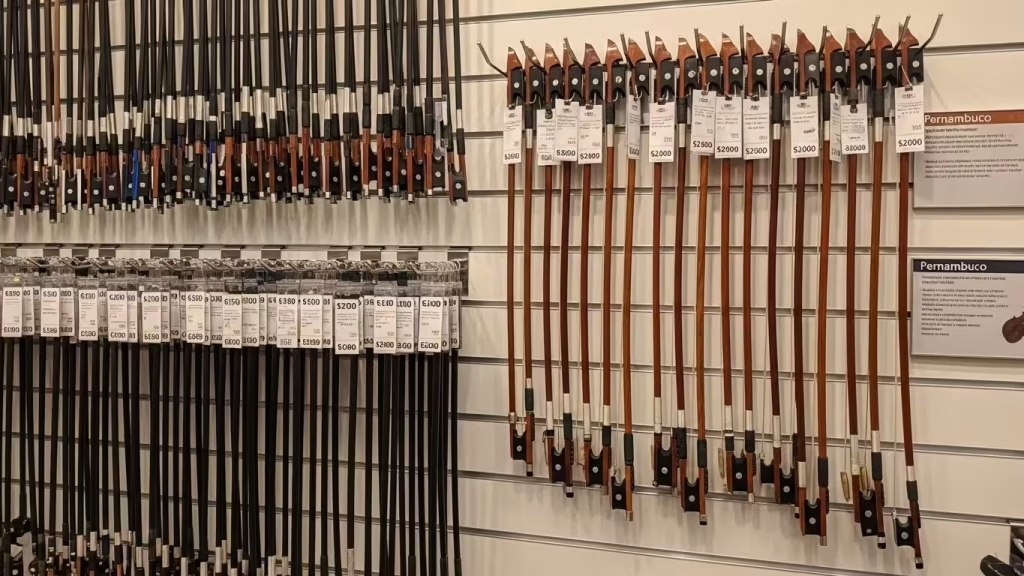
Carbon Fiber Bow Price Ranges
Entry-level carbon fiber bows cost $100-$300. These bows vastly outperform similarly priced wooden bows. Brands like Glasser and Fiddlerman offer reliable options. These bows suit beginners perfectly. The durability alone justifies the investment.
Mid-range carbon fiber bows run $300-$800. This range includes excellent bows from CodaBow and Incredibow. Performance approaches that of $2,000-$3,000 Pernambuco bows. Many intermediate players never need to upgrade beyond this range.
Professional carbon fiber bows cost $800-$2,000+. CodaBow Diamond and Arcus bows compete with $5,000+ Pernambuco bows. Professional musicians use these bows for travel and outdoor performances. The sound quality satisfies even critical ears.
Ultra-premium carbon fiber bows exceed $2,000. These specialized bows use advanced materials and construction. They represent the pinnacle of carbon fiber technology. Some professionals prefer these to all but the finest Pernambuco bows.
Pernambuco Bow Price Ranges
Student Pernambuco bows start at $300-$1,000. These bows use lower-grade Pernambuco wood. Quality varies significantly in this range. Some are excellent values. Others perform worse than good carbon fiber bows. Careful testing is essential.
Intermediate Pernambuco bows cost $1,000-$5,000. This range offers good wood and solid craftsmanship. Many serious amateurs and semi-professional musicians play bows in this category. The sound quality clearly surpasses entry-level options.
Professional handmade bows run $5,000-$15,000. Master bow makers create these instruments. Each bow is unique. The wood quality is exceptional. These bows offer maximum tonal variety and response. Professional soloists typically play bows in this range.
Master maker and antique bows cost $15,000-$50,000+. These bows are investments and musical instruments. Famous makers like Peccatte, Sartory, and Voirin command premium prices. Antique French bows appreciate over time. Collectors pursue these bows as much as players do.
Total Cost of Ownership
Initial purchase price is only part of the equation. A $1,000 carbon fiber bow and a $1,000 Pernambuco bow have different total costs over 10 years. Rehairing costs are identical at about $75 per rehair. Most players need rehairing once yearly. That’s $750 over 10 years for either bow.
Maintenance costs differ significantly. Pernambuco might need professional check-ups costing $50-$100 annually. Carbon fiber needs no regular professional maintenance. Over 10 years, this adds $500-$1,000 to Pernambuco ownership.
Repair costs heavily favor carbon fiber. A Pernambuco bow might need one repair in 10 years costing $200-$500. Carbon fiber rarely needs repairs. Budget $300 for potential Pernambuco repairs over a decade.
Insurance costs matter for expensive bows. A $10,000 Pernambuco bow might cost $100-$200 yearly to insure. That’s $1,000-$2,000 over 10 years. Carbon fiber bows under $2,000 rarely need separate insurance.
Depreciation versus appreciation affects net cost. Carbon fiber bows depreciate like electronics. Expect to recover 40-60% of purchase price if you sell. Quality Pernambuco bows often hold value or appreciate. A $5,000 Pernambuco bow might sell for $4,000-$6,000 after 10 years.
Value for Different Budget Levels
Under $500 budget: Carbon fiber wins decisively. A $400 carbon fiber bow outperforms any $400 Pernambuco bow. The durability and consistency make this a no-brainer choice. Save Pernambuco shopping for when your budget increases.
$500-$1,500 budget: This range gets interesting. A $1,200 carbon fiber bow competes with $2,000-$3,000 Pernambuco bows. However, a carefully chosen $1,200 Pernambuco bow might offer better tone. Testing becomes critical. Try multiple bows of both materials.
$1,500-$5,000 budget: Serious comparison territory begins here. Quality Pernambuco bows emerge in this range. You’ll find excellent carbon fiber at the lower end. Personal preference matters more than material at this level. Advanced players can identify their preference clearly.
$5,000+ budget: Professional Pernambuco dominates this category. Few carbon fiber bows exceed $3,000. If you’re spending $5,000+, you’re buying tone complexity and tradition. However, owning a $1,500 carbon fiber as a second bow makes sense. Use Pernambuco for concerts and carbon fiber for travel.
Choosing the Right Bow for Your Skill Level
Your current ability affects which bow serves you best. Buying too much or too little bow wastes money either way.
Best Bows for Beginners
Carbon fiber suits beginners perfectly. New players don’t yet hear subtle tonal differences. They won’t miss Pernambuco’s warmth because they’re learning basic technique. Carbon fiber’s consistency helps beginners develop clean technique without fighting their equipment.
Durability matters enormously for beginners. Learning musicians accidentally drop bows, hit music stands, and mishandle equipment. A carbon fiber bow survives these accidents. A Pernambuco bow might break. The peace of mind alone justifies carbon fiber for students.
Affordable entry options exist throughout the carbon fiber range. A $200 carbon fiber bow serves a beginner for 3-5 years easily. This bow retains enough value to sell when upgrading. The initial investment is low, and the useful life is long.
When should beginners consider Pernambuco? Wait until you can hear tonal differences clearly. Wait until you consistently practice 30+ minutes daily. Wait until your teacher recommends upgrading. For most players, this happens after 2-4 years of study.
Intermediate Player Bow Selection
The transition point comes when you outgrow your starter bow. You’ll notice that better bows respond more easily. You’ll hear tone quality differences. Your teacher will mention that you need better equipment. This typically happens at the intermediate level.
Budget-conscious upgrading means choosing strategically. A $600-$900 carbon fiber bow dramatically improves your playing. It costs less than intermediate Pernambuco but performs comparably. This delays the need for an expensive Pernambuco bow until you’re more advanced.
Testing multiple bow types teaches you about your preferences. Borrow bows from friends. Attend instrument shows where you can try dozens of bows. Your preferences become clear through comparison. Some intermediate players discover they prefer carbon fiber’s clarity.
Investment timing matters for serious students. If you’re planning to pursue music professionally, invest in quality earlier. A $2,000-$3,000 Pernambuco bow serves you through college. If music is a serious hobby, a $1,000 carbon fiber bow might last your entire life.
Advanced and Professional Needs
Why do professionals often choose Pernambuco? They need maximum tonal variety for different musical styles. They appreciate the subtle expressiveness that fine Pernambuco provides. The complexity of sound matters in solo performances and recordings. Professional ears distinguish qualities that others might miss.
Carbon fiber for specific situations makes sense even for professionals. Many orchestra musicians use carbon fiber for outdoor summer festivals. Touring musicians keep carbon fiber bows for airline travel. Studio musicians sometimes prefer carbon fiber’s consistent, clear sound for certain projects.
Owning multiple bows for different purposes is common among professionals. A soloist might own a $15,000 Pernambuco for concerts, a $5,000 Pernambuco for orchestra work, and a $1,500 carbon fiber for everything else. This strategy protects expensive bows while maintaining performance quality.
Teaching Professionals and Studio Musicians
The multiple-bow strategy benefits teachers significantly. Use a carbon fiber bow for teaching demonstrations. Let students try your carbon fiber bow, not your expensive Pernambuco. This protects your primary instrument while giving students quality comparison experiences.
Insurance and security considerations favor carbon fiber for studio work. Recording studios have many people moving around. Your bow could be knocked over or damaged. A carbon fiber bow eliminates worry. You focus on playing, not protecting equipment.
Cost-effective professional solutions exist by combining materials. Buy an excellent Pernambuco bow for important performances. Buy one or two carbon fiber bows for everything else. This approach costs less than buying multiple Pernambuco bows while covering all your needs.
When to Choose Carbon Fiber vs. Pernambuco Bows
Specific situations favor one material over the other. Matching your bow to your circumstances prevents problems and saves money.
Travel and Outdoor Performance
Carbon fiber’s weather resistance advantage is unbeatable for travel. Airlines lose baggage. Temperature extremes in cargo holds damage Pernambuco. Carbon fiber arrives in playing condition regardless of travel conditions. Professional touring musicians often use carbon fiber exclusively on the road.
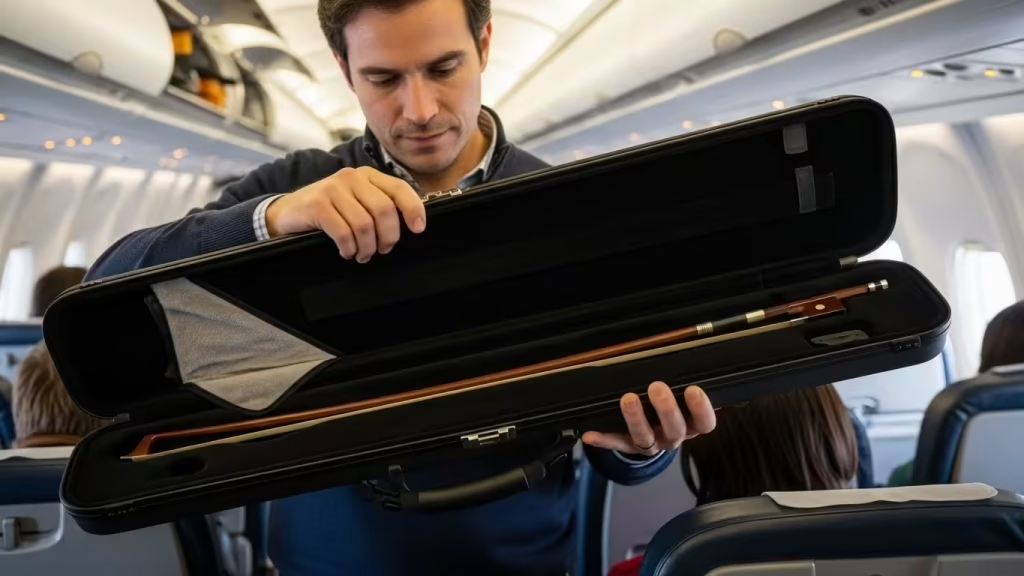
Airline travel creates unavoidable risks. Even carry-on bags face overhead bin compression. Gate-checking happens unexpectedly. A carbon fiber bow survives these situations. A Pernambuco bow might not. The monetary loss matters less than missing a performance because your bow broke.
Outdoor summer festivals expose bows to heat, humidity, and sun. These conditions challenge Pernambuco severely. Carbon fiber performs perfectly at outdoor events. Many orchestras have “summer bows” specifically for outdoor concerts. These are always carbon fiber.
Security and theft concerns favor carbon fiber too. A stolen $1,000 carbon fiber bow hurts less than a stolen $10,000 Pernambuco bow. Using carbon fiber in high-risk situations makes sense. Save your Pernambuco for controlled environments.
Music Lessons in San Diego with K&M Music School
1 Expert Music Lessons
We offer Piano, Violin, Cello, Guitar, Ukulele, Saxophone, Bassoon, Harp, Voice, and Toddler group lessons for students of all ages and skill levels.
2 Why Choose Us?
- 🎶 Boosts focus and self-discipline
- 🎵 Strengthens cognitive skills
- 🎼 Enhances cultural understanding
- 🎤 Builds confidence through recitals
3 We Welcome Adults Too!
Orchestra and Ensemble Playing
Professional orchestra requirements vary by position. Principal players often use Pernambuco for its tonal richness. Section players frequently choose carbon fiber for its reliability and lower cost. Orchestra auditions rarely specify bow material. The committee evaluates your playing, not your equipment.
Chamber music considerations differ from orchestra work. Chamber music requires blend and balance. Both materials work beautifully. Your choice depends on personal preference and ensemble sound goals. Neither material creates blend problems.
What section players typically use varies by orchestra and region. European orchestras lean more heavily toward Pernambuco. American orchestras show greater carbon fiber acceptance. Younger orchestras have more carbon fiber users. Traditional orchestras have fewer.
Budget realities for working musicians make carbon fiber attractive. Orchestra jobs pay well but not extravagantly. Spending $10,000 on a bow strains most budgets. A $1,500 carbon fiber bow performs the job excellently. This leaves money for other expenses.
Solo Performance and Recording
Studio recording bow preferences depend on the engineer and project. Some engineers hear no difference between materials. Others claim they can hear distinctions. In blind tests, even experienced engineers struggle to identify bow materials consistently. Your playing matters far more than your bow material.
Solo recital considerations include visual presentation. Some audiences expect traditional materials. Others don’t notice or care. Playing a carbon fiber bow in a major solo recital is completely acceptable today. Let your performance speak, not your equipment.
Tone quality importance in featured work cannot be understated. Solo work showcases your sound intimately. If Pernambuco helps you achieve your ideal tone, the investment makes sense. However, many soloists perform beautifully with high-end carbon fiber. Test extensively before deciding.
Professional recording musician insights reveal that material choices vary widely. Session musicians often prefer carbon fiber’s consistency. Classical recording artists lean toward Pernambuco. Film score recording shows no clear preference. The musical context matters more than the material.
Sustainability and Ethics in Bow Selection
Environmental and ethical considerations influence buying increasingly. Understanding these issues helps you make choices aligned with your values.
Pernambuco Wood Conservation Status
Endangered species classification affects Pernambuco availability. The wood is CITES-listed (Convention on International Trade in Endangered Species). This classification restricts international trade. Legal Pernambuco must have proper documentation. Buying from reputable dealers ensures legal sourcing.
Deforestation concerns in Brazil are serious. The Atlantic Forest where Pernambuco grows has been reduced to less than 10% of its original size. Illegal logging continues despite protections. Each Pernambuco bow represents a tree that took 100+ years to grow.
Ethical sourcing verification is possible but difficult. Reputable bow makers source from legal, sustainable operations. Some operations plant new trees to replace harvested ones. However, verification systems aren’t perfect. Unethical sourcing still occurs.
Future availability predictions suggest Pernambuco will become scarcer and more expensive. The International Pernambuco Conservation Initiative works to preserve the species. However, climate change and continued pressure threaten long-term availability. Prices will likely continue rising.
Carbon Fiber Environmental Impact
Manufacturing carbon footprint for carbon fiber bows is significant. Carbon fiber production requires substantial energy. The process uses petroleum-based materials. Manufacturing creates greenhouse gas emissions. However, the long lifespan of carbon fiber bows spreads this impact over decades.
Recycling and disposal challenges exist for carbon fiber. The material doesn’t biodegrade. Recycling carbon fiber is technically possible but rarely done. End-of-life disposal usually means landfills. This environmental cost is real but affects future generations more than current ones.
Comparing sustainability of materials is complicated. Pernambuco is technically renewable but practically endangered. Carbon fiber uses fossil fuels but lasts longer. Neither choice is perfectly green. Both have environmental costs.
Making Environmentally Conscious Choices
Certified sustainable Pernambuco sources do exist. Organizations like IPCI (International Pernambuco Conservation Initiative) promote sustainable practices. Buying from makers who support these organizations helps. However, certified sustainable Pernambuco is expensive and limited.
Supporting reforestation initiatives helps if you choose Pernambuco. Some bow makers donate portions of sales to conservation. Ask before purchasing. Your buying power can support ethical practices. These contributions make a real difference in Brazil.
The used bow market benefits the environment significantly. Buying a used bow of either material avoids new manufacturing impact. Quality bows last generations. A 50-year-old Pernambuco bow performs beautifully. A 20-year-old carbon fiber bow is essentially new. Consider used bows for both value and environmental reasons.
How to Choose Between Carbon Fiber and Pernambuco Bows
Making your actual selection requires hands-on comparison. Theory matters less than how bows feel and sound in your hands.
In-Store Testing Techniques
What to listen for during trials includes tone quality, clarity, and response. Play scales across your instrument’s full range. Notice how easily the bow speaks on each string. Try different dynamic levels from very soft to very loud. Good bows respond clearly at all volumes.
Playing different musical styles reveals bow characteristics. Play slow lyrical passages to test warmth and smoothness. Play fast technical passages to test articulation and bounce. Play pizzicato to test balance. A versatile bow handles all these situations well.
Fatigue assessment during extended playing matters more than most players realize. Play continuously for 15-20 minutes. Your arm and hand should feel comfortable throughout. Poor bow balance causes fatigue. Weight distribution affects how tired you get during long practice sessions.
Getting honest feedback from teachers is invaluable. Teachers have heard many bows on many students. They can identify which bow helps your sound most. However, remember that teacher preferences are personal. Trust your teacher’s input but make your own final decision.
Online Purchase Considerations
Trial period policies make online buying possible. Reputable dealers offer 7-14 day trial periods. Read the policy carefully before ordering. Understand who pays return shipping. Know if there are restocking fees. These details matter if you don’t love the bow.
Video demonstrations and reviews provide useful information. Watch videos of the exact bow model you’re considering. However, remember that recording equipment affects sound significantly. Videos give you general impressions, not exact sound replication.
Communicating with sellers before purchasing helps match you with the right bow. Describe your playing style, instrument, and preferences. Good dealers recommend options based on your needs. This consultation prevents buying the wrong bow.
Risk mitigation strategies include buying from established dealers with good reputations. Check reviews on sites like ViolinForum and MaestroNet. Ask other musicians about their experiences. Avoid deals that seem too good to be true.
Getting Professional Input
When to consult your teacher is before making any significant purchase. Teachers know your playing and can guide decisions. However, some teachers have strong biases for or against certain materials. Listen to their reasoning, not just their conclusions.
Luthier recommendations carry significant weight. Luthiers have handled thousands of bows. They understand quality construction intimately. However, luthiers sometimes prefer selling higher-margin Pernambuco bows. Get multiple opinions.
Understanding personal bias in advice means recognizing that everyone has preferences. Older musicians often prefer Pernambuco because that’s what they know. Younger musicians may be more open to carbon fiber. Consider the source when evaluating advice.
Trusting your own ears and feel is ultimately most important. You’re the one who will play this bow for years. If a carbon fiber bow feels and sounds better to you than a Pernambuco bow, choose carbon fiber. Your experience matters most.
Top Carbon Fiber and Pernambuco Bow Makers
Knowing reputable manufacturers helps you shop confidently. Quality varies significantly by maker.
Leading Carbon Fiber Bow Brands
CodaBow is the industry leader in carbon fiber bows. They offer models from $400 to $3,000+. The Diamond series competes with expensive Pernambuco bows. Professional musicians worldwide use CodaBow. Their quality control is excellent. Every bow performs as advertised.
Arcus Bows from Germany use unique carbon fiber compositions. They’re extremely light, which some players love and others dislike. Prices range from $800-$3,000. The sound is bright and clear. These bows have passionate fans among professionals.
JonPaul Bows offers innovative designs at reasonable prices. Their bows cost $300-$2,000. They focus on feel and playability. Many teachers recommend JonPaul bows for students. The company responds well to customer feedback.
Incredibow provides budget-friendly options starting around $100. These bows serve beginners well. They’re not professional quality but excellent for starting out. The durability is outstanding. Every beginning student should consider Incredibow.
Respected Pernambuco Bow Makers
Contemporary master makers include names like Paul Siefried, Charles Espey, and Ole Kanestrom. These artisans create bows costing $8,000-$20,000. Each bow is handmade to order. Waiting lists can be years long. The quality is exceptional.
French bow makers like François Peccatte, Dominique Peccatte, and Nicolas Maline made bows in the 1800s. Today, these antique bows can cost about $20,000 to $100,000+. So, they are collector items as well as playing bows. Even after 150+ years, many still sound excellent.
German bow making tradition includes makers like KG Werner and Karl Strobel. German bows often cost less than French bows of comparable quality. The style differs slightly from French bows. Many professionals play German bows happily.
American contemporary makers have gained recognition recently. Makers like Morgan Andersen and Paul Beech create excellent bows. American craftsmanship rivals European tradition. Prices are often slightly lower than European equivalents.
Where to Buy Quality Bows
Local luthier shops offer the best buying experience. You can try dozens of bows side-by-side. Expert staff help you choose. You build relationships with local professionals who service your instruments. Support local businesses when possible.
Online specialty retailers like Fiddlershop, Shar Music, and Southwest Strings offer huge selections. Their trial policies make online buying less risky. Prices are often competitive. However, you miss the in-person comparison experience.
Auction houses sell antique and collectible bows. Tarisio and Brompton specialize in string instruments and bows. These venues suit advanced players looking for investment-grade bows. Prices reflect collector demand, not just playing quality.
Music store chains like Guitar Center occasionally stock bows. However, selection is limited, and staff knowledge varies. These stores work for emergency replacements but not for serious bow shopping.
Debunking Carbon Fiber vs. Pernambuco Bow Myths
Misconceptions about bow materials persist. Separating fact from fiction helps you decide wisely.
“Carbon Fiber Sounds Plastic and Fake”
This criticism was partially valid for early carbon fiber bows from the 1990s. Those bows did sound harsh and thin. However, modern carbon fiber technology has advanced dramatically. Today’s premium carbon fiber bows sound rich and complex.
Blind listening tests reveal surprising results. When professional musicians can’t see the bow, they frequently can’t identify materials. Sound quality depends more on bow quality than on material. An excellent carbon fiber bow sounds better than a poor Pernambuco bow.
Quality variation within carbon fiber matters enormously. A $150 carbon fiber bow sounds different from a $1,500 carbon fiber bow. Comparing cheap carbon fiber to expensive Pernambuco creates unfair conclusions. Compare equal price points for an accurate assessment.
“Pernambuco Is Always Better”
Situations where carbon fiber excels include travel, outdoor performances, and humid climates. For these uses, carbon fiber objectively performs better than Pernambuco. “Better” means different things in different contexts.
Low-quality Pernambuco performs poorly regardless of material prestige. A $500 Pernambuco bow usually sounds worse than a $500 carbon fiber bow. The wood quality in cheap Pernambuco bows is poor. Price doesn’t guarantee quality across materials.
Personal preference importance cannot be overstated. Some professional musicians genuinely prefer carbon fiber’s sound. Their ears and technique respond better to carbon fiber characteristics. Preference is individual, not universal.
Material snobbery exists in classical music. Some musicians judge others for using carbon fiber. This prejudice is becoming less common but hasn’t disappeared. Don’t let snobbery prevent you from choosing what works best for you.
“Carbon Fiber Has No Resale Value”
The secondary market for quality carbon fiber exists and functions well. CodaBow Diamond bows retain 60-70% of purchase price. This depreciation rate is similar to mid-range Pernambuco bows. Excellent carbon fiber bows from reputable makers sell quickly used.
Brand reputation in used market matters significantly. CodaBow, Arcus, and JonPaul bows resell easily. Unknown brands struggle. This matches Pernambuco’s used market where maker reputation drives value.
Realistic value retention expectations help you plan financially. Carbon fiber depreciates like high-quality equipment. Pernambuco can appreciate but usually doesn’t unless it’s a master maker or antique. Most $3,000 Pernambuco bows eventually sell used for $2,000-$2,500.
“You Need Pernambuco to Sound Professional”
You do not need a Pernambuco bow to sound professional. Many pros use carbon fiber bows, even in major orchestras. Some players have also passed blind auditions using carbon fiber.
Orchestra audition realities show that committees judge playing, not equipment. Auditions happen behind screens. The panel hears you but doesn’t see your bow. Material doesn’t matter. Your sound and technique matter.
Skill trumps equipment in every musical context. A great player sounds great on any reasonable bow. A poor player sounds poor on the most expensive bow available. Invest in lessons before investing in expensive equipment.
Where Should You Spend Your Money on a Bow?
Making your final decision requires synthesizing all this information. Here’s a practical framework.
Decision Framework by Budget
Under $500: Choose carbon fiber confidently. The best carbon fiber bows at this price outperform the best Pernambuco bows dramatically. Brands like CodaBow Prodigy, JonPaul Avanti, or Incredibow Infinity serve you excellently. You won’t regret this choice.
$500-$1,500: Test both materials extensively. A $1,200 CodaBow Diamond competes with $3,000 Pernambuco bows. However, some players connect better with Pernambuco’s feel. Your preference emerges clearly through comparison. Visit shops and try at least 10 bows of each material.
$1,500-$5,000: Serious comparison territory favors Pernambuco for most advanced players. However, exceptional carbon fiber exists at the top of this range. Test premium CodaBow and Arcus bows against comparable Pernambuco. Some players still prefer carbon fiber. Keep an open mind.
$5,000+: Pernambuco dominates this professional range. Few carbon fiber bows exceed $3,000. If you’re investing $5,000+, you want Pernambuco’s complexity and tradition. However, consider buying a $1,500 carbon fiber bow as a second bow for travel and outdoor work.
Decision Framework by Goals
Casual amateur players: Carbon fiber provides the best value and lowest maintenance. You don’t need Pernambuco’s subtle qualities. Spend $300-$800 and enjoy playing without worry. Your money is better spent on music and lessons.
Serious hobbyists: Either material works depending on your preferences. If you love exploring tone quality, invest in Pernambuco. If you value practicality, choose premium carbon fiber. Your dedication justifies quality equipment of either material.
Pre-professional students: Invest in quality but choose strategically. A $2,000 Pernambuco bow serves you through college and beyond. However, a $1,200 carbon fiber bow plus $800 of additional lessons might develop your skills more. Balance equipment and education budgets.
Working professional musicians: Own both materials. Buy the best Pernambuco bow you can afford for important performances. Buy a quality carbon fiber bow for everyday use, teaching, and travel. This strategy maximizes value and protects your investment.
Hybrid Approach: Owning Both
Primary performance bow decisions often favor Pernambuco for professionals. This bow represents your best sound for concerts, recordings, and auditions. Budget appropriately for quality that matches your ambitions.
Travel and teaching bow strategy should include carbon fiber. This bow handles rough situations you won’t risk your primary bow in. The peace of mind justifies the investment even if you prefer Pernambuco’s sound.
Cost-effective multi-bow strategies work at every level. Even students benefit from owning two bows. A $400 carbon fiber for school and a $900 Pernambuco for solo work costs $1,300 total. This beats spending $1,300 on one bow that must handle everything.
Maintaining Your Carbon Fiber or Pernambuco Bow Investment
Proper care extends bow life and protects your investment. These maintenance practices apply to both materials with noted differences.
Daily Care Routines
Loosening hair after playing is the single most important maintenance step. Always loosen tension completely. Leaving bows tight causes permanent damage to both materials. Make this a non-negotiable habit.
Cleaning rosin buildup prevents gradual accumulation that dulls sound. Wipe the stick gently with a soft, dry cloth after every playing session. Don’t use cleaning products on the stick. Plain cloth is sufficient.
Handling and storage practices protect bows from accidents. Always hang bows properly or lay them in cases. Never lean bows against walls where they might fall. Store bows away from heat sources and windows.
Seasonal Maintenance Needs
Humidity control for Pernambuco requires monitoring and adjustment. Use a hygrometer to track humidity in storage areas. Maintain 40-50% relative humidity. Use humidifiers in dry winter months. Use dehumidifiers in humid summer months.
Carbon fiber seasonal stability means you don’t need environmental control. The bow performs identically in all conditions. This advantage saves money and worry. You don’t need humidity monitoring equipment.
Rehairing frequency guidelines suggest once yearly for regular players. Play 30 minutes daily? Rehair annually. Play 2+ hours daily? Rehair every 6-8 months. Hair breaks, stretches, and loses grip gradually. Fresh hair improves sound noticeably.
Professional Service Schedule
See a bow rehairer when the hair is damaged or the bow stops playing well. For example, rehair if many hairs break, the hair stretches and won’t tighten, or the hair is so dirty it won’t grip the strings. So, don’t wait until half the hair is gone.
Finding qualified technicians matters more than you might think. Good rehairing makes bows play better. Poor rehairing causes problems. Ask your teacher or local musicians for recommendations. Check credentials and references.
Service costs to expect include $50-$100 for standard rehairing. Rush service costs more. High-end bows sometimes require more expensive hair, increasing cost. Budget $75 as average.
Music Lessons in San Diego with K&M Music School
1 Expert Music Lessons
We offer Piano, Violin, Cello, Guitar, Ukulele, Saxophone, Bassoon, Harp, Voice, and Toddler group lessons for students of all ages and skill levels.
2 Why Choose Us?
- 🎶 Boosts focus and self-discipline
- 🎵 Strengthens cognitive skills
- 🎼 Enhances cultural understanding
- 🎤 Builds confidence through recitals
3 We Welcome Adults Too!
Conclusion
There is no single best answer for carbon fiber vs. Pernambuco bows. So, your budget, skill level, and goals matter most. Carbon fiber is durable, consistent, and usually a better value, especially under $1,500. Pernambuco can sound warmer and more complex, and many advanced players like it.
For most beginners and intermediate players, carbon fiber is often the smartest buy. It lasts a long time and needs less maintenance. As you improve, adding a good Pernambuco bow can make sense. In fact, many pros own both and choose based on the situation.
Before you buy, try many bows in person. Trust your ears and hands more than opinions. So, the right bow is the one that feels and sounds best to you, no matter the material.
Ready to find your ideal bow? Visit a reputable luthier or music shop this week. Ask to try both carbon fiber and Pernambuco options in your budget range. Bring your instrument and play for at least 15 minutes with each bow. Take notes on what you hear and feel. Your investment in the right bow will reward you with better sound and more enjoyment for years to come. Sign up for a free trial lesson.