

Choosing between Yamaha, Kawai, and Roland digital pianos can feel overwhelming in San Diego’s diverse music market. This comprehensive guide compares all three brands to help you select the right piano for your home, budget, and musical aspirations.
San Diego offers an exceptional selection of digital pianos for every type of player. Whether you’re a complete beginner, an intermediate student pushing toward mastery, or an advanced performer seeking concert-quality sound, understanding the differences between these three industry leaders makes all the difference. This guide explores sound quality, key action, essential features, local dealer options, and even climate considerations specific to our coastal city.
Quick Comparison: Yamaha, Kawai, and Roland Digital Pianos
Yamaha delivers traditional acoustic piano sound with legendary reliability. With the most extensive dealer network in San Diego, Yamaha offers models like the P-125, YDP-165, and CLP-735 ranging from $500 to $5,000+. This makes Yamaha the go-to choice for beginners and families seeking proven value.
Kawai stands out for its wooden-key action that recreates authentic piano touch. Classical pianists particularly appreciate Kawai’s superior tactile response and control. Models like the ES520, KDP75, and the premium CA49 through CA99 range from $600 to $6,000+, making Kawai ideal for serious students committed to proper technique development.
Roland focuses on cutting-edge digital innovation with Bluetooth connectivity, extensive sound libraries, and professional recording capabilities. The FP-30X, HP704, and LX705 span $700 to $5,000+, positioning Roland as the top choice for tech-savvy musicians and home studio enthusiasts.
Why These Three Brands Dominate the Digital Piano Market
Walk into any music store in San Diego, and you’ll encounter these three names everywhere. There’s a compelling reason for their dominance.
Yamaha has crafted pianos for over 130 years, accumulating unmatched acoustic piano expertise. When Yamaha engineers a digital piano, they sample their world-class CFX concert grand and the legendary Bösendorfer Imperial. The result? A sound that feels immediately familiar to anyone who’s experienced a quality acoustic piano. Yamaha’s Clavinova, P-Series, and Arius lines span from $500 to over $5,000, with a sterling reputation for reliability that makes them a safe investment for families and educational institutions.
Kawai also emerges from a rich Japanese piano-making heritage dating back to 1927. What distinguishes Kawai is their unwavering focus on authentic touch. They incorporate wooden keys in many models—something most digital piano manufacturers avoid due to cost considerations. This wooden-key technology, called Grand Feel, creates a playing experience remarkably close to an acoustic grand piano. Kawai’s CA Series, ES Series, and KDP Series range from $600 to $6,000 and beyond. Classical pianists consistently prefer Kawai for the nuanced touch control essential to developing proper technique.
Roland takes a different approach entirely. Founded in 1972, Roland built its reputation on electronic music technology. Rather than simply playing back piano samples, Roland models the actual physics of sound production using SuperNATURAL technology. Roland’s FP, HP, and LX series typically range from $700 to $5,000. Musicians choose Roland when they prioritize Bluetooth connectivity, robust recording features, and maximum flexibility.
Each brand brings distinct strengths to San Diego piano buyers. Your choice depends entirely on what matters most to your musical journey.

Music Lessons in San Diego with K&M Music School
1 Expert Music Lessons
We offer Piano, Violin, Cello, Guitar, Ukulele, Saxophone, Bassoon, Harp, Voice, and Toddler group lessons for students of all ages and skill levels.
2 Why Choose Us?
- 🎶 Boosts focus and self-discipline
- 🎵 Strengthens cognitive skills
- 🎼 Enhances cultural understanding
- 🎤 Builds confidence through recitals
3 We Welcome Adults Too!
Understanding Your Needs as a San Diego Piano Buyer
Before comparing specific models, consider your unique situation carefully. The ideal digital piano for a college student in a Pacific Beach apartment differs dramatically from what a family in Rancho Bernardo requires.
Who Will Play This Piano?
Beginners need reliable action and decent sound without breaking the bank. Entry-level models from all three brands serve students just starting lessons effectively. Features like built-in metronomes and lesson modes help new players develop good practice habits from day one.
Advanced players and professionals demand superior key action, exceptional sound quality, and features like half-pedaling that respond to subtle technique. Premium models from Yamaha, Kawai, and Roland meet these exacting standards. These instruments cost more, but they’re engineered for serious performance.
Adults returning to piano after years away often want something significantly better than their childhood instrument without needing every professional feature. Mid-range models strike the perfect balance between quality and value for this growing segment of players.
Families with varying skill levels need versatile pianos that work for everyone. A quality digital piano with excellent sound at any volume proves ideal. Headphone jacks allow individual practice without disturbing others—essential in San Diego’s multi-family housing environments.
Where Will You Place Your Digital Piano?
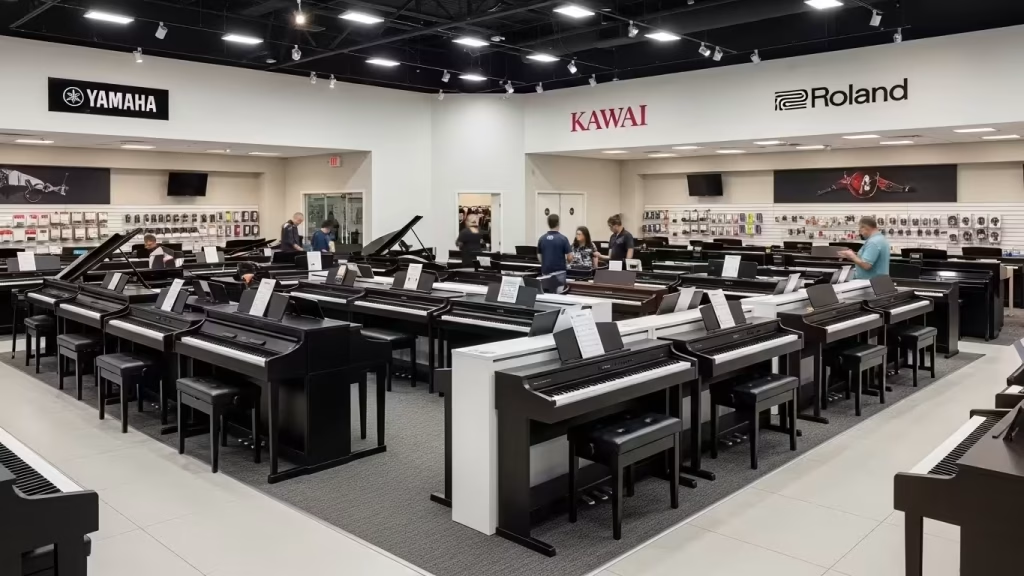
San Diego real estate comes at a premium. Space considerations matter significantly.
Apartments and condos favor portable or compact console models. The Yamaha P-125, Kawai ES520, and Roland FP-30X occupy minimal floor space. You can relocate them when needed or store them in closets during moves.
Smaller homes in neighborhoods like North Park or Normal Heights benefit from slim console designs. Models like the Yamaha YDP-145, Kawai KDP120, and Roland RP107 fit against walls without dominating living spaces.
Larger living rooms in suburban areas like Carmel Valley or Del Mar can accommodate premium cabinet-style digital pianos. Models like the Yamaha CLP-775, Kawai CA79, and Roland LX708 become beautiful focal points while delivering concert-quality performance.
Home studios require instruments with professional recording capabilities and MIDI connectivity. Roland excels in this category, though Yamaha and Kawai offer these features in higher-end models.
Bedrooms work exceptionally well as dedicated practice spaces. Headphone jacks enable playing anytime without disturbing family members or neighbors—critically important in the multi-family housing common throughout San Diego.
San Diego Climate Considerations
San Diego’s coastal climate affects musical instruments differently than you might expect.
Humidity near the coast remains relatively stable year-round. Digital pianos handle this far better than acoustic pianos, which require frequent tuning adjustments. Areas like La Jolla, Coronado, and Ocean Beach particularly benefit from digital piano stability.
Temperature fluctuations in inland valleys like Poway or Ramona rarely stress digital electronics. These instruments tolerate temperature variations that would damage delicate acoustic mechanisms.
Salt air in beach communities requires occasional preventive cleaning. Wiping down keys and surfaces monthly prevents buildup. All three brands handle San Diego’s coastal climate remarkably well.
Maintenance advantages become apparent quickly. Digital pianos require dramatically less maintenance than acoustics in our environment. You’ll never pay for tuning or deal with humidity-related mechanical issues.
Budget Planning for San Diego Buyers
Digital piano prices span an enormous range. Understanding the market tiers helps you set realistic expectations and avoid overspending or under-buying.
Entry-level ($500-$1,000) includes models like the Yamaha P-45, Kawai ES120, and Roland FP-10. These instruments provide 88 weighted keys and respectable sound quality—perfect for beginners uncertain about long-term commitment.
Mid-range ($1,000-$2,500) offers significantly enhanced key action and sound quality. The Yamaha P-515, Kawai CA49, and Roland FP-90X occupy this sweet spot. Most serious students and dedicated hobbyists find their ideal instrument in this range.
Professional-grade ($2,500-$5,000+) instruments feature wooden keys, advanced sound technology, and sophisticated cabinet designs. The Yamaha CLP-795GP, Kawai CA99, and Roland LX708 exemplify this tier. These investments pay dividends for serious pianists committed to long-term development.
Hidden costs add up quickly. Budget for:
- Quality adjustable bench ($100-$300)
- Professional headphones for extended practice ($100-$200)
- Triple pedal unit if not included ($150-$300)
- Stand for portable models ($100-$200)
- Protective dust cover ($30-$60)
Financing options exist at most San Diego music stores. Many dealers offer 12-24-month payment plans that make mid-range and premium instruments accessible to more buyers.
Yamaha Digital Pianos: Detailed Review and Comparison

Yamaha’s comprehensive digital piano lineup offers something for everyone, from casual beginners to demanding professionals.
Yamaha Entry-Level Models for Beginners
Yamaha P-45 ($500-$550) represents Yamaha’s most affordable 88-key option. It features Graded Hammer Standard (GHS) action, meaning keys feel progressively heavier in the lower register and lighter in the upper range—just like an acoustic piano. The sound utilizes Yamaha’s Advanced Wave Memory (AWM) technology, which captures actual recordings of world-class acoustic pianos.
Pros: Lightweight (25 lbs), straightforward operation, legendary Yamaha reliability
Cons: Basic feature set, limited 64-note polyphony, no Bluetooth connectivity
Who should buy it? Absolute beginners on tight budgets or those uncertain about sustaining piano study long-term.
Yamaha P-125 ($650-$700) improves on the P-45 substantially. You get enhanced speakers, 192-note polyphony, and Bluetooth audio connectivity. Sound quality jumps noticeably. The P-125 also includes access to Yamaha’s Smart Pianist iOS app, which significantly expands functionality.
Pros: Outstanding value, truly portable, Bluetooth audio streaming, quality speakers
Cons: Still uses entry-level GHS action, predominantly plastic construction
Who should buy it? Beginners who intend to stick with piano study and want room to grow without immediate upgrade pressure.
Yamaha YDP-145 Arius ($1,000-$1,100) suits buyers wanting traditional furniture styling. It includes an integrated stand, three-pedal system, and sliding key cover. The GHS action and AWM sound match the P-125, but the Arius projects better sound thanks to its larger resonating cabinet.
Pros: Attractive furniture styling, three-pedal system, superior sound projection
Cons: Not portable, requires dedicated floor space
Who should buy it? Families wanting a permanent piano location in their home with traditional aesthetics.
Yamaha Mid-Range Options
Yamaha P-515 ($1,500-$1,700) represents a portable piano engineered for performers. It features wooden keys for enhanced tactile response. High-quality grand piano samples combine with extensive additional instrument sounds and robust recording tools.
Pros: Excellent key feel, superior sound, maintains portability, comprehensive features
Cons: Premium price for a portable model, requires separate stand and pedals
Who should buy it? Gigging musicians and advanced students who need professional portability.
Yamaha YDP-165 Arius ($1,400-$1,500) offers console-style design for home use. It features improved key action compared to entry models, creating more realistic touch response. It shares the same premium piano samples as the P-515, making it an exceptional “sweet spot” for many families.
Pros: Strong value proposition, furniture aesthetics, quality sound, three-pedal system
Cons: While improved, key action still falls short of premium-tier models
Who should buy it? Serious students and families seeking quality without premium pricing.
Yamaha CLP-735 Clavinova ($2,500-$2,700) marks entry into Yamaha’s prestigious Clavinova line. It features more sophisticated keyboard action with wooden keys. Sound modeling technology creates more realistic resonance and sustain. The speaker system delivers substantially more powerful projection.
Pros: Wooden-key construction, VRM modeling technology, beautiful furniture cabinet, half-pedaling support
Cons: Heavy and expensive, requires professional delivery
Who should buy it? Advanced students and adults seriously committed to quality performance.
Yamaha Premium Models
Yamaha CLP-775 and CLP-795GP ($4,500-$8,000+) represent Yamaha’s flagship Clavinova models. They feature full wooden-key construction with the most realistic touch response available. The CLP-795GP’s grand piano styling makes a stunning visual statement. Sound quality reaches extraordinary levels, particularly through headphones. Speaker systems deliver room-filling projection.
Pros: Yamaha’s finest key action, exceptional sound quality, stunning furniture design, cutting-edge technology
Cons: Very expensive, extremely heavy, requires professional delivery and setup
Who should buy it? Professionals, serious pianists seeking the absolute best, and those unable to accommodate an acoustic grand piano.
Where to Buy Yamaha in San Diego
Authorized Yamaha dealers throughout San Diego include several well-established music retailers. Bertrand’s Music in downtown San Diego and other local dealers stock various Yamaha models with expert staff providing knowledgeable guidance and professional setup services.
Online purchases save money but sacrifice the crucial in-person demonstration experience. Yamaha honors warranties regardless of purchase location. National retailers like Sweetwater and Amazon sell Yamaha digitals at highly competitive prices with convenient home delivery.
Warranty coverage on Yamaha pianos typically runs three years for parts and one year for labor. Register your piano online immediately after purchase. San Diego has authorized service centers available should you need repairs.
Kawai Digital Pianos: Detailed Review and Comparison
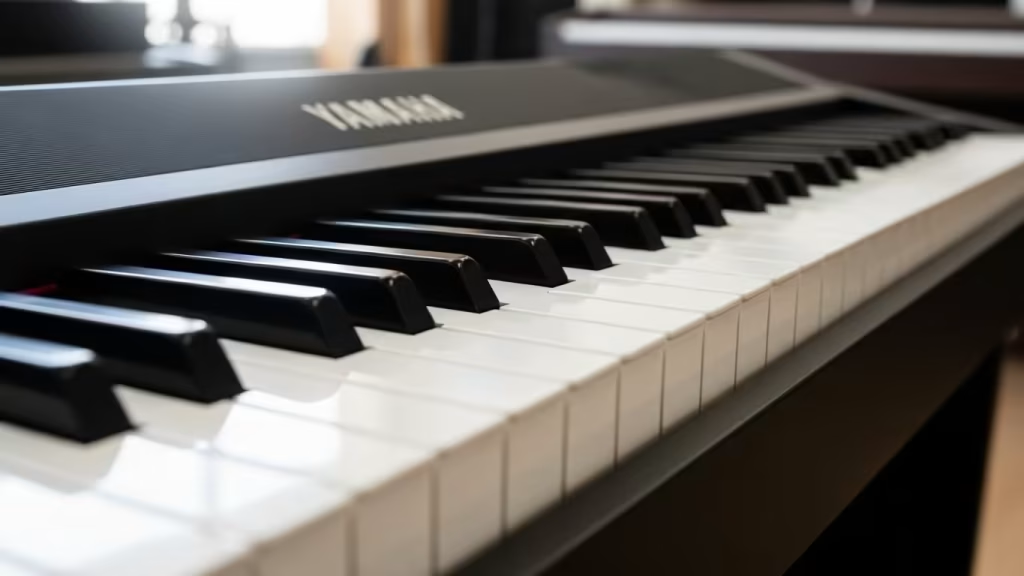
Kawai’s laser focus on authentic piano touch sets them apart. Their digital pianos consistently feel more like genuine acoustic instruments than most competitors.
Kawai Entry-Level Digital Pianos
Kawai ES120 ($700-$800) serves as Kawai’s basic portable model. Its key action often feels noticeably superior to similarly priced competitors. Sound derives from detailed samples of Kawai’s renowned acoustic pianos.
Pros: Exceptional key feel for the price point, portable design, solid construction
Cons: Limited feature set, requires separate stand and pedals
Who should buy it? Beginners who prioritize authentic touch quality over digital features.
Kawai KDP120 ($1,100-$1,200) packages the ES120’s action in an attractive furniture cabinet. Three pedals come integrated, and speakers project more effectively thanks to the larger resonating enclosure. The KDP120 represents solid value for families.
Pros: Console styling, three-pedal system, quality sound, proven reliability
Cons: RHC action doesn’t represent Kawai’s best technology
Who should buy it? Families wanting affordable console styling with reliable quality.
Kawai Mid-Range Excellence
Kawai ES520 ($1,300-$1,400) advances to Responsive Hammer III (RHIII) action, incorporating better sensors and refined graded hammer weights. Sound quality impresses with Kawai’s Progressive Harmonic Imaging technology. Bluetooth MIDI and audio connectivity add modern convenience. The ES520 also includes useful lesson functions and recording capabilities.
Pros: Excellent key responsiveness, superior sound, Bluetooth connectivity, helpful lesson features, maintains portability
Cons: Benefits significantly from a quality furniture stand
Who should buy it? Intermediate to advanced students wanting portability without sacrificing quality.
Kawai KDP75 ($1,200-$1,300) offers console-style design for home environments. It improves on the KDP120 with better key feel and more attractive cabinetry. Sound quality impresses for the price point. This model competes directly with the Yamaha YDP-165.
Pros: Strong value, decent key response, attractive furniture styling
Cons: Action still doesn’t quite reach true mid-range quality
Who should buy it? Buyers wanting console aesthetics without premium pricing.
Kawai CA49 ($2,500-$2,700) begins Kawai’s premium CA series. It features wooden keys, dramatically improving tactile realism. Sound and speaker systems advance significantly. Three pedals with progressive half-pedaling come standard.
Pros: Wooden-key construction, excellent touch response, premium sound, powerful speakers
Cons: Substantial price increase from mid-range models
Who should buy it? Serious pianists ready to invest in genuine quality.
Kawai Premium CA Series
Kawai CA59, CA79, CA99 ($3,500-$7,000+) represent Kawai’s pinnacle achievements. The CA79 and CA99 utilize full Grand Feel III action with wooden keys, triple sensors, and counterweights. Sound quality reaches professional levels with 88-key sampling technology. The CA99 features a sophisticated 6-speaker Onkyo audio system with separate tweeters, mid-range drivers, and woofers.
The key feel on these models approaches genuine grand piano authenticity remarkably closely. Many professional pianists and conservatory instructors recommend the CA79 and CA99 for their most serious students.
Pros: Industry-leading key action, exceptional sound quality, beautiful cabinet designs, full half-pedaling support
Cons: Very expensive, extremely heavy, potentially excessive for casual players
Who should buy it? Advanced players, piano teachers, professionals, and dedicated hobbyists seeking the ultimate digital piano experience.
Finding Kawai Pianos in San Diego
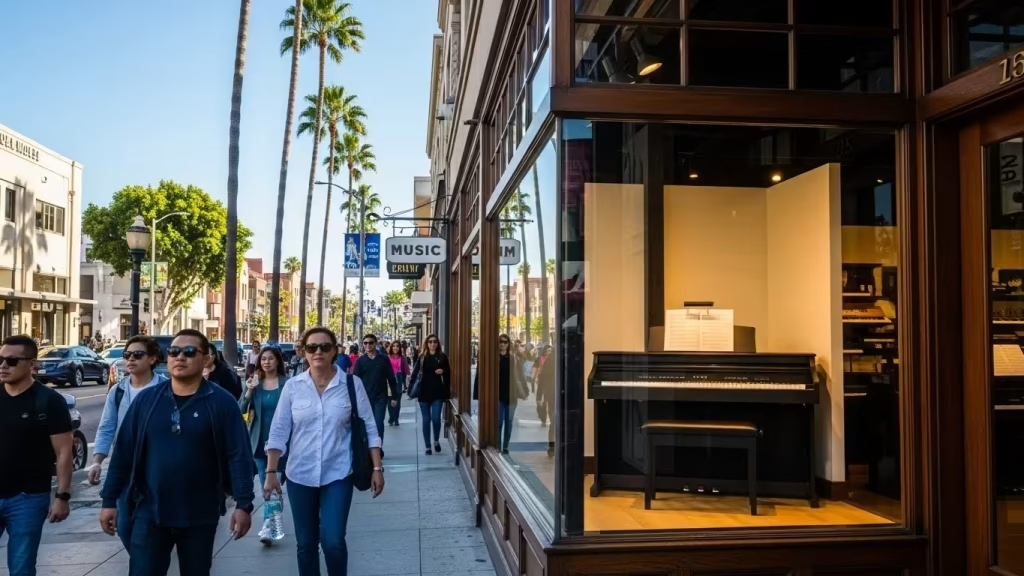
Kawai dealers in San Diego include specialized piano retailers focused on quality instruments. While Kawai’s dealer network proves smaller than Yamaha’s, it remains readily accessible. Call ahead to confirm which models are available for demonstration.
Teacher recommendations frequently favor Kawai for serious students. San Diego piano teachers with classical training backgrounds often suggest Kawai specifically for its superior touch quality. This matters tremendously for proper technique development.
Online availability for Kawai matches Yamaha’s reach. Major music retailers stock popular models with nationwide shipping. Kawai also sells directly through their website with dealer support services.
Roland Digital Pianos: Detailed Review and Comparison
Roland brings decades of electronic music expertise to digital pianos. Their instruments excel at connectivity, modern features, and technological innovation.
Roland Entry-Level Options
Roland FP-10 ($500-$600) delivers 88 keys in an ultra-compact package weighing just 26 pounds. It uses PHA-4 Standard action, Roland’s entry mechanism with escapement simulation. SuperNATURAL Piano sound technology models rather than simply samples piano tones. Bluetooth MIDI connects seamlessly to learning apps.
Pros: Extremely compact, Bluetooth MIDI, decent action for the price
Cons: Small speakers, basic feature set
Who should buy it? Space-limited buyers or those wanting Roland quality on a tight budget.
Roland FP-30X ($700-$800) ranks as one of the most popular portable digital pianos available. It upgrades from the FP-10 with better speakers and expanded sound options. Bluetooth for both audio and MIDI plus built-in recording capabilities make it exceptionally versatile. Key feel satisfies many intermediate players. The FP-30X thrives in San Diego apartments and smaller homes.
Pros: Outstanding value, compact and portable, quality speakers, Bluetooth audio and MIDI
Cons: Plastic key construction, entry-level action technology
Who should buy it? Anyone wanting modern features and solid quality without exceeding $1,000.
Roland RP107 ($1,200-$1,300) packages the FP-30X in a remarkably slim console cabinet. The RP107 measures only 11 inches deep, making it ideal for space-constrained environments. Three pedals and integrated speakers complete the package.
Pros: Extremely slim profile, three-pedal system, modern features, attractive design
Cons: Small cabinet limits speaker size and projection
Who should buy it? San Diego condo and apartment dwellers wanting console styling without bulk.
Roland Mid-Range Innovation
Roland FP-60X and FP-90X ($1,500-$2,500) represent professional portable pianos with upgraded PHA-4 Standard (FP-60X) and PHA-50 (FP-90X) actions. The FP-90X features hybrid wood and plastic key construction. Both include extensive sound libraries, professional recording features, and impressive speaker systems. The FP-90X particularly shines for stage performers and home studio users.
Pros: Professional-level features, powerful speakers, highly portable, excellent connectivity
Cons: Require quality stands and pedals, increasing total investment
Who should buy it? Gigging musicians, home studio owners, and advanced players needing portability.
Roland HP704 ($2,500-$2,700) offers console-style home piano design with attractive furniture cabinetry. It features more premium key action and a robust sound system. Bluetooth audio and MIDI, USB recording, and app support provide comprehensive modern connectivity.
Pros: Enhanced action, feature-rich, modern connectivity, attractive cabinet
Cons: Expensive for what some consider mid-range key action
Who should buy it? Tech-focused players wanting console pianos with cutting-edge features.
Roland Premium LX Series
Roland LX705 and LX708 ($4,000-$6,000+) represent Roland’s flagship home pianos. They utilize hybrid wood and plastic keys for improved tactile realism. Roland generates piano sound in real-time rather than relying solely on samples—a unique approach called modeling. Advanced speaker systems create expansive, three-dimensional sound. The LX708 features an even more powerful speaker configuration and larger cabinet. Both models include Roland’s complete connectivity feature set.
Pros: Advanced sound modeling, realistic key construction, powerful speakers, comprehensive features
Cons: Very expensive, modeled sound feels different from acoustic pianos to some players
Who should buy it? Tech-enthusiastic players, home studio owners, and musicians wanting alternatives to traditional sampled piano sounds.
Roland’s Unique Digital Advantages
Bluetooth connectivity on most Roland models enables streaming music through the piano’s speakers. Bluetooth MIDI connects to learning apps and recording software wirelessly, eliminating cable clutter.
Piano Every Day app provides guided practice routines, rhythm exercises, and progress tracking. It makes practice more engaging, especially for younger students who respond well to gamification.
Extensive sound library extends far beyond piano voices. Most Roland models include electric pianos, organs, strings, and synthesizers. Musicians playing diverse styles appreciate this versatility tremendously.
USB recording captures performances as audio files or MIDI data directly to USB flash drives. No computers or special software required—simply plug in and record.
Roland Retailers in San Diego
Roland dealers throughout San Diego stock FP and HP series models widely. Guitar Center locations carry popular Roland digitals at competitive prices. Specialized music stores also maintain Roland inventory with knowledgeable staff.
Online purchases work excellently for Roland products. Their website lists authorized dealers nationwide. Amazon and Sweetwater sell Roland pianos with full manufacturer warranties and convenient shipping.
Service and support for Roland products in San Diego operates through authorized service centers. Roland’s customer service also assists with technical questions via phone and email.
Head-to-Head Comparison: Yamaha vs. Kawai vs. Roland
Now let’s directly compare these brands across the factors that matter most to buyers.
Sound Quality Showdown
Yamaha samples their CFX concert grand and Bösendorfer Imperial pianos meticulously. The recordings capture every subtle nuance. When you play a Yamaha digital piano, you hear actual recordings of world-class acoustic instruments. The sound feels warm and immediately familiar. Most players describe Yamaha’s tone as “traditional” and “safe”—you simply cannot go wrong with it.
Kawai uses Progressive Harmonic Imaging to sample their exceptional acoustic grands. Kawai pays particular attention to capturing the full dynamic range from delicate pianissimo to powerful fortissimo. Their pianos sound clear and articulate across the entire keyboard. Many players describe Kawai’s tone as “bright” and “crystalline.” Classical music sounds particularly stunning on Kawai instruments.
Roland uses modeling technology instead of recorded samples, generating piano sound mathematically in real-time. SuperNATURAL and Pure Acoustic Modeling simulate how real pianos physically create sound. This allows Roland to recreate intricate details like string resonance and pedal effects dynamically as you play. The sound differs noticeably from sampled pianos. Some players love the clean, controlled character, while others prefer the organic warmth of samples.
Which sounds best? Personal preference determines the winner conclusively. Visit San Diego dealers to compare directly. Most people find all three brands sound excellent within their respective price ranges.
Key Action and Touch Comparison
Yamaha’s actions range from GHS (entry) to GH3 (mid-range) to GrandTouch (premium). Premium actions incorporate wooden keys and longer pivot lengths mimicking grand pianos. Yamaha actions feel solid and predictable, working beautifully for all musical styles.
Kawai’s wooden-key advantage distinguishes them meaningfully. Even the mid-tier CA49 includes wooden keys. The Grand Feel III action in the CA79 and CA99 rivals quality acoustic grands in touch realism. Kawai actions feel slightly lighter than Yamaha’s. Classical pianists often prefer Kawai for the nuanced control wooden keys provide.
Roland’s hybrid actions combine wood and plastic strategically. The PHA-50 in premium models uses hybrid construction intelligently. Roland actions feel excellent but noticeably different from traditional pianos. Some players find them slightly springier. The escapement mechanism adds realistic resistance at the bottom of key travel.
Winner? Kawai edges ahead in the premium segment with superior wooden-key technology. Yamaha and Roland tie in entry and mid-range categories. Personal feel matters most—test extensively before deciding.
Features and Technology Face-Off
Yamaha includes Virtual Resonance Modeling (VRM) in Clavinova models, simulating complex string resonance and damper effects. Smart Pianist app adds helpful functionality. Yamaha focuses primarily on piano-centric features rather than technological bells and whistles.
Kawai offers similar features to Yamaha in their CA series. Bluetooth MIDI connects to educational apps seamlessly. Recording functions help students track progress objectively. Kawai also focuses primarily on authentic piano experience rather than extensive extra features.
Roland wins the technology battle decisively. Bluetooth audio and MIDI come standard on most models. USB recording, extensive sound libraries, and the Piano Every Day app give Roland clear advantages. Home studio users particularly appreciate Roland’s comprehensive connectivity.
Winner? Roland for features and connectivity. Yamaha and Kawai for purists wanting authentic piano focus without distraction.
Music Lessons in San Diego with K&M Music School
1 Expert Music Lessons
We offer Piano, Violin, Cello, Guitar, Ukulele, Saxophone, Bassoon, Harp, Voice, and Toddler group lessons for students of all ages and skill levels.
2 Why Choose Us?
- 🎶 Boosts focus and self-discipline
- 🎵 Strengthens cognitive skills
- 🎼 Enhances cultural understanding
- 🎤 Builds confidence through recitals
3 We Welcome Adults Too!
Build Quality and Longevity
All three brands build exceptionally reliable instruments. Digital pianos typically last 10-20 years with proper care and reasonable use.
Yamaha enjoys an outstanding reputation for reliability. Their digital pianos withstand heavy use in schools and professional music studios. You can confidently expect a Yamaha to perform flawlessly for many years.
Kawai builds equally reliable instruments. The wooden keys in CA series models might seem fragile, but Kawai engineers them for longevity. Proper humidity control helps, though San Diego’s stable climate makes this straightforward.
Roland digital pianos also last excellently well. Their electronic expertise shows in reliable circuitry and robust construction. The plastic key construction on most models proves durable if less premium-feeling than wood.
Winner? Tie. All three brands deliver excellent longevity and reliability.
Value for Money Analysis
Best budget option: Yamaha P-45 ($500) or Roland FP-10 ($500-$600). Both deliver 88 weighted keys and respectable sound for minimal investment.
Best mid-range value: Yamaha YDP-165 ($1,400-$1,500) or Kawai ES520 ($1,300-$1,400). These instruments offer impressive quality for their price points. Most players find them satisfying for many years.
Premium models worth the investment: Kawai CA79 ($5,000-$6,000) delivers genuinely professional-level action and sound. Serious pianists find this worthwhile compared to acoustic grands costing three times more.
Resale value in San Diego remains strong for all three brands. Well-maintained instruments from these manufacturers sell quickly in the used market. Yamaha enjoys a slight edge due to broader brand recognition.
Special Considerations for San Diego Piano Buyers
Living in San Diego brings unique factors worth considering carefully.
San Diego’s Music Education Landscape
San Diego County boasts hundreds of qualified private piano teachers. Many hold strong preferences based on their training and teaching philosophy.
Teachers with classical backgrounds often recommend Kawai specifically for its superior touch quality. The wooden keys help students develop proper technique from the beginning. If your child studies classical piano seriously, ask their teacher for brand recommendations.
Teachers with diverse backgrounds frequently suggest Yamaha for its versatility and proven reliability. Yamaha works beautifully for students exploring different musical styles.
Modern teachers who incorporate technology extensively may prefer Roland. The connectivity features and educational apps support contemporary teaching methods effectively.
Music schools and conservatories in San Diego use all three brands. San Diego School of Creative and Performing Arts and other programs equip practice rooms with quality digital pianos from various manufacturers.
Community music programs like San Diego Youth Symphony and local community centers don’t care which brand you own. They care that your piano features full 88 keys with proper weighted action.
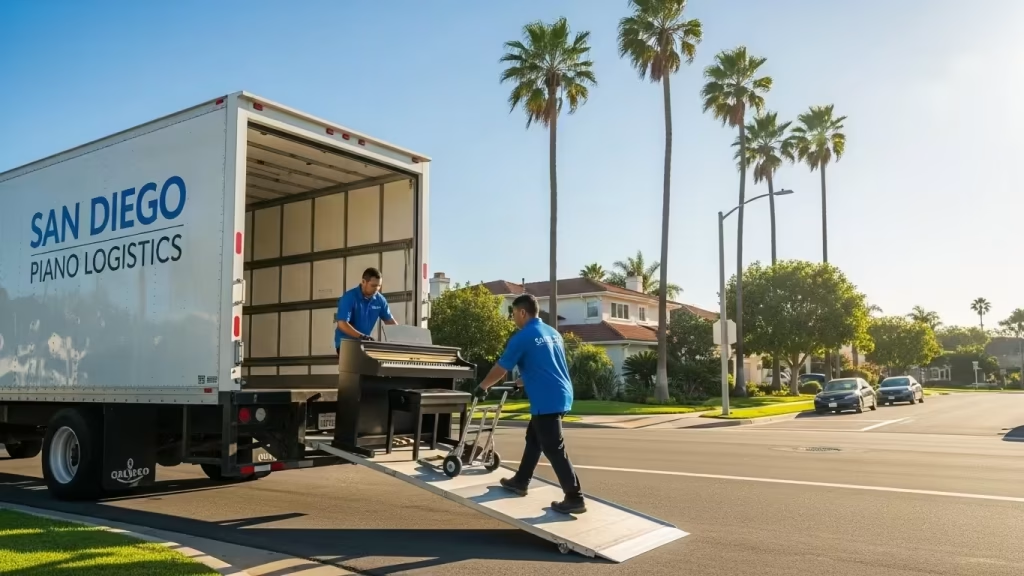
Space and Portability in San Diego Homes
San Diego housing characteristics significantly affect which piano makes practical sense.
Downtown and beach apartments often feature limited square footage. Portable models like the Yamaha P-125, Kawai ES520, and Roland FP-30X fit more easily and can be relocated or stored in closets when needed.
Suburban single-family homes in areas like Scripps Ranch, Mira Mesa, or Rancho Peñasquitos typically offer more space. Console or cabinet-style pianos work beautifully, looking like quality furniture rather than temporary equipment.
Multi-story homes common in Carlsbad and Encinitas make moving pianos between floors challenging. Lighter portable models prove advantageous if you anticipate relocating the instrument periodically.
Moving considerations matter in San Diego’s active rental market. If you move frequently, portable models make life substantially easier. Cabinet-style pianos require professional movers, costing $200-400 per local move.
Noise Considerations in San Diego Living
San Diego’s many attached housing situations make noise management important.
Apartment complexes typically enforce quiet hours (usually 10 PM to 8 AM). Digital pianos with headphone jacks enable practice anytime without disturbing neighbors. This proves crucial for working professionals who practice late evenings.
Condo buildings have similar restrictions. Even during permitted hours, loud piano practice can annoy neighbors sharing walls. Digital pianos allow precise volume control.
Headphone quality matters for extended practice sessions. Invest $100-200 in comfortable over-ear headphones. Your ears will thank you after hour-long practice sessions.
Volume control features on all three brands let you reduce sound without sacrificing tonal quality. This helps maintain good relationships in multi-family housing situations.
Being a considerate neighbor matters in San Diego’s increasingly dense housing environment. Digital pianos make this effortless while allowing unlimited practice time.
San Diego’s Active Music Community
San Diego boasts a vibrant music scene with numerous opportunities to connect and perform.
Performance opportunities exist at community centers, churches, and local festivals year-round. Having a quality digital piano at home helps you prepare confidently for these events.
Piano clubs and meetup groups connect players of all levels. Facebook groups like “San Diego Piano Players” and various Meetup events bring together enthusiasts regularly.
San Diego music forums provide advice and local connections. Facebook Marketplace groups help you find used instruments and gather recommendations from experienced local players.
Music stores throughout San Diego host events and workshops regularly. Building relationships with local dealers provides resources extending far beyond initial purchases.
Making Your Final Decision: Yamaha, Kawai, or Roland?
After reviewing all these options thoroughly, how do you actually choose?
Decision Framework for Different Buyer Types
Classical pianists and serious students should prioritize key action quality above all else. Kawai’s wooden keys in the CA series provide the most authentic tactile experience. The touch sensitivity helps develop proper technique essential for advanced repertoire. Budget for at least the CA49 if you’re serious about classical piano development. Your teachers will appreciate and notice your instrument choice.
Pop, jazz, and contemporary players benefit from Roland’s versatility significantly. The extensive sound library, recording features, and connectivity support various musical styles. The FP-90X or HP704 provide professional features without limiting you to piano sounds exclusively.
All-around traditional choice belongs to Yamaha. If you want a reliable instrument working beautifully for any style, sounding excellent, feeling decent, and holding value, choose Yamaha. The YDP-165 or CLP-735 satisfies most players for many years.
Budget-conscious buyers find genuine value across all three brands. The Yamaha P-125 ($650-700) offers the best entry-level experience, providing sufficient quality to avoid frustrating early progress while keeping costs manageable.
Technology enthusiasts should start with Roland. Bluetooth connectivity, comprehensive apps, USB recording, and extensive features integrate beautifully with smartphones and computers, opening creative possibilities beyond traditional practice.
Test Before You Buy
Specifications and descriptions only communicate so much. Playing instruments in person reveals preferences you didn’t know you had.
Visit San Diego dealers prepared with specific questions. Bring sheet music you know well. Play the same passage on Yamaha, Kawai, and Roland models within your budget range.
What to listen for: Does the tone sound harsh or warm? Do speakers project evenly at different volumes? Can you hear subtle details in quiet passages? Does the sound satisfy you emotionally?
Key action tests to perform: Play scales slowly, feeling the resistance and release of each key carefully. Try dynamic contrasts from delicate soft playing to powerful fortissimo. Test black keys as thoroughly as white keys. Try rapid repeated notes. Press keys slowly to evaluate initial resistance.
Questions to ask San Diego dealers:
- What’s the complete warranty coverage?
- Do you offer in-home delivery and professional setup?
- What’s your return policy if I’m not satisfied?
- Do you have floor models or open-box deals available?
- Which models do local piano teachers recommend most frequently?
- Do you offer trade-ins if I upgrade later?
Bringing a teacher or experienced player helps tremendously if you’re a beginner. They can evaluate factors you might miss entirely. Many San Diego piano teachers will visit stores with students for a small fee or as a professional courtesy.
Essential Questions Before Purchase
Ensure you understand the complete transaction before committing.
Warranty details: Yamaha typically offers three years on parts. Kawai provides three years parts and labor on premium models. Roland warranties vary by model but usually cover three years. Extended warranties cost extra but may provide peace of mind.
Return policies: Local dealers often allow 30-day returns or exchanges. Online retailers vary widely. Amazon has generous return policies. Private party sales usually don’t allow returns at all.
Professional delivery and setup in San Diego typically costs $100-300. This includes bringing the piano inside, assembly if needed, and placement exactly where you want it. Strongly recommended for heavy cabinet-style models.
Technical support: All three brands provide phone and email customer support. San Diego has authorized service centers for repairs if needed. Most issues within the first few years are covered under warranty.
Trade-in options: Some San Diego dealers accept trade-ins toward upgrades. This provides value if you outgrow your first instrument. Digital pianos hold value significantly better than entry-level acoustic pianos.
Where to Buy Digital Pianos in San Diego
San Diego offers multiple excellent purchase options to suit different priorities.
Top San Diego Music Dealers
Full-line music stores carrying all three brands enable convenient one-stop comparison shopping. These stores employ knowledgeable staff who can demonstrate features and answer detailed questions. They also service what they sell.
Specialty piano stores throughout San Diego County focus exclusively on pianos and keyboards. Their staff typically possesses deeper expertise and may offer better selection in premium models.
Guitar Center locations in San Diego stock popular models from all three brands. Their keyboard staff knows instruments well, though piano-specific expertise varies by location. Good source for mainstream models at competitive prices.
Costco occasionally stocks digital pianos from these brands at outstanding prices. Selection proves limited, but deals can be exceptional. Costco’s generous return policy provides security if the instrument doesn’t work out.
Online vs. Local Purchase
Buying from San Diego dealers provides several advantages:
- Crucial in-person testing before purchase
- Local warranty service and support
- Delivery and professional setup assistance
- Building relationships for future questions
- Supporting local businesses
Online retailers offer distinct benefits:
- Often significantly lower prices
- Broader selection
- Customer reviews from verified buyers
- Convenient home delivery
- Easy price comparison across retailers
Shipping considerations: Digital pianos ship via freight delivery. Someone must be home to accept delivery. “White glove” delivery services bring the piano inside and set it up (costs extra but proves worthwhile).
Local delivery services in San Diego handle piano moves professionally. This matters tremendously for cabinet-style instruments weighing 100+ pounds.
Used and Refurbished Options
San Diego’s active used market offers money-saving opportunities.
Craigslist and Facebook Marketplace list used digital pianos regularly. Prices typically run 40-60% of new retail for instruments a few years old. Inspect carefully before buying. Test all keys, pedals, and features thoroughly. Ask about purchase date and warranty status.
Certified refurbished from authorized dealers provides warranty protection. These instruments were returned, repaired if necessary, and thoroughly inspected. You save money with substantially less risk than private party purchases.
What to inspect on used digital pianos:
- Test every single key for proper sound and response
- Verify all pedals work correctly
- Check all connections (headphones, USB, MIDI, pedals)
- Listen for speaker distortion at various volumes
- Ensure cabinet and keys show no structural damage
- Confirm all buttons and controls function properly
- Ask for proof of purchase for potential warranty claims
Fair pricing for used models in San Diego: Check completed listings on eBay and Reverb for actual market values. Offer 50-60% of current new retail for instruments 2-3 years old in excellent condition.
Timing Your Purchase
Best months for piano sales include November (Black Friday deals), December (holiday sales), January (clearance), and August-September (back-to-school promotions). San Diego dealers typically follow these national patterns.
Black Friday deals can save $200-500 on mid-range and premium models. Many stores offer attractive package deals including benches, headphones, and stands.
End-of-model-year clearances happen when manufacturers release updated versions. Previous year models go on sale, often with significant discounts. Functionality rarely changes enough to matter for most buyers.
Back-to-school promotions in August and September target parents of students starting lessons. Expect bundle deals and attractive financing offers.
Accessories You’ll Need for Your Digital Piano
Your digital piano purchase requires several additions to complete your setup properly.
Essential Accessories
Quality headphones matter tremendously for extended practice. Over-ear closed-back models work best, blocking external noise without sound leakage. Spend $100-150 on models like Audio-Technica ATH-M50x or Sony MDR-7506. Avoid cheap headphones that cause ear fatigue.
Proper piano bench affects playing comfort significantly. Adjustable benches ($150-300) let you find correct height precisely. Keys should align at elbow height when sitting. Fixed-height benches ($100-150) work if you’re the sole player or everyone’s similar height.
Sustain pedal comes included with most digital pianos, but it’s often quite basic. Upgrade to a weighted pedal ($50-100) for dramatically better feel and control. The Yamaha FC3A and Roland DP-10 work across brands with universal polarity switches.
Triple pedal units ($150-300) add essential soft and sostenuto pedals. Necessary for advanced classical repertoire. Some console models include these built-in.
Dust covers ($30-60) protect your investment from San Diego’s coastal dust accumulation. Especially important if you live near the ocean. Covers prevent keys from accumulating grime between cleanings.
Music stand comes built-in on most models. If you buy a portable piano, ensure your stand or case includes a music rest. Foldable metal music stands ($20-40) work for extensive sheet music collections.
Optional but Useful Add-Ons
Furniture stand for portable pianos ($100-200) provides superior stability and more furniture-like appearance than X-stands. The Yamaha L-125 matches their portable pianos aesthetically.
X-stand ($50-100) works adequately for practice but feels less stable. Double-braced X-stands support heavier portable pianos better.
External speakers prove unnecessary for most situations. Digital piano speakers satisfy most home use. Only consider external speakers ($200+) if you plan to perform for audiences.
Recording equipment like USB audio interfaces ($100-300) helps capture higher-quality recordings than internal piano recording. Most players don’t need this initially.
Piano lamps ($40-100) help you read music in dim lighting conditions. LED models generate no heat and last indefinitely.
Carrying cases for portable models ($50-150) protect your investment during moves. Padded gig bags work for occasional transport. Hard cases provide maximum protection for frequent movers.
Caring for Your Digital Piano in San Diego
Digital pianos require less maintenance than acoustics, but some care keeps them performing optimally.
Basic Maintenance Tips
Cleaning keys should happen monthly. Use a slightly damp microfiber cloth. Never spray liquid directly onto keys. Wipe each key individually, then dry with a clean cloth. This removes oils from fingers and accumulated dust.
Protecting from San Diego sun matters if your piano sits near windows. Direct sunlight fades plastic over time and can potentially damage electronics. Use curtains or position the piano away from direct sun exposure.
Coastal salt air in beach communities requires extra attention. Wipe down the entire piano monthly with a slightly damp cloth. Salt buildup can affect connections and controls over time.
Software updates improve functionality periodically. Check manufacturer websites annually for firmware updates. Updates fix bugs and sometimes add features. Follow instructions carefully during update procedures.
Dusting the cabinet weekly prevents buildup. Use a dry microfiber cloth on wood cabinets. Avoid furniture polish on plastic components.
Power surge protection makes sense in San Diego, though power remains generally stable. A simple surge protector ($20-50) guards against rare voltage spikes that could damage sensitive electronics.
When to Seek Professional Service
Most issues with digital pianos prove simple to resolve.
Common problems you can troubleshoot:
- Keys not sounding: Check volume and headphone jack (anything plugged in mutes speakers)
- No power: Verify outlet works and power adapter connects fully
- Pedal not working: Check pedal connection and polarity switch if applicable
- Distorted sound: Lower volume, check speaker connections
When to call professionals:
- Keys remain dead after checking obvious issues
- Strange noises from speakers at all volume levels
- Physical damage to keys or cabinet structure
- Electrical smell or visible damage to components
San Diego repair technicians advertise in local music stores and online directories. Rates typically run $75-150 per hour plus parts. Warranty repairs through authorized service centers remain free during coverage period.
Extended warranties ($150-400) cover repairs after manufacturer warranty expires. Evaluate based on piano cost. Probably worthwhile on instruments over $2,500. Less important on entry-level models where repair costs might approach replacement costs.
Frequently Asked Questions
General Digital Piano Questions
How long do digital pianos last? Quality digital pianos from Yamaha, Kawai, and Roland typically last 15-20 years with proper care. Electronics may eventually fail, but under normal use, these instruments provide many years of reliable service. Keys and pedals often last even longer.
Can you learn properly on a digital piano vs. acoustic? Absolutely. Digital pianos with proper weighted 88-key action teach correct technique effectively. The slight differences in feel matter more to advanced players than beginners. Many professional pianists practice extensively on digitals. The key is choosing a quality instrument with realistic action.
Do digital pianos need tuning? No. Digital pianos stay perfectly in tune perpetually, saving approximately $100-200 annually compared to acoustic piano tuning. You can adjust overall pitch slightly to match other instruments if needed, but internal tuning never drifts.
What’s the difference between 61, 76, and 88 keys? Standard acoustic pianos feature 88 keys. To learn piano properly, you need all 88. Shorter keyboards (61 or 76 keys) work for synthesizers and portable keyboards but limit your ability to play most standard piano repertoire. Always choose 88 keys for serious piano study.
Brand Comparison Questions
Is Yamaha better than Kawai? Neither is objectively superior. Yamaha offers wider selection and more extensive dealer networks. Kawai provides superior touch in premium models with wooden-key technology. For entry and mid-range models, quality proves comparable. Personal preference determines the winner for your specific needs.
Which brand do professional pianists prefer? Professionals use all three brands depending on individual needs. Classical pianists often favor Kawai for its authentic touch. Jazz and contemporary players frequently choose Roland for features and versatility. Yamaha’s reliability appeals to gigging musicians who need dependability. The choice depends entirely on individual priorities.
Are Roland pianos good for classical music? Yes, though they feel less traditional. Roland’s modeling technology sounds noticeably different from sampled pianos. Some classical players prefer this clarity and precision. Others want the organic warmth of Yamaha or Kawai samples. The key action on premium Roland models works perfectly fine for classical technique development.
Which brand has the best warranty? All three offer similar coverage: typically three years on parts. Kawai provides three years parts and labor on some premium models. Roland and Yamaha warranties prove solid, but read specific terms for your model carefully.
San Diego-Specific Questions
Where can I try all three brands in San Diego? Full-line music stores throughout San Diego County stock multiple models from each brand. Call ahead to confirm specific models are available on the floor for demonstration. Some stores require appointments for extensive testing time.
Do San Diego piano teachers have brand preferences? Many do, based on their training background and teaching philosophy. Classical teachers often recommend Kawai specifically. Teachers who incorporate technology prefer Roland. Yamaha appeals to teachers wanting reliable, versatile instruments. Ask your specific teacher for their professional recommendation.
What’s typical delivery time in San Diego? In-stock models deliver within a few days to one week. Special orders take 2-8 weeks depending on model and current availability. Online purchases usually ship within 5-10 business days. White-glove delivery service adds a few days to the timeline.
Are there piano rental options in San Diego? Some San Diego music stores offer rent-to-own programs. Monthly rental fees ($50-150) apply toward purchase if you decide to buy. This lets you try an instrument at home before committing fully. Good option for beginners uncertain about long-term commitment.
Conclusion
Choosing between Yamaha, Kawai, and Roland depends entirely on your specific needs and personal preferences. All three brands manufacture excellent digital pianos across multiple price ranges.
This comprehensive guide explains the fundamental differences. Yamaha stands for reliable sound quality and widespread San Diego availability. Kawai excels at realistic key feel, especially in wooden-key models. Roland leads in modern features and digital connectivity.
Your budget, skill level, available space, and musical goals should guide your final choice. Try pianos at San Diego stores before buying whenever possible. The key feel and sound you personally experience matters far more than specifications on paper.
San Diego offers excellent conditions for digital piano ownership with stable climate and an active music community. Whether you choose a Yamaha P-125, a Kawai CA79, or a Roland FP-90X, you’re selecting an instrument capable of serving you well for many years.
Start your piano journey today by visiting a local San Diego showroom. Test instruments from all three brands personally. Trust your ears and fingers. The perfect digital piano is waiting for you to discover it.
Ready to find your perfect digital piano? Visit a San Diego dealer this week and experience the difference for yourself. Your musical future starts now. Sign up for a free trial lesson.