

Cello lessons for kids become magical when teachers and parents use games to build essential skills. These fun cello activities help children learn proper posture and rhythm naturally while they enjoy making music. Teaching kids to play cello through playful exercises creates a strong foundation that shapes their musical journey for years to come.
Children who learn the cello need engaging activities that hold their attention while teaching proper technique. When kids join cello lessons, they absorb knowledge better through play than through strict instruction. This article shares creative games that make cello lessons for kids both educational and enjoyable, with special focus on developing correct posture and solid rhythm skills.
| Age Group | Posture Games | Rhythm Games |
|---|---|---|
| 4–6 years | Animal Poses, Statue Game | Clap Along, Echo Patterns |
| 7–9 years | Balloon Balance, String Painter | Beat Buddy, Rhythm Cards |
| 10–12 years | Mirror Game, Posture Points | Metronome Challenge, Music Math |
Why Proper Posture and Rhythm Matter in Cello Lessons for Kids
Good posture forms the foundation of successful cello playing for children. When kids develop proper sitting, holding, and playing positions early, they avoid physical strain and produce better sound. The cello requires specific body alignment that feels unnatural at first. Teaching these positions through games makes them stick better than direct instruction alone.
Rhythm skills act as the heartbeat of musical development. Children who master basic timing early in their cello lessons find it easier to learn complex music later. Many kids struggle with consistent rhythm, which creates frustration during practice. Game-based rhythm activities in cello lessons for kids build this skill without the pressure of formal training.
Together, posture and rhythm create the two pillars that support all other cello skills. Children who learn these fundamentals through fun games develop confidence. They also progress faster in their overall musical journey. These building blocks make other aspects of cello playing feel more natural and accessible.

Getting Started: The Right Cello Size and Setup for Children
Finding the right cello size stands as the first step toward successful lessons for kids. Too large an instrument creates immediate posture problems that games alone cannot fix. Children typically need these sizes:
- Ages 4-5: 1/10 or 1/8 size
- Ages 6-7: 1/4 size
- Ages 8-10: 1/2 size
- Ages 11-12: 3/4 size
- Teens and up: Full size
Proper setup includes an appropriate chair height where the child’s feet can touch the floor. The cello’s endpin should adjust so the instrument’s neck reaches the child’s ear. A non-slip mat helps keep the cello stable during early lessons. These basic elements create the physical environment where posture games can succeed.
Parents should check that children sit at the chair’s edge with straight backs. The cello should rest against the child’s chest with the C-string peg near their left ear. These position checks become easier when incorporated into fun cello lessons for kids rather than presented as rules to follow.

Music Lessons in San Diego with K&M Music School
1 Expert Music Lessons
We offer Piano, Violin, Cello, Guitar, Ukulele, Saxophone, Bassoon, Harp, Voice, and Toddler group lessons for students of all ages and skill levels.
2 Why Choose Us?
- 🎶 Boosts focus and self-discipline
- 🎵 Strengthens cognitive skills
- 🎼 Enhances cultural understanding
- 🎤 Builds confidence through recitals
3 We Welcome Adults Too!
Fun Posture Games for Cello Lessons with Young Children
Animal-Inspired Posture Games
Children connect naturally with animal imagery during cello lessons. The “Cello Turtle” game teaches proper neck and head position by asking kids to “peek out of their shell” while keeping their back straight. This playful approach helps young cellists maintain the correct head angle without creating tension.
The “Elephant Trunk Bow Hold” transforms the challenging bow grip into a fun activity. Children imagine their right hand and bow as an elephant’s trunk, keeping it flexible yet strong. Teachers can say “lift your trunk” or “spray water with your trunk” to adjust hand positions during cello lessons for kids.
“Frog Hop Finger Placement” turns left-hand technique into a game where each finger “hops” onto the string like a frog jumping onto a lily pad. Children love making the hopping sound effects while practicing precise finger placement. This game works especially well for beginners ages 4-8 during their early cello lessons.
Playful Posture Challenges
The “Balloon Balance” game improves back posture during kids’ cello lessons. Children imagine balancing an invisible balloon on their head while playing. If they slouch, the “balloon” would fall. This mental image creates better awareness than simply saying “sit up straight.”
“Superhero Sit” encourages proper seating position with a theme kids love. Young cellists pretend they’re superheroes sitting at the edge of a tall building (the chair), staying alert and ready to play. This game makes proper seating feel exciting rather than restrictive during cello lessons for kids.
“Magic Strings” helps children place their left hand correctly on the fingerboard. The teacher describes the strings as having magical powers that only work when touched with the proper curved finger position. Kids enjoy testing the “magic” by playing notes with correct and incorrect positions to hear the difference in tone and sound quality.

Engaging Rhythm Games for Kids’ Cello Lessons
Clapping and Movement Games
“Echo the Teacher” builds basic rhythm skills before touching the cello. The teacher claps a simple pattern, and the child repeats it back. This game gradually increases in difficulty as children develop better rhythm awareness during their cello lessons.
“Pass the Rhythm” works well in group cello lessons for kids. Children sit in a circle and create a rhythmic pattern that passes from student to student. Each child must maintain the exact timing when receiving and passing the rhythm. This social activity makes rhythm practice feel like play.
“Rhythm Walk” connects physical movement with musical timing. Children step around the room to different beat patterns, holding their position when the music stops. This whole-body approach to rhythm helps kids internalize timing in a way that transfers to their cello playing.
Instrument-Based Rhythm Activities
“Bow Tap Games” uses the cello bow to practice rhythm without worrying about string crossings. Children tap their bows on different parts of the cello following rhythm cards. This activity builds bow control while strengthening timing skills during cello lessons for kids.
“String Counting Songs” pairs familiar children’s tunes with specific string patterns. Young cellists play open strings while singing songs with matching rhythms. This combination of voice and instrument helps cement rhythm patterns in a child-friendly way during early cello lessons.
“Rhythm Cards and Play-Along” uses visual aids with symbols representing different note values. Children place these cards in sequences and play the resulting rhythm pattern on their cello. This game connects visual learning with physical playing, strengthening rhythm comprehension for young musicians.
Combining Posture and Rhythm: Integrated Cello Games for Children
Storytelling Through Cello
Character-based playing transforms cello lessons for kids into imaginative adventures. Children adopt different characters that require specific postures—a royal queen sits tall with perfect posture, while a sneaky fox might require careful, precise bow movements. Each character also plays with a distinctive rhythm pattern, connecting the two skill areas.
Musical stories with posture changes create mini-performances during lessons. Teachers narrate a simple story where children must change their playing position based on plot developments. For example, “The cello climbs a mountain” might require gradually sitting taller, while “The cello floats down a river” could focus on smooth, rhythmic bow strokes.
These narrative approaches make cello lessons for kids more memorable. Children remember proper technique when connected to characters and stories they helped create. The emotional engagement improves both posture awareness and rhythm consistency simultaneously.
Multi-Skill Cello Challenges
“Posture-Rhythm Relay” works well in group cello lessons. Children form teams and perform specific posture positions while maintaining rhythm patterns. Each child must complete their part correctly before the next teammate begins. This friendly competition motivates proper technique.
“Musical Chairs Cello Style” adapts the classic game for instrument learning. Children walk around chairs while music plays, but when sitting, they must immediately adopt perfect cello posture and play a specific rhythm. Incorrect posture or rhythm results in an extra challenge round rather than elimination, keeping everyone engaged.
Recording and playback activities help kids self-evaluate. Children record themselves playing short pieces, then watch back to spot their own posture and rhythm strengths and weaknesses. This technology-assisted approach makes self-correction feel like a game rather than criticism during cello lessons for kids.
Age-Appropriate Cello Lesson Games: From Preschool to Preteen
Cello Games for Ages 4-6
Very young children need simple, short activities during cello lessons. Posture games for this age focus on basic concepts like “tall back” and “soft hands.” The “Freeze Dance” cello game has children stop in perfect posture positions whenever the music pauses. These quick-change activities match shorter attention spans.
For rhythm, preschool and kindergarten cellists benefit from large-movement activities. “March and Play” has children step in place while bowing open strings. The physical action helps them feel the beat in their bodies. These fundamental games create the building blocks for more complex skills in future cello lessons for kids.
Children this age respond well to imaginative play during lessons. Teachers might create a “cello zoo” where different animals play with different postures and rhythms. This age group needs frequent activity changes, with posture and rhythm games interspersed between very short playing segments.
Cello Games for Ages 7-9
Children in elementary school are ready for more sophisticated cello lesson games. The “Posture Detective” activity has students identify and correct posture problems in pictures, their teacher, or their classmates. This analytical approach helps them develop self-awareness about their playing position.
Rhythm independence grows during these years. “Rhythm Conversation” has the teacher play a rhythm pattern while the student maintains a different, simpler pattern. This call-and-response approach builds the multitasking skills needed for more advanced cello playing while maintaining engagement.
Seven-to-nine-year-olds enjoy achievement-based games during cello lessons. Creating a “Posture Points” system rewards consistently correct sitting and holding positions with small prizes or special activities. This age group benefits from the concrete feedback while developing proper habits.
Cello Games for Ages 10-12
Preteens benefit from more mature approaches to posture and rhythm during cello lessons. The “Metronome Challenge” progressively increases tempo while requiring students to maintain perfect posture. This game creates the kind of focused practice that builds resilience and attention to detail.
Peer learning becomes highly effective at this age. “Posture Partners” pairs students to provide constructive feedback on each other’s playing position. Having students photograph each other’s posture from different angles helps them see details they might miss while playing.
Competitive elements can motivate older children. “Rhythm Accuracy Contests” use recording technology to measure how precisely students can match complex rhythm patterns. This age group appreciates the objective measurement of their skills during cello lessons for beginners, especially when framed as beating their personal best scores.
Creating a Positive Practice Environment for Kids’ Cello Learning
A dedicated practice space helps children mentally prepare for focused cello work. This area should include a proper chair, a music stand, and enough room for correct posture. Keeping this space free from distractions signals that cello time deserves special attention. This physical setup supports the posture games learned during formal cello lessons for kids.
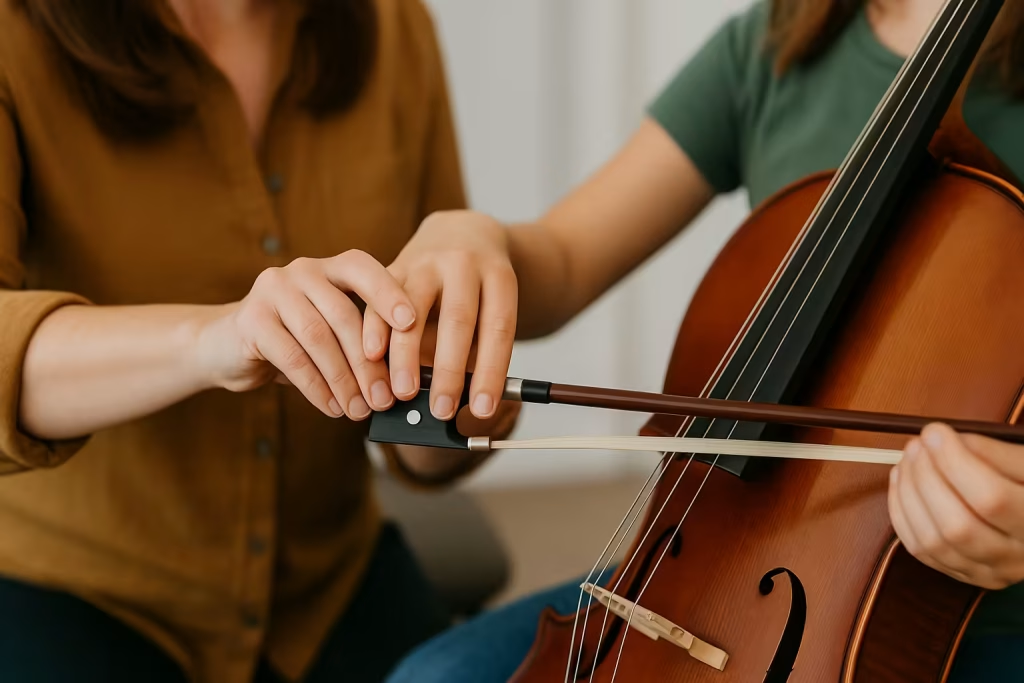
Consistent practice routines build success more than sporadic, lengthy sessions. Most children do better with 15-30 minutes daily rather than hour-long practices less frequently. Parents can create a visual practice chart where kids track their posture and rhythm game achievements between formal cello lessons.
Parent support works best when focused on process rather than results. Comments like “I notice how straight your back was during that piece” reinforce posture awareness better than general praise. Parents should use the same vocabulary as the child’s teacher when discussing posture and rhythm at home.
Reward systems specifically targeting posture and rhythm skills create motivation. A simple sticker chart for “bow arm position” or “steady beat” gives concrete goals. After collecting a certain number of stickers, children earn small rewards that ideally connect to their musical interests, like choosing a new piece or attending a concert.
Evaluating Progress: Milestones in Children’s Cello Posture and Rhythm
Parents and teachers should look for specific posture developments in young cellists. Early milestones include sitting independently at the chair’s edge and holding the bow without tension. Later achievements include maintaining proper position during string crossings and position shifts. These benchmarks help customize cello lessons for kids based on their current development stage.
Common posture problems have specific solutions that games can address. If a child hunches over their cello, the “String Painter” game has them imagine painting long, straight brush strokes with their bow, requiring tall posture. For collapsing wrists, the “Strong Bridge” game has children pretend their wrist forms a bridge that cannot collapse when cars (fingers) drive across.
Rhythm achievement follows predictable patterns during children’s cello development. First comes the ability to maintain steady quarter notes, then eighth notes, and eventually more complex patterns. Recording practice sessions helps track these developments between formal cello lessons for kids.
Advanced skill integration appears when children maintain correct posture while executing challenging rhythms. This milestone often emerges gradually between the ages 9-12. Teachers can document this progress with periodic video recordings that show the child’s growing mastery of simultaneous skills.
Technology Tools and Apps for Teaching Cello to Kids
Several rhythm apps support skills taught in cello lessons for kids. Programs like “Rhythm Cat” and “Rhythm Trainer” gamify basic beat recognition and maintenance. These digital tools extend lesson concepts into home practice in a format many children find engaging.
Video tools for posture self-assessment have transformed how kids learn proper positioning. Simple smartphone recordings allow children to see themselves from angles impossible while playing. Teachers can guide parents in setting up proper recording positions to check specific posture elements between cello lessons.
Online games reinforce music fundamentals that support cello playing. Note-reading games like “Staff Wars” and ear-training programs like “Good Ear” build skills that complement physical technique. These applications work best when teachers connect the digital content directly to cello posture and rhythm concepts.
Recording technology helps children develop self-evaluation skills. Many kids respond more objectively to hearing and seeing recordings of themselves than to verbal feedback during lessons. Teachers can create simple rubrics where children rate their own posture and rhythm accuracy when watching their practice videos.
Group vs. Individual Cello Lessons for Children: Pros and Cons
Group cello lessons offer significant benefits for rhythm development. Children naturally mimic peers and often maintain a steadier tempo when playing together. Group activities like “Rhythm Circle,” where students pass a steady beat around by taking turns playing single notes, build both social confidence and musical timing.
Individual lessons provide focused attention that helps form proper posture habits. Teachers can precisely adjust a child’s hand position or sitting stance in ways impossible in group settings. These personalized corrections create a stronger technical foundation during early cello lessons for kids.
Many teachers find that combining approaches creates optimal results. A weekly private lesson paired with a monthly group music class gives children both detailed instruction and peer motivation. Parents can discuss this balanced approach with prospective teachers when setting up cello lessons for their kids.
Specific games work better in different settings. “Posture Spotting” has children identify correct and incorrect positions in other students, making it perfect for groups. “Bow Stroke Detective” requires teacher feedback on subtle technique details, making it ideal for private cello lessons for kids.
When to Seek Professional Cello Instruction for Your Child
Children show readiness for formal cello lessons through several behaviors. Sustained interest in the instrument, ability to focus for 20-30 minutes, and physical size sufficient for even the smallest cello (usually around age 4-5) indicate a good starting point. Early exposure can come through music appreciation classes before beginning instrument-specific lessons.
When choosing a cello teacher for children, look for someone experienced with the specific age group. Ask potential instructors about their approach to teaching posture and rhythm through games. A teacher who speaks entirely in technical terms might not connect well with very young beginners. The best kids’ cello teachers blend technical accuracy with playful approaches.
Questions for potential instructors should cover their teaching philosophy. Ask how they maintain children’s interest during repetitive technical work. Inquire about their methods for correcting posture problems without creating tension. Request examples of rhythm games they use during cello lessons for kids of different ages.
Home activities complement professional instruction when they reinforce lesson concepts without introducing conflicts. Parents should ask teachers for specific posture and rhythm games to practice between lessons. This consistency between lesson and home creates faster progress and less confusion for young cellists.
Conclusion: Making Cello Lessons a Joyful Journey for Kids
The path to cello mastery begins with fun, engaging lessons that teach proper posture and rhythm through play. Children who associate these fundamental skills with positive experiences develop a stronger foundation than those taught through strict technical instruction alone. These game-based approaches make cello lessons for kids both effective and enjoyable.
The benefits of building proper technique through playful activities extend throughout a child’s musical life. Students who learn correct posture through games typically experience less physical strain and produce better sound quality. Those who develop rhythm through engaging activities generally progress faster when reading music and playing with others.
Parents and teachers who embrace these playful approaches to cello instruction create musical journeys that children want to continue. By turning essential skill-building into games rather than drills, they foster both technical excellence and genuine love for the instrument. This combination offers the greatest gift possible from early cello lessons for kids: the foundation for a lifetime of musical enjoyment.
Music Lessons in San Diego with K&M Music School
1 Expert Music Lessons
We offer Piano, Violin, Cello, Guitar, Ukulele, Saxophone, Bassoon, Harp, Voice, and Toddler group lessons for students of all ages and skill levels.
2 Why Choose Us?
- 🎶 Boosts focus and self-discipline
- 🎵 Strengthens cognitive skills
- 🎼 Enhances cultural understanding
- 🎤 Builds confidence through recitals
3 We Welcome Adults Too!
Call to Action
Has your child experienced cello lessons with game-based learning? Share your experiences in the comments below. What posture or rhythm games have worked best for your young cellist?
Download our free “Posture and Rhythm Assessment Guide for Young Cellists” by signing up for our newsletter. This helpful resource includes photos of proper positioning and simple tests to check your child’s progress at home.
Want more ideas for making music practice fun? Explore our related articles on motivating young musicians and choosing the right instrument for your child’s learning style. Sign up for a free trial lesson.
FAQs About Cello Lessons for Kids
At what age should children start cello lessons?
Most children can begin cello lessons between the ages of 4-7, depending on their physical size and attention span. Very young beginners (ages 4-5) benefit from shorter, more frequent lessons with high parent involvement. Some teachers recommend starting with piano or rhythm classes before beginning cello around age 6-7. The key factor is the child’s interest level and ability to focus for at least 15-20 minutes at a time.
How long should children practice cello each day?
Young beginners (ages 4-6) should practice 10-15 minutes daily, focusing on posture, games, and simple playing. Elementary-aged children (7-9) benefit from 15-25 minutes of structured practice that includes both technical exercises and pieces. Older children (10-12) typically need 30-45 minutes daily to progress steadily. Quality matters more than quantity—five minutes of focused posture work benefits children more than 30 minutes of distracted playing.
What size cello is right for my child?
Proper sizing requires in-person assessment, but general guidelines include: 1/10 or 1/8 size for ages 4-5, 1/4 size for ages 6-7, 1/2 size for ages 8-10, and 3/4 size for ages 11-12. The child should sit with the cello in playing position—the top of the instrument should rest near their left ear, and they should reach the fingerboard comfortably without stretching. Too large a cello creates immediate posture problems that interfere with learning proper technique during kids’ cello lessons.
How can I tell if my child’s posture is correct?
Correct cello posture for children includes several checkpoints: feet flat on the floor, sitting at the chair’s edge, back straight but not rigid, shoulders relaxed and level, cello touching the body at the chest and knees, and the C-string peg near the left ear. The left hand should form a curved “C” shape on the fingerboard, while the right hand holds the bow with flexible fingers. Taking profile photos during practice helps parents check these elements between formal cello lessons for kids.
What are the signs that my child is struggling with rhythm?
Children with rhythm challenges often speed up during easy passages and slow down during difficult sections. They may have trouble maintaining a steady beat when playing with recordings or metronomes. Some people physically tense up when trying to follow rhythm patterns. If your child can’t clap back simple patterns or march in time to music, they may need extra rhythm games during their cello lessons. Most rhythm issues resolve with specific exercises and patient practice.
How often should kids have formal cello lessons?
Most children benefit from weekly 30-45 minute lessons, depending on age. Very young beginners might do better with two 20-minute sessions weekly. Consistency matters more than duration—regular lessons establish practice patterns and catch technique problems early. Some teachers recommend supplementing private lessons with monthly group classes where children practice rhythm and ensemble skills together. Summer cello camps or workshops provide motivational boosts between regular lesson periods.
Can cello lessons help with my child’s development in other areas?
Cello lessons for kids develop multiple non-musical skills. The posture work improves physical awareness and coordination. Rhythm activities enhance mathematical thinking and pattern recognition. Learning to read music builds visual processing abilities. The discipline of regular practice develops concentration, persistence, and delayed gratification skills. Research shows connections between instrumental music study and improved academic performance. Perhaps most importantly, successful music learning builds children’s confidence in their ability to master complex skills through consistent effort.