

Master the electric guitar with our guide on proper posture and pick grip. Learn essential tips and techniques to enhance your playing experience and prevent injuries. Dive in now!
Mastering the electric guitar is about more than learning chords and scales. Good posture and pick grip are important for comfort and control. This guide will help you hold the guitar correctly to improve your playing.
Proper posture and pick grip are important for playing the electric guitar well. This guide will explain why they matter. You’ll also learn common mistakes and how to fix them. No matter if you’re a beginner or experienced, getting these right will make you play better. It will also help you avoid injuries.
Understanding Proper Posture for Playing an Electric Guitar
The Importance of Proper Posture
Good posture is key for playing the electric guitar. It helps you stay in control, avoid pain, and prevent injuries. With good posture, you can focus on playing without discomfort. It also lets you play longer without getting tired.
Common Posture Mistakes
Beginners often make common posture mistakes that can hinder their playing. Here are some of the most common mistakes to avoid:
- Slouching hurts your back and shoulders. This causes discomfort and makes it harder to control your playing.
- Hunching over the guitar can strain your neck and back. This makes it harder to play smoothly. Try to keep your back straight to avoid this.
- Twisting your body while playing can hurt your spine and shoulders. This can lead to long-term injuries. Try to keep your body straight while you play.
- Poor foot placement can make you unstable. This makes it harder to play accurately. To fix it, place your feet firmly on the ground.

Music Lessons in San Diego with K&M Music School
1 Expert Music Lessons
We offer Piano, Violin, Cello, Guitar, Ukulele, Saxophone, Bassoon, Harp, Voice, and Toddler group lessons for students of all ages and skill levels.
2 Why Choose Us?
- 🎶 Boosts focus and self-discipline
- 🎵 Strengthens cognitive skills
- 🎼 Enhances cultural understanding
- 🎤 Builds confidence through recitals
3 We Welcome Adults Too!
How to Achieve Proper Posture
To have proper posture, keep your back straight and relaxed while playing. Here are some tips to help you do this:
- Relax Your Shoulders: Keep your shoulders relaxed and down, away from your ears. This helps you maintain a stable playing position.
- Keep your back straight while playing. Don’t hunch or slouch. This will help you stay balanced and in control.
- Place Your Feet Firmly: Place your feet firmly on the ground, with your knees slightly bent. This helps you stay stable and balanced while playing.
- Adjust your guitar so it’s at the right height. This helps you play comfortably without straining your neck or back.
Benefits of Proper Posture
Proper posture offers several benefits for electric guitar players. Here are some of the key benefits:
- Good posture helps you control your guitar better. This makes it easier to play accurately and smoothly.
- Proper posture reduces strain on your muscles and joints. This makes it easier to play longer without feeling tired or sore.
- Good posture helps prevent injuries. It keeps your body aligned and lowers the risk of strain.
- Good posture helps you focus on playing. You won’t worry about discomfort or pain. This makes playing easier and more enjoyable.

Common Posture Mistakes and How to Fix Them
Let’s dive deeper into common posture mistakes and how to fix them:
- Slouching: To fix slouching, try to stand up straight and tall. Imagine a string pulling you up from the top of your head. Keep your shoulders back and down, and your chin parallel to the ground.
- Hunching: To fix hunching, try to keep your back straight and avoid leaning forward. Imagine a string pulling you up from the top of your head. Keep your shoulders back and down, and your chin parallel to the ground.
- Twisting: To fix twisting, try to keep your body aligned with your guitar. Imagine a string pulling you up from the top of your head. Keep your shoulders back and down, and your chin parallel to the ground.
- Place your feet firmly on the ground with your knees slightly bent. This keeps you stable and balanced while playing.
How to Maintain Proper Posture During Long Practice Sessions
Maintaining proper posture during long practice sessions can be challenging. Here are some tips to help you maintain good posture:
- Take Regular Breaks: Take regular breaks to rest your hands and arms. This will help you maintain good posture and reduce the risk of injury.
- Stretch and warm up before you practice. This will help your flexibility. It also lowers the risk of injury. You’ll play more comfortably and better.
- Use a Stool or Chair: If you find it difficult to maintain proper posture while standing, try using a stool or chair. This will help you stay stable and balanced while playing.
- Adjust your guitar so it’s at the right height. This helps you play comfortably without hurting your neck or back.
Mastering the Pick Grip for an Electric Guitar
The Basics of Pick Grip
The pick grip is the way you hold the pick in your hand while playing the electric guitar. There are several types of pick grips, each with its advantages and disadvantages. The most common pick grips are:
- The alternate pick grip uses your thumb and index finger to pick the strings. It’s a flexible grip. It works for many playing styles.
- Economy Pick Grip: This grip involves using only the index finger to pick the strings. It is efficient and allows for fast playing, but it can be less comfortable for beginners.
- Match Pick Grip: This grip involves using the thumb and index finger together to pick the strings. It is strong and allows for powerful playing, but it can be less comfortable for beginners.
- The sweep pick grip uses your thumb and index finger to pick the strings in a sweeping motion. It’s flexible and works for many playing styles.
Choosing the Right Pick Grip
Choosing the right pick grip depends on your playing style and personal preference. Here are some tips to help you choose the right pick grip:
- Consider Your Playing Style: Think about the type of music you play and the techniques you use. Choose a pick grip that allows you to play comfortably and effectively.
- Try different pick grips to find the one that feels best. As you play more, you may find one you like better. Try different pick grips to find the one that feels best. As you play more, you may find one you like better. Experimenting helps you improve your grip.
How to Develop a Strong Pick Grip
To build a strong pick grip, practice exercises often. The more you practice, the easier it will feel. Keep practicing regularly to get better control and comfort. Also, use a metronome. It helps you practice at different speeds and improve your timing.
- Play scales and exercises to strengthen your fingers. This will help you improve your pick grip. It will also make your playing technique better.
- Stretch and warm up before practicing. This helps you become more flexible and reduces the risk of injury. It will also make playing easier and more comfortable.

Benefits of a Strong Pick Grip
A strong pick grip offers several benefits for electric guitar players. Here are some of the key benefits:
- A strong pick grip helps you control the guitar better. A strong pick grip reduces strain on your muscles and joints. This helps you play longer without getting tired or sore.
- A strong pick grip helps prevent injuries. It keeps your body aligned and reduces strain. This makes playing safer and more comfortable.
- A strong pick grip helps you focus on playing. You won’t have to worry about discomfort or pain. This lets you concentrate better.
Common Pick Grip Mistakes and How to Fix Them
Let’s dive deeper into common pick grip mistakes and how to fix them:
- To fix a weak grip, use your thumb and index finger together to pick the strings. This will help you build a stronger grip and improve your playing.
- To fix poor timing, use a metronome. It helps you practice at different speeds. This will improve your timing and accuracy.
- If you have trouble with dexterity, practice scales and exercises. This will make your fingers stronger and more flexible. It will also help you improve your pick grip and playing technique.
How to Maintain a Strong Pick Grip During Long Practice Sessions
Maintaining a strong pick grip during long practice sessions can be challenging. Here are some tips to help you maintain a strong pick grip:
- Take Regular Breaks: Take regular breaks to rest your hands and arms. This will help you maintain a strong pick grip and reduce the risk of injury.
- Stretch and warm up before you practice. This will improve your flexibility and help prevent injuries. It will also make playing more comfortable and effective.
- Use a metronome to practice at different speeds. This will help you improve timing and accuracy. It will also help you keep a strong pick grip and play better overall.
- Play scales and exercises to build finger strength and control. This will help you keep a strong pick grip. It will also make your playing technique better.
Combining Proper Posture and Pick Grip
The Connection Between Posture and Pick Grip
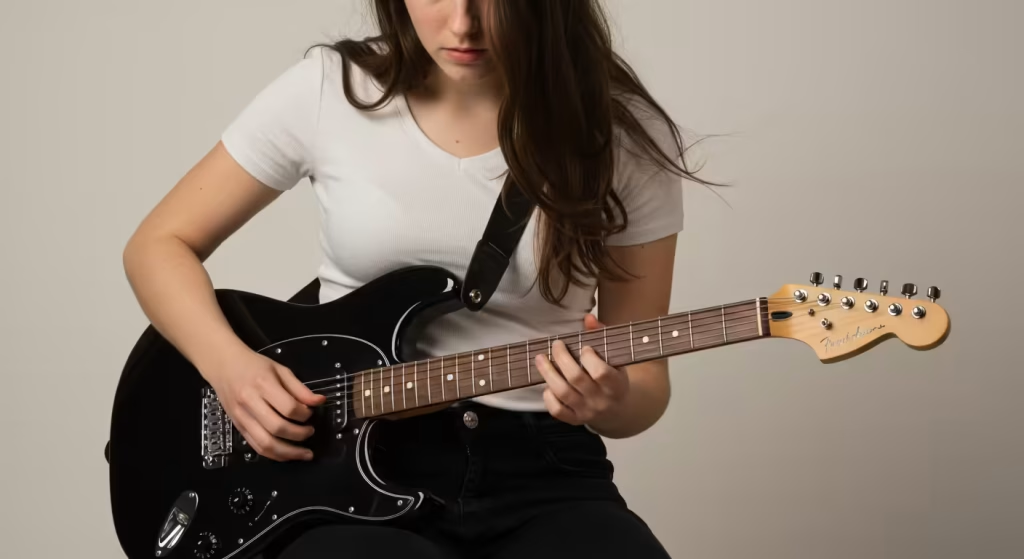
Proper posture and pick grip go hand in hand. When you have good posture, you can focus on playing without discomfort. A strong pick grip gives you better control and precision. This makes it easier to play smoothly and do complex techniques.
Putting It All Together
To combine good posture and pick grip, practice both at the same time. This will help you play better. Here are some tips to improve both.
- Practice good posture and pick grip often. The more you practice, the easier and more natural it will feel.
- Use a metronome to practice at different speeds. This will improve your timing and accuracy. It will also help you strengthen your pick grip and playing technique.
- Play scales and exercises to build finger strength and control. This will help improve your pick grip and playing technique.
- Stretch and warm up before you practice. This helps improve flexibility and lowers the risk of injury. It will also make playing more comfortable and easier.
Benefits of Combining Proper Posture and Pick Grip
Combining proper posture and pick grip offers several benefits for electric guitar players. Here are some of the key benefits:
- Good posture and pick grip help reduce strain on your muscles and joints. This makes it easier to play longer without feeling tired or sore.
Good posture and pick grip help prevent injuries. Good posture and pick grip help you stay focused on playing. You won’t have to worry about pain or discomfort.
Music Lessons in San Diego with K&M Music School
1 Expert Music Lessons
We offer Piano, Violin, Cello, Guitar, Ukulele, Saxophone, Bassoon, Harp, Voice, and Toddler group lessons for students of all ages and skill levels.
2 Why Choose Us?
- 🎶 Boosts focus and self-discipline
- 🎵 Strengthens cognitive skills
- 🎼 Enhances cultural understanding
- 🎤 Builds confidence through recitals
3 We Welcome Adults Too!
Common Mistakes When Combining Proper Posture and Pick Grip
Let’s look at common mistakes with posture and pick grip, and how to fix them. First, we’ll identify the mistakes. Then, we’ll see how to improve them.
- If you ignore posture, try sitting upright and relaxed while playing. This will help you improve your posture and play better.
- Ignoring pick grip can hurt your playing. To fix this, use your thumb and index finger together to pick the strings. This will help you build a strong grip and improve your playing.
- Lack of Practice: To fix a lack of practice, try to practice both proper posture and pick grip regularly. The more you practice, the more comfortable and natural it will become.
How to Maintain Proper Posture and Pick Grip During Long Practice Sessions
Maintaining proper posture and pick grip during long practice sessions can be challenging. Here are some tips to help you maintain proper posture and pick grip:
- Take Regular Breaks: Take regular breaks to rest your hands and arms. This will help you maintain proper posture and pick grip, and reduce the risk of injury.
- Stretch and warm up before practicing. This will make you more flexible and reduce the chance of injury. It will also help you play better and more comfortably.
- Use a metronome to practice at different speeds. This will help you improve your timing and accuracy. It also helps you keep good posture and a strong pick grip. In turn, your playing technique will get better.
- Play scales and exercises to strengthen your fingers. This will help you keep good posture and grip. It will also improve your overall playing technique.
Conclusion
Good posture and pick grip are important for playing the electric guitar. By using the right techniques, you can avoid mistakes and injuries. Practice exercises to improve your skills. Whether you’re new or experienced, these basics will help you play better and reach your goals.
Call to Action
Ready to improve your electric guitar playing? Share your experiences and tips for proper posture and pick grip in the comments below. Don’t forget to follow us on social media for more guitar tips and tricks! Sign up for a free trial lesson!
FAQ
How do I know if I have proper posture while playing the electric guitar?
Proper posture means sitting up straight with your back and shoulders relaxed. If you feel comfortable and steady while playing, your posture is likely good.
What are the benefits of proper posture for playing the electric guitar?
Proper posture helps you maintain control, reduces strain, and prevents injuries. It also allows you to play for longer periods without feeling tired or sore.
What are the most common pick grips for playing the electric guitar?
There are different pick grips: alternate, economy, match, and sweep. Each grip has pros and cons. Choose the one that works best for your playing style.
How do I choose the right pick grip for my playing style?
Think about your playing style and what feels best. Try different grips to find the one that feels natural and comfortable for you.
What exercises can I do to improve my pick grip strength?
Practice scales and exercises to improve your finger strength and dexterity. Use a metronome to practice at different tempos and improve your timing and accuracy.
How can I prevent injuries while playing the electric guitar?
Maintain proper posture and practice regularly to improve your overall playing technique. Stretch and warm up before practicing to reduce the risk of injury.
What are some tips for playing the electric guitar for longer periods?
Sit with good posture and take breaks to rest your hands and arms. Stretch and warm up before playing to stay flexible and avoid injury.
How do I know if I have a strong pick grip?
A strong pick grip allows you to play with more control and precision. If you feel comfortable and stable while playing, you likely have a strong pick grip.
What are some common mistakes when combining proper posture and pick grip?
Common mistakes are poor posture, bad pick grip, and not practicing enough. To fix them, sit up straight and relax while playing. Hold the pick with your thumb and index finger. Also, make sure to practice often.
How can I maintain proper posture and pick grip during long practice sessions?
Take breaks to rest your hands and arms. Stretch and warm up before practicing to stay flexible and avoid injury. Use a metronome to practice at different speeds and improve timing. Play scales to make your fingers stronger and faster.
What are some benefits of combining proper posture and pick grip?
Good posture and pick grip help you control your guitar better. They also reduce strain on your muscles and joints. This prevents injuries and lets you focus more on playing.
How can I improve my overall playing technique by combining proper posture and pick grip?
Practice good posture and pick grip regularly. Use a metronome to work on timing and accuracy. Play scales to make your fingers stronger and faster. Stretch and warm up to avoid injuries and improve flexibility.
What are some tips for choosing the right pick grip for my playing style?
Think about your playing style when picking a grip. Try different grips to find the most comfortable one. Practice often to get stronger and have better control.
How can I develop a strong pick grip?
Practice your pick grip to build strength and control. Use a metronome to help with timing and accuracy. Play scales to strengthen your fingers. Stretch and warm up before playing to stay flexible and prevent injury.
What are some common posture mistakes, and how can I fix them?
Common posture mistakes are slouching, hunching, twisting, and poor foot placement. To fix this, sit up straight, relax your shoulders, and keep your back straight. Place your feet flat on the ground and adjust your guitar to the right height. Practice scales and exercises to strengthen your fingers and improve control.
How can I maintain good posture during long practice sessions?
Take breaks to rest your hands and arms. Stretch and warm up before playing to stay flexible and avoid injury. Use a stool or chair to stay balanced. Adjust your guitar so it’s at the right height and doesn’t strain your neck or back.
What are some benefits of proper posture for playing the electric guitar?
Proper posture helps you control the guitar better and prevents strain. It also stops injuries and lets you play longer without getting tired. With good posture, you can focus more on playing, not on discomfort.
How can I improve my overall playing technique by combining proper posture and pick grip?
FAQ
How do I know if I have proper posture while playing the electric guitar?
Proper posture means sitting up straight and relaxing your shoulders. If you feel comfortable and steady while playing, your posture is probably good.
What are the benefits of proper posture for playing the electric guitar?
Proper posture helps you maintain control, reduces strain, and prevents injuries. It also allows you to play for longer periods without feeling tired or sore.
What are the most common pick grips for playing the electric guitar?
There are different pick grips: alternate, economy, match, and sweep. Each has pros and cons. Pick the one that fits your playing style.
How do I choose the right pick grip for my playing style?
Think about your playing style and what feels comfortable. Try different grips to find the one that works best for you.
What exercises can I do to improve my pick grip strength?
Practice scales and exercises to improve your finger strength and dexterity. Use a metronome to practice at different tempos and improve your timing and accuracy.
How can I prevent injuries while playing the electric guitar?
Maintain proper posture and practice regularly to improve your overall playing technique. Stretch and warm up before practicing to reduce the risk of injury.
What are some tips for playing the electric guitar for longer periods?
Sit up straight and take breaks to rest your hands and arms. Stretch and warm up before playing to stay flexible and avoid injury.
FAQ
How do I know if I have proper posture while playing the electric guitar?
Proper posture means sitting up straight with relaxed shoulders. If you feel comfortable and steady while playing, your posture is good.
What are the benefits of proper posture for playing the electric guitar?
Proper posture helps you maintain control, reduces strain, and prevents injuries. It also allows you to play for longer periods without feeling tired or sore.
What are the most common pick grips for playing the electric guitar?
There are four main pick grips: alternate, economy, match, and sweep. Each one has pros and cons. Pick the one that works best for your style.
How do I choose the right pick grip for my playing style?
Think about your playing style and what feels comfortable. Try different grips to find the one that works best for you.
What exercises can I do to improve my pick grip strength?
Practice scales and exercises to improve your finger strength and dexterity. Use a metronome to practice at different tempos and improve your timing and accuracy.
How can I prevent injuries while playing the electric guitar?
Maintain proper posture and practice regularly to improve your overall playing technique. Stretch and warm up before practicing to reduce the risk of injury.
What are some tips for playing the electric guitar for longer periods?
Sit with good posture and take breaks to rest your hands and arms. Also, stretch and warm up before practicing. This will help your flexibility and lower the risk of injury.