
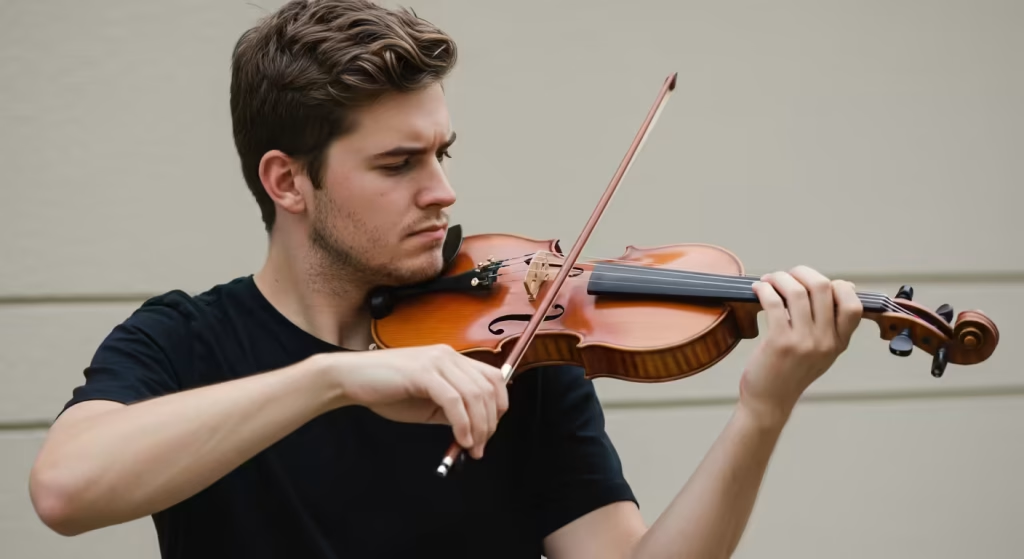
Good violin posture is important to avoid discomfort and play well. Poor posture can cause shoulder and chin rest pain, making it hard to play. This guide will help you learn the right posture and fix discomfort. Proper posture improves technique, reduces tension, and makes playing more enjoyable. Let’s learn how to have better posture for better playing.
| Brand | Key Features | Benefits |
|---|---|---|
| Kun Shoulder Rest | Adjustable height and width, ergonomic design | Reduces shoulder strain, customizable fit for different body types |
| Wolf Forte Secondo Shoulder Rest | Lightweight, fully adjustable, brass fittings | Excellent stability, reduces neck tension, durable construction |
| Kreddle Chin Rest | Height/angle adjustable, hypoallergenic | Prevents skin irritation, customizable positioning for optimal comfort |
| Wittner Hypoallergenic Chin Rest | Composite material, various shapes available | Eliminates allergic reactions, lightweight design reduces fatigue |
| Bonmusica Shoulder Rest | Fully moldable metal plate, padded cushion | Contours to individual shoulder shape, exceptional stability |
Understanding Proper Violin Posture
Good violin posture means being balanced and comfortable while playing. This includes positioning your body, arms, and hands correctly. Poor posture can cause shoulder and chin rest pain, making it hard to play for long periods. Let’s break down the key parts of proper posture.
Body Alignment
Maintaining proper body alignment is essential for proper violin posture. Your body should be upright and relaxed, with your shoulders back and down. Avoid hunching or rounding your shoulders, as this can cause discomfort and tension. Keep your back straight and your core engaged to support your body while playing.
Arm Position
Your arms should be relaxed and close to your body. Avoid tensing your arms or shoulders, as this can cause discomfort and tension. Keep your elbows close to your body and your hands relaxed and open. This allows for better control and flexibility while playing.
Hand Position
Your hands should be relaxed and open, with your fingers curved slightly. Avoid tensing your hands or wrists, as this can cause discomfort and tension. Keep your thumbs close to your fingers and your hands relaxed and open. This allows for better control and flexibility while playing.
Violin Position
Your violin should be set up correctly for good posture. The chin rest should be at the right height and angle. The shoulder rest should fit comfortably. Keep the violin close to your body. Rest your left hand on the fingerboard and your right hand on the strings.
The Importance of Proper Violin Posture
Good violin posture is important for many reasons. It helps prevent injuries and improves your playing. Poor posture can cause discomfort, tiredness, and long-term problems. Let’s look at why proper posture matters.
Preventing Injuries
Poor posture can cause injuries like tendonitis and carpal tunnel syndrome. By keeping good posture, you can avoid these injuries and play without pain.
Improving Playing Technique
Good violin posture helps you play better. It reduces tension and improves flexibility. This makes your playing easier and more natural. With proper posture, you can focus on your music and express yourself clearly.
Enhancing Overall Performance
Good violin posture helps you play better. It improves breath control, tone, and dynamics. With proper posture, you can play with more confidence. This makes your performances better and more enjoyable.
Common Posture Issues
Many violinists have posture problems that cause discomfort. These problems can be from sitting wrong, bad body alignment, or the wrong violin setup. Finding these problems is the first step to fixing the pain in the shoulders and the chin rest. Let’s look at some common posture issues.
Incorrect Seating
Incorrect seating can cause discomfort. To fix this, adjust your chair. It should be the right height and distance from the violin. Keep your feet flat on the floor. Your knees should be at a 90-degree angle. This helps with support and stability while playing.
Improper Body Alignment
Improper body alignment can cause discomfort. Keep your back straight and shoulders relaxed. Don’t hunch forward or tense your muscles. Stand or sit tall with good posture to play comfortably and effectively.
Improper Violin Setup
Improper violin setup can cause discomfort. To fix this, make sure your violin is set up correctly. The chin rest should be the right height and angle. The shoulder rest should fit comfortably. Keep the violin close to your body. Your left hand should rest on the fingerboard, and your right hand on the strings.
Fixing Shoulder Discomfort
Correct Seating
Ensure your chair is at the right height and distance from the violin. Your feet should be flat on the floor, and your knees should be at a 90-degree angle. This allows for better support and stability while playing. Additionally, consider using a footstool to raise your feet and improve your posture.
Proper Body Alignment
Keep your back and shoulders straight. Don’t hunch or round your shoulders, as it can cause pain. Keep your arms relaxed and close to your body. Don’t tense your arms or shoulders. Use a mirror to check your posture and make adjustments.
Appropriate Violin Setup
Check your violin setup. The chin rest should be the right height and angle. The shoulder rest should fit comfortably. Keep the violin close to your body. Your left hand should rest on the fingerboard, and your right hand on the strings. If needed, ask a luthier or technician to adjust your setup.
Fixing Chin Rest Discomfort
Chin rest discomfort is common. It can be caused by bad seating, poor body alignment, or a wrong violin setup. To fix it, adjust your seating and make sure your violin setup is right.
Correct Seating
Ensure your chair is at the right height and distance from the violin. Your feet should be flat on the floor, and your knees should be at a 90-degree angle. This allows for better support and stability while playing. Additionally, consider using a chin rest pad to provide extra cushioning and support.
Proper Body Alignment
Keep your back and shoulders straight. Don’t hunch or round your shoulders. This can cause pain. Keep your arms relaxed and close to your body. Avoid tensing your arms or shoulders. Use a mirror to check your posture and make changes if needed.
Appropriate Violin Setup
Check your violin setup. Make sure the chin rest is the right height and angle. Adjust the shoulder rest for comfort. Keep the violin close to your body. Your left hand should rest on the fingerboard, and your right hand on the strings. If needed, ask a luthier or technician to help adjust your setup.
Exercises to Improve Violin Posture
Regular exercise can help improve your violin posture and prevent discomfort. These exercises can be done before or after playing. They include:
Stretching
Stretching your arms, shoulders, and back can improve flexibility and reduce tension. Here are some simple stretches to try:
- Arm Stretch: Stand tall and reach your arms overhead, then gently pull them back and down. Hold for 20-30 seconds.
- Shoulder Stretch: Stand tall and reach your arms overhead, then gently pull them back and down. Hold for 20-30 seconds.
- Back Stretch: Stand tall and reach your arms overhead, then gently pull them back and down. Hold for 20-30 seconds.
Strengthening
Strengthening your core, arms, and shoulders can help support your body while playing. Here are some simple exercises to try:
- Plank: Lie face down with your elbows and forearms on the ground, and your body in a straight line. Hold for 20-30 seconds.
- Push-ups: Start in a plank position. Lower your body until your chest almost touches the ground. Then, push yourself back up to the starting position.
- Bicep Curls: Stand tall and hold a light dumbbell in each hand. Bend your elbows and curl the dumbbells up to your shoulders, then lower them back down.
Breathing
Focusing on your breath helps relax your body and improve posture. Try these simple breathing exercises:
- Diaphragmatic Breathing: Lie on your back and place one hand on your chest and the other on your abdomen. Inhale deeply through your nose, filling your lungs completely. Exhale slowly through your mouth.
- Pursed Lip Breathing: Stand tall and inhale deeply through your nose. Exhale slowly through your mouth, pursing your lips as if you’re whistling.
The Role of a Violin Teacher
A violin teacher can help you improve your posture. They give advice and fix posture problems. Regular lessons help you develop good habits and prevent discomfort. Here are the benefits of working with a teacher:
Personalized Advice
A violin teacher can give you advice based on your needs and goals. They can help you find posture problems. Then, they can give you exercises to improve your posture.
Identifying Posture Issues
A violin teacher can spot posture problems you might miss. They can give feedback and help you fix these issues. This will improve your posture and playing.
Developing Good Playing Habits
Regular lessons with a violin teacher help you build good habits. They can guide and support you as you improve. This helps you play better and stay comfortable.
Preventing Discomfort
A violin teacher can help you avoid discomfort by showing you how to keep good posture. They can give you exercises and tips to improve your posture and prevent pain.
Violin Posture for Different Playing Styles
Different playing styles require different violin postures. Here are some tips for maintaining proper violin posture for different playing styles:
Classical Violin Posture
Classical violinists play with an upright posture. They keep their shoulders back and down. This helps them play better. This posture allows for better breath control and tone. To maintain proper classical violin posture:
- Keep your back straight and your core engaged.
- Keep your arms relaxed and close to your body.
- Keep your hands relaxed and open, with your fingers curved slightly.
- Keep your violin close to your body. Place your left hand on the fingerboard. Rest your right hand on the strings.
Folk Violin Posture
Folk violinists play with a relaxed posture. Their shoulders are back and down. This helps them move easily. To keep this posture, follow these tips:
- Keep your back straight and your core engaged.
- Keep your arms relaxed and close to your body.
- Keep your hands relaxed and open, with your fingers curved slightly.
- Hold your violin close to your body. Rest your left hand on the fingerboard. Place your right hand on the strings.
Jazz Violin Posture
Jazz violinists play with an upright posture. They keep their shoulders back and down. This helps them play better. This posture allows for better breath control and tone. To maintain proper jazz violin posture:
- Keep your back straight and your core engaged.
- Keep your arms relaxed and close to your body.
- Keep your hands relaxed and open, with your fingers curved slightly.
- Hold your violin close to your body. Rest your left hand on the fingerboard. Place your right hand on the strings. This will help you play better.
Violin Posture for Different Violin Sizes
Different violin sizes require different violin postures. Here are some tips for maintaining proper violin posture for different violin sizes:
Full-Size Violin Posture
Full-size violins are designed for adult players. To maintain proper full-size violin posture:
- Keep your back straight and your core engaged.
- Keep your arms relaxed and close to your body.
- Keep your hands relaxed and open, with your fingers curved slightly.
- Hold your violin close to your body. Rest your left hand on the fingerboard. Place your right hand on the strings.
Three-Quarter Size Violin Posture
Three-quarter-size violins are designed for younger players. To maintain proper three-quarter size violin posture:
- Keep your back straight and your core engaged.
- Keep your arms relaxed and close to your body.
- Keep your hands relaxed and open, with your fingers curved slightly.
- Hold your violin close to your body. Rest your left hand on the fingerboard. Place your right hand on the strings.
Quarter Size Violin Posture
Quarter-size violins are designed for the youngest players. To maintain proper quarter-size violin posture:
- Keep your back straight and your core engaged.
- Keep your arms relaxed and close to your body.
- Keep your hands relaxed and open, with your fingers curved slightly.
- Hold the violin close to your body. Rest your left hand on the fingerboard. Place your right hand on the strings.
Conclusion: Take Control of Your Violin Posture Today
Proper violin posture is the foundation of successful playing and long-term comfort. By implementing the techniques and adjustments outlined in this guide, you can significantly reduce shoulder and chin rest discomfort while improving your overall playing ability. Remember that good posture isn’t just about comfort—it’s about unlocking your full potential as a violinist.
The journey to perfect posture is ongoing. Be patient with yourself as you make adjustments and develop new habits. Your body and your playing will thank you for the effort you invest in maintaining proper alignment and position. Sign up for a free trial lesson.
Your Next Steps
- Evaluate your current setup: Take time to assess your current chin rest and shoulder rest configuration. Consider if upgrades or adjustments might benefit your comfort.
- Practice daily posture exercises: Incorporate the stretching and strengthening exercises into your daily routine, even for just 5-10 minutes.
- Seek professional guidance: Consider consulting with a violin teacher or posture specialist who can provide personalized feedback.
- Be consistent: Make proper posture a non-negotiable part of every practice session, no matter how brief.
Don’t wait for discomfort to become pain—take action today to improve your violin posture and experience the joy of comfortable, expressive playing for years to come!
FAQs
Q: How can I adjust my violin setup to fix posture issues? A: Consult a luthier or violin technician to adjust your violin setup. They can help you find the correct height and angle for your chin rest and shoulder rest.
Q: What exercises can I do to improve my violin posture? A: Stretching, strengthening, and breathing exercises can help improve your violin posture. Consult a physical therapist or fitness instructor for personalized exercise recommendations.
Q: How often should I see a violin teacher? A: A violin teacher can help you build good habits and avoid discomfort. Try to have lessons once a week or every other week, based on your schedule and progress.
Q: What should I do if I continue to experience discomfort? A: If you continue to experience discomfort, consult a healthcare professional. They can help you identify any underlying issues and provide appropriate treatment.
Q: Can proper violin posture improve my playing technique? A: Yes, good violin posture reduces tension and helps you move more easily. This leads to better playing and habits. It also improves your overall performance.
Q: What are some common posture issues among violinists? A: Common posture problems include sitting incorrectly, poor alignment, and a bad violin setup. Fixing these problems can reduce discomfort. It also helps you play better.
Q: How can I maintain proper violin posture for different playing styles? A: Different styles of playing need different postures. Classical violinists sit up straight, while folk violinists relax more. Adjust your posture to match your style.