

Navigating your first music competition? This guide has tips to help you nail your performance, wow the judges, and launch your musical career.
Your first music competition can be fun and a bit scary. Being ready helps you feel confident. This guide will show you how to prepare step by step.
Be Competition-Ready
- Select the right event for your level
- Strategically showcase your strengths
- Polish pieces through methodical practice
Execute Like a Pro
- Internalize music via memorization techniques
- Refine stylistic precision details
- Optimize on-site warmups & focus rituals
Level Up Afterward
- Review feedback for growth areas
- Set goals for continued progress
- Leverage the experience at future events
| Preparation | Performance | Growth |
|---|---|---|
| Choose suitable competition | Execute with precision | Review feedback |
| Select repertoire showcasing strengths | Internalize music through memorization | Set future goals |
| Create practice schedule | Refine stylistic details | Leverage experience |
| Handle logistics early | Optimize on-site warm-ups | Continuous improvement |
| Pack essentials and extras | Maintain focus and confidence | Apply lessons learned |
Choosing the Right Music Competition for You
Choose a competition that matches your skills and experience. This helps the event fit your growth as a musician. Entering a contest that is too hard can feel discouraging. Picking the right one makes it more fun and rewarding.
Baroque music, which was popular in the 1600s and 1700s, often used the violin. Composers like Bach, Vivaldi, and Handel wrote famous violin pieces, which are still important today.
New wind players learning double-tonguing should not compete with advanced players. Choose competitions that match your skill level. This makes practicing and performing easier. It also helps you feel less stressed.
Make a list to compare music competitions. Write down the location, fees, and dates. Add the instruments, styles, and rules. Check the prizes and scholarships. Then, look at the audition rules and required pieces. Finally, note the age limits and memberships. This will help you find contests you can enter now.
Key Initial Questions When Choosing a Music Competition:
- Does this competition cater to my instrument and preferred musical style(s)?
- Do I meet all the rules to enter? Check your age, amateur status, and where you live. Make sure you follow all the competition requirements. This helps you avoid problems later.
- Make a list to compare music competitions. Write down the location, entry fees, and dates. Also, include the instruments, styles, and judging rules. Check the prizes, scholarships, and past winners. Next, look at the audition rules and required pieces. Finally, note age limits and memberships. This helps you find contests you can join now.
Can I afford the registration fees and cover travel expenses if required? - Does the competition timeframe allow me adequate preparation time for my selected repertoire?
Answer these questions honestly for each event. This helps you pick the best competition for your first time.

Spotlight: Grace, Age 17, Choosing Her First Piano Competition
Grace started playing piano at age 6. For the past four years, she has learned quickly with Mrs. Swanson, a well-known piano teacher. Now 17, Grace feels she has good technique and musicality. Regular recitals and performances have also improved her stage presence.
Grace is part of the Crescendo Young Musicians Society. She learns they have a yearly concerto competition for members. The deadline is in six months. The winner gets to play one movement of a concerto with the Crescendo Chamber Orchestra.
This competition is perfect for Grace. She checks and meets the age and membership rules. The music matches her skill level. Since it’s local, there are no travel costs. Mrs. Swanson thinks Grace is ready and offers to help her prepare. Grace decides to enter her first competition!
Selecting Your Musical Repertoire
Choose music that matches your skills and shows your musicality. Don’t pick pieces that are too hard for you. Ask your teacher to help you find the right music. This will show your strengths and help you succeed in your first competition.
Factors to Consider When Selecting Competition Repertoire:
- If you have quick fingers, choose a piece that shows your speed. Pick music with different tempos, styles, and moods. Include works from different genres and periods. This shows you are a well-rounded musician.
- If you have quick fingers, choose a piece that shows your speed. Pick music with different tempos, styles, and moods. Include works from different genres and periods. This shows you are a well-rounded musician.
- Pick music you are good at playing. Think about what the judges might like too. Choosing the right pieces can help you stand out. Ask your teacher for advice. They can help you pick music that shows your strengths and fix weak spots.
Choosing the right music helps you do your best in a competition. It lets you show your feelings and stay in control technically. Picking carefully gives you the best chance to succeed.
Spotlight: Kaitlyn, Age 15, Selecting Her Competition Repertoire
Kaitlyn is learning the flute. Her teacher gives her music from different periods and styles. Over three years, Kaitlyn has improved a lot. She can play Baroque, Classical, Romantic, and modern pieces with skill and expression.
A local concerto competition is coming up. Participants need to perform 15-20 minutes of different styles of music. Kaitlyn meets with her teacher to plan her program. Together, they choose the best pieces for the competition.
They choose a lively Baroque sonata to show Kaitlyn’s fast, precise playing. Then, they pick a smooth French piece to highlight her rich tone and emotion. These pieces show her strengths and versatility. Kaitlyn feels confident practicing this music.
Logistics and Registration
Handling competition logistics in advance alleviates unnecessary stress as the event approaches. After selecting your competition and repertoire, promptly address these items:
- Register and pay entry fees – Secure your place by submitting forms and paying prior to the deadline. Double-check eligibility rules related to age, rank, location, etc. to avoid issues.
- Make travel plans – If traveling, book flights, transport, hotels 2-3 months out. Factor in possible weather delays. Scout the host city and competition venue area in advance.
- Check the competition schedule and dress code. Learn the timeline and where each event will happen. Know what clothes you need to wear. Also, understand the rules and procedures for the event. This helps you be ready and confident.
- Get your documents ready to bring with you. Make copies of your sheet music, registration papers, and repertoire details. Also, include contact information for the competition. This helps you stay organized and prepared.
Taking care of details early helps you stay organized. This makes it easier to prepare for the big event. Being ready helps you feel calm and confident.
Recommended Competition Packing Checklist:
- Multiple copies of each score (at least three, including a binder copy)
- Recording device to review your performance afterward
- Attire – performance clothes, shoes, accessories, hair/makeup supplies
- Medications/vitamins – prescriptions, daily supplements, pain relievers
- Throat lozenges, lip balm, personal hygiene items
- Water bottles, healthy snacks, protein bars
- Extra supplies – violin strings, reeds, valve oil, rosi,n etc.
- Electronic tuner, metronome, pencil
- Repertoire list including timings
- Contact information for competition organizers and your teacher
- Map of competition location and surrounding area
This checklist ensures you have everything you need behind the scenes!
Spotlight: Theo, Age 18, Handling Competition Logistics
Theo is traveling to Houston next month for a saxophone competition. He looks for hotels near the university hosting the event. He finds a room at the competition’s special rate. Theo also checks flight options and picks a nonstop flight. He chooses an early morning flight the day before to allow extra time in case of delays.
Theo checks the competition schedule. There is a briefing at 8 a.m. on competition day. The dress code for preliminaries is all black. He needs to play three contrasting pieces in under 22 minutes for the first round. Theo packs an extra reed and sets phone reminders to practice his program. Planning early helps him feel calm and ready.

Rehearsing Your Competition Repertoire
Practicing regularly and carefully helps you improve your skills. It builds the technical and artistic ability you need to do well in a competition. When you practice, focus on small details to get better. This makes a big difference in your performance.
- Set up a regular practice schedule. Spend time on each piece in your repertoire. Practicing consistently helps you feel confident. It also makes your playing more secure.
- Record practice frequently – Identifying improvement areas through recordings enables self-assessment and correction.
- Request instructor feedback – Teachers catch issues you may be too close to notice. Welcome their input.
- Practice playing your pieces all the way through. Do this after you learn each one. Pretend you are performing in a competition. This helps you feel more comfortable on stage.
Setting aside regular practice time is very important. Focus on your competition pieces during these sessions. This is the best way to succeed. Being disciplined helps you improve.
Sample 12-Week Competition Rehearsal Schedule
| Week | Piece 1 | Piece 2 | Piece 3 |
|---|---|---|---|
| 1 | Learn notes/rhythm | Learn notes/rhythm | |
| 2 | Refine technical passages | Learn notes/rhythm | |
| 3 | Shape musical phrases | Refine technical passages | |
| 4 | Add expression and dynamics | Learn notes/rhythm | Learn notes/rhythm |
| 5 | Memorize A section | Refine technical passages | Learn notes/rhythm |
| 6 | Memorize B section | Shape musical phrases | Refine technical passages |
| 7 | Run Part 1 continuously | Memorize A section | Learn notes/rhythm |
| 8 | Polish Part 1 details | Memorize B section | Shape musical phrases |
| 9 | Learn Part 2 | Run Part 1 continuously | Memorize A section |
| 10 | Refine Part 2 technique | Polish Part 1 details | Memorize B section |
| 11 | Memorize Part 2 | Learn Part 2 | Run Part 1 continuously |
| 12 | Run entire piece continuously | Refine Part 2 technique | Polish Part 1 details |
Music Memorization Tips
Committing your repertoire to memory well in advance is expected for most competitions. Useful memorization tactics include:
- Memorize small sections of 8-10 measures at a time. Practice each hand separately first. Then, combine them when you’re ready. Add more phrases little by little.
- Use mental cues to help with tricky parts. Try visual, verbal, or musical cues. These can make it easier to remember. It helps you play more confidently.
Practice playing your pieces from memory often. Repeating them helps you remember better. Just like other skills, memory gets stronger with practice. This makes performing easier.
Allocate time early on solely for memory work to ingrain recall.
Sample Memory Cues for a Challenging Passage
- Visual Cue: “Lightning Leap” – Big leap up for LH in measure 58.
- Verbal Cue: “Smooth seas” – Flowing sixteenth notes in RH above the leap.
- Musical Cue: The bassline leaps upward, while the melody flows smoothly above.
Tip: Customized cues like these can save you from a memory slip on stage!
Performance Preparation Techniques
Hone these vital techniques in lessons leading up to competition day:
- Imagine yourself performing successfully. See yourself feeling confident, focused, and expressive. This helps you do the same on stage.
- Refine stylistic precision – Meticulously polish articulation, phrasing, tone colors, and inflection.
- First, find ways to make your music better. Then, see what parts need more practice. Working on these will help you improve. This makes you a better player.
Internalizing successful outcomes while meticulously polishing instills readiness to excel under pressure.
Spotlight: Ava, Age 16, Preparing Flute Repertoire
Ava follows a 12-week plan to get ready for her competition. In week 1, she learns her new pieces. In weeks 2-3, she works on her technique. Weeks 4-7 focus on making the music sound beautiful. By week 8, she memorizes both pieces. The last four weeks are for polishing her performance skills.
- Precise, centered tonguing for lively Baroque articulation
- Supple shaping of lyrical line in adagio
- Forte tone colors for accented notes against a piano backdrop
- Confident body language and stage presence
Ava asks her parents to hold weekly recitals at home. She treats them like real competition. She practices a lot to get ready. This makes her feel confident in her skills.

Music Lessons in San Diego with K&M Music School
Expert Music Lessons
We offer Piano, Violin, Cello, Saxophone, Bassoon, Harp, Voice, and Toddler group lessons for students of all ages and skill levels.
Why Choose Us?
- 🎶 Boosts focus and self-discipline
- 🎵 Strengthens cognitive skills
- 🎼 Enhances cultural understanding
- 🎤 Builds confidence through recitals and performances
We Welcome Adults Too!
Book Your Free Lesson NowPacking for the Competition
First, collect everything you need for your trip. Do this a few days early. It helps make leaving easier and less stressful. Being prepared saves time and worry.
Must-Have Items
- Bring at least three copies of each piece of music. This is helpful in case something goes wrong. Having extra copies keeps you prepared. It makes sure you’re ready for any emergency.
- Bring a recording device to capture your performance. This lets you review it later with your teacher. Use a mini tripod to set up your phone or tablet. It helps you record clearly in different auditoriums.
- Pack your performance clothes, shoes, and accessories. Don’t forget hair and makeup supplies. Bring tools to fix wrinkles or stains. Also, pack a backup outfit in case something goes wrong.
- Set achievable goals. Focus on improving, not perfection. Maintain a balanced schedule to stay healthy.
These small but important items make things easier. They help you stay organized and calm. Having them ready gives you peace of mind. It helps everything run smoothly.
Additional Handy Extras
Consider packing these additional useful things:
- Music stand – Ensure it is sturdy, lightweight, and collapses neatly.
- Bring an electronic tuner and metronome with you. Check if the tuning needs to be A-440 or A-442. Use the metronome to stay on beat. These tools help you stay prepared and accurate.
- Pack extra strings, reeds, valve oil, and rosin. These are helpful if something breaks or goes wrong. It’s better to have backups in case you can’t fix things right away. This keeps you ready to play.
- Repertoire list – Have timings, memory cues, and contact info all in one place.
- Save the phone numbers of the organizers and accompanists. This is helpful if you need to contact them quickly. Having their numbers ready keeps things simple. It helps you stay prepared for any situation.
While not mandatory, these supplemental items provide helpful backup assurance.
Packing Pro Tips
- Use a checklist so nothing gets forgotten at home!
- Keep important items in your carry-on bag. Bring your medicine and a copy of your music. This way, you’re ready if your checked bag gets lost. Transport your instrument in a strong case. Avoid places with extreme temperatures to keep it safe.
- Keep valuable items like reed knives and jewelry in secure containers. Don’t leave them loose in your bag. This keeps them safe and easy to find. It also helps you stay organized.
- Bring copies of your passport/ID and health insurance cards in case of emergency.
- Pack black outfits that follow the dress code. Choose clothes you can mix and match for different days. This saves space and keeps things simple. It also helps you look ready for every performance.
Smart packing makes things easier. It helps you avoid problems during the trip. This way, you can focus on doing your best performance.
Arriving On Site
When you reach the competition location:
- Look for a quiet place to warm up before performing. Try to find a private room or hallway. Use soundproof pods if they are available. This helps you focus and get ready.
- First, buzz your lips to warm up. Next, play notes one after another without skipping. Then, cover all the notes your instrument can make. Also, this helps keep your mouth muscles flexible.
- Find a quiet place to imagine yourself playing your best. Picture a great performance in your mind. This helps you feel confident before you start. It gets you ready to do your best.
Using these strategies helps you stay ready. They prepare your body and mind. This makes it easier to handle pressure. It gives you the best chance to succeed.
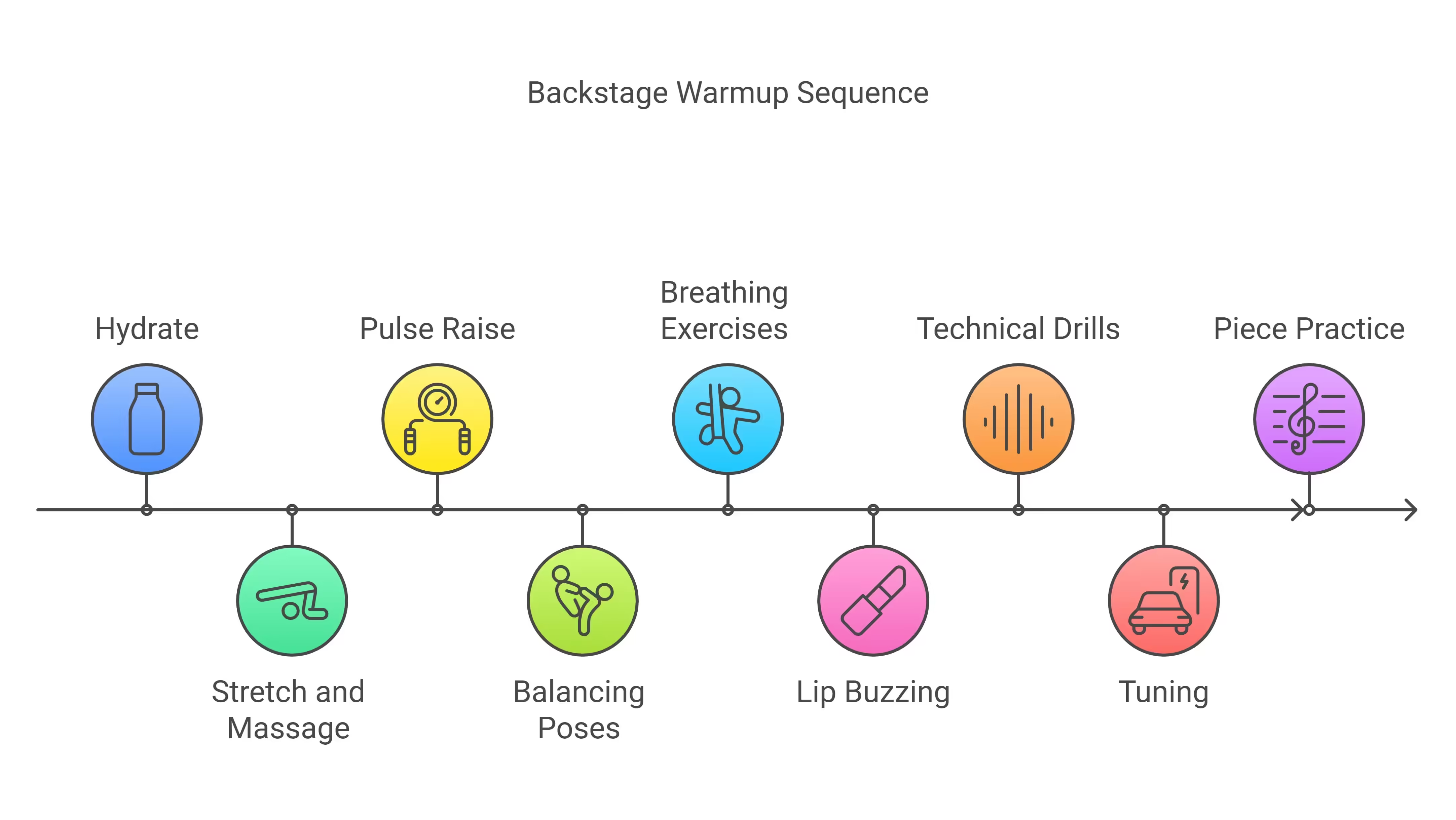
Recommended Backstage Warmup Sequence
Follow this sequence first thing after arriving to optimize on-stage readiness:
- Hydrate – Drink 8 oz room temperature water to lubricate the throat and vocal folds.
- Stretch and massage your neck, shoulders, and arms. Also, work on your wrists, hands, and torso. This keeps your body loose and relaxed. It helps you feel ready to perform. Pulse raise – Jump rope or run in place for 30 seconds to increase blood flow.
- Balancing poses – Perform 30-60 seconds of tree pose or warrior III pose to improve balance and focus.
- Practice deep belly breaths to relax. Focus on long exhales to control your breathing. Try saying vowel sounds to improve your voice. This helps you sound clear and efficient.
- First, buzz your lips to warm up. Next, play notes one after another without skipping. Then, cover all the notes your instrument can make. Also, this helps keep your mouth muscles flexible.
- Technical drills – Run short sections of scales, arpeggios, or technical exercises.
- Tune – Use an electronic tuner to set the pitch and make any minor tuning adjustments.
- Play small parts of your pieces before performing. This warms up your ears and sound. It also helps you focus on the music. It’s a quick way to get ready.
This efficient sequence activates the body and mind for peak functionality on stage.
Performance Mindset Strategies
Cultivating optimal thinking patterns before competing boosts confidence to succeed under pressure:
Affirmations – Repeat empowering mantras like “I am prepared and ready to perform my very best.”
Visualization – Picture previous successful performances to trigger familiar confident feelings.
First, wear your concert clothes when you practice. Next, practice how to bow correctly. Then, go through your songs one by one. Also, move around like you would on stage.
Focus on music – Redirect thoughts away from outcomes and onto the beauty within each phrase.
Take a moment to breathe deeply before going on stage. Focus on slow belly breaths. This helps you feel calm and ready. It’s an easy way to manage nerves.
Implementing these techniques steadies nerves so you can channel energy into the music.
Music Lessons in San Diego with K&M Music School
Expert Music Lessons
We offer Piano, Violin, Cello, Saxophone, Bassoon, Harp, Voice, and Toddler group lessons for students of all ages and skill levels.
Why Choose Us?
- 🎶 Boosts focus and self-discipline
- 🎵 Strengthens cognitive skills
- 🎼 Enhances cultural understanding
- 🎤 Builds confidence through recitals and performances
We Welcome Adults Too!
Book Your Free Lesson NowConclusion
Music competitions provide invaluable opportunities for growth, performance experience, and personal development. While they come with challenges, such as managing nerves or perfectionism, the rewards of skill-building, feedback, and confidence make the experience worthwhile. By preparing strategically, maintaining a positive mindset, and embracing learning opportunities, young musicians can thrive in the competitive environment.
Call to Action
Ready to take on your first music competition? Use these tips to prepare confidently, perform with poise, and grow as a musician. Start by selecting a competition that suits your skill level and goals. Commit to the process, and don’t forget to celebrate your progress along the way. Good luck on your musical journey! Sign up for a free trail lesson.
Frequently Asked Questions
How do I manage performance anxiety during competitions?
Use techniques such as affirmations, visualization, and mindful breathing. Simulating performance conditions in practice can also help.
What should I pack for a music competition?
Include essentials like copies of your music, a recording device, performance attire, instrument accessories, and emergency items like extra strings or reeds.
How can I recover from a mistake on stage?
Stay calm and continue as if nothing happened. Avoid showing the error outwardly and focus on the rest of the piece.
How do I choose the right competition for my skill level?
Assess the competition’s requirements, including repertoire difficulty, age limits, and eligibility rules. Select one that aligns with your experience and goals.
What’s the best way to practice for a competition?
Develop a structured schedule, focus on small sections, and practice regularly. Recording yourself and seeking teacher feedback are also key.
Is it necessary to memorize my pieces?
Memorization is often expected. Break your repertoire into smaller sections, use cues, and practice from memory regularly to strengthen recall.
How do I use feedback from judges to improve?
Review the comments objectively, focus on constructive criticism, and apply suggestions to enhance your skills. Use the feedback as a tool for growth.