
Last Updated: April 14, 2026 | By K&M Music Company | San Diego, California
What happens to your brain when you play music? Science on memory, focus, mood, stress, and learning — explained in plain language.

If you have ever asked what happens to your brain when you play music, you are asking a smart question. Playing music affects the human brain in many ways at once. It can involve hearing, movement, timing, memory, attention, feeling, and learning. That is why the science of music and the brain is so interesting — current neuroscience continues to reveal discoveries about the way music reshapes how our brains work.
Key ideas in this guide:
- Playing music uses many parts of the brain at the same time — hearing, movement, memory, attention, and emotion. It is a total brain workout.
- Practice can shape the brain over time. Repeated training is linked to stronger brain connections and real brain development.
- Kids and adults can both benefit. Neuroscience research connects music with mood, focus, learning, and mental activity.
- Music is not just entertainment — it is a powerful cognitive tool.
What You’ll Learn
- The Short Answer
- Why Playing Is Different From Listening
- Which Brain Areas Are Involved
- What Happens in Real Time
- How Music Changes the Brain’s Wiring
- Dopamine, Mood, and Stress
- Memory, Attention, and Learning
- Children’s Brain Development
- Adult Brains and Music
- Different Instruments, Different Effects
- Better Practice Habits for the Brain
- FAQ

What Happens to Your Brain When You Play Music? The Short Answer
Your entire brain gets very busy when you play music. It has to hear sounds, predict patterns, control movement, notice mistakes, keep time, use memory, and respond with emotion. Very few activities make the human brain do so many things at once — that is why researchers call it a total brain workout.
Simple Takeaways
| What Happens | Why It Matters |
|---|---|
| Many brain regions activate at once | Music is a whole-brain activity |
| Sound, movement, memory, and feeling link together | Creates stronger neural connections |
| Regular practice may strengthen brain pathways | Supports brain development at any age |
| Music can support mood, attention, and learning | Benefits extend beyond music itself |
| Kids and adults both gain from making music | It is never too early or too late |
Why Playing Music Feels So Different From Passive Listening
Listening to music can already do a lot. It can shift mood, stir memory, and hold attention. Yet playing music adds something extra. You are not just receiving sound — you are creating it.
That means your brain must plan actions, control your body, and respond in real time. Think about a beginner at a piano. One hand misses a note. The ears hear it right away. The brain compares expected sound with actual sound. Then the fingers adjust on the next try.
This loop — action, error, correction — is one reason playing music and brain health are often discussed together. The brain is learning through doing, not just receiving.

What Parts of the Brain Work When You Play Music?
There is no single “music spot” in the brain. Music uses a network of brain regions — different areas do different jobs, and they work as a team.
| Brain Area | What It Does | Music Example |
|---|---|---|
| Auditory cortex | Processes pitch, tone, rhythm, and sound waves | Hearing if a note sounds right |
| Motor cortex | Controls movement of fingers, hands, breath | Pressing keys or strings |
| Sensory cortex | Processes touch and physical sensations | Feeling string vibration |
| Cerebellum | Coordinates timing and movement | Keeping a steady beat |
| Hippocampus | Stores and retrieves memory | Remembering a melody |
| Prefrontal cortex | Planning, attention, choices | Deciding what to play next |
| Amygdala / reward system | Emotion and pleasure | Why music gives you strong feelings |
| Temporal lobe | Processes auditory stimulation and language | Understanding tonal music and voices |
In simple terms, music activates sound, memory, emotion, and movement areas — the entire brain lights up.
What Happens to Your Brain When You Play Music in Real Time
Music feels smooth. The brain mechanisms behind it are anything but simple. It happens in tiny steps, often within fractions of a second.
| Step | What Happens |
|---|---|
| 1 | You hear a sound — the ear sends sound waves through the auditory nerve into the brain |
| 2 | The brain sorts the sound — separating pitch, rhythm, loudness, and tonal color |
| 3 | The brain predicts what comes next — using musical structure and pattern recognition |
| 4 | The brain sends movement commands — fingers, hands, lips, breath, or voice respond |
| 5 | The brain checks the result — did the sound match the plan? |
| 6 | The brain updates memory — storing what worked and what did not |
This quick loop is one reason music practice can feel intense. You are hearing, moving, predicting, correcting, and remembering all at once. That is exactly why it is so good for the brain.
How Playing Music Affects the Brain’s Wiring

One of the biggest science words in this topic is neuroplasticity. It simply means the brain can change with experience. If you repeat an action often, the brain gets better at supporting that action — the circuits involved get stronger and more efficient.
Music training is often used as an example of brain plasticity because it asks the brain to do many things at once — listening, timing, movement, memory, and attention.
Harvard Health gives a simple frame: brain pathways get stronger when they are used and weaker when they are ignored. Music is useful because it activates so many networks at once.
What Neuroplasticity Means in Daily Life
- A scale feels awkward at first, then natural later
- A rhythm that once felt confusing starts to click
- Reading music gets faster with repetition
- Your fingers find positions with less effort over time
That is brain change in action. If you are exploring music lessons, every practice session is literally building new brain connections.
Does Playing Music Release Dopamine and Change Mood?
Many people ask what music does to the brain emotionally. A big part of the answer involves the brain’s reward system. Pleasurable music has been linked with dopamine release in the striatal system. One well-known study in Nature Neuroscience found that intense pleasure from music can trigger dopamine release.
That does not mean every practice session feels amazing. Some days are slow. Some days are frustrating. Still, music can create strong emotional payoff. You work through something hard. Then a phrase clicks. That little lift can help keep you going.
Dopamine Release Simulation
Why Music Can Help With Stress
Music can shift your attention. If your mind is stuck on stress, playing music gives your brain something else to focus on. You may need to count beats, shape phrases, place your fingers, or control your breathing. That shift can help quiet your mind and create a calmer brain state.
Research shows that music can reduce anxiety, lower blood pressure and pain, and improve sleep, mood, alertness, and memory.
Can Playing Music Improve Memory, Attention, and Learning?
The honest answer is yes, music can help these areas — though the effect varies by person.
Music and Memory
Playing music uses several kinds of memory. You may remember note names, finger patterns, chord shapes, rhythmic figures, lyrics, or the sound of a phrase. The hippocampus — a brain region linked with memory — helps with storing and retrieving this information.
Music and Attention
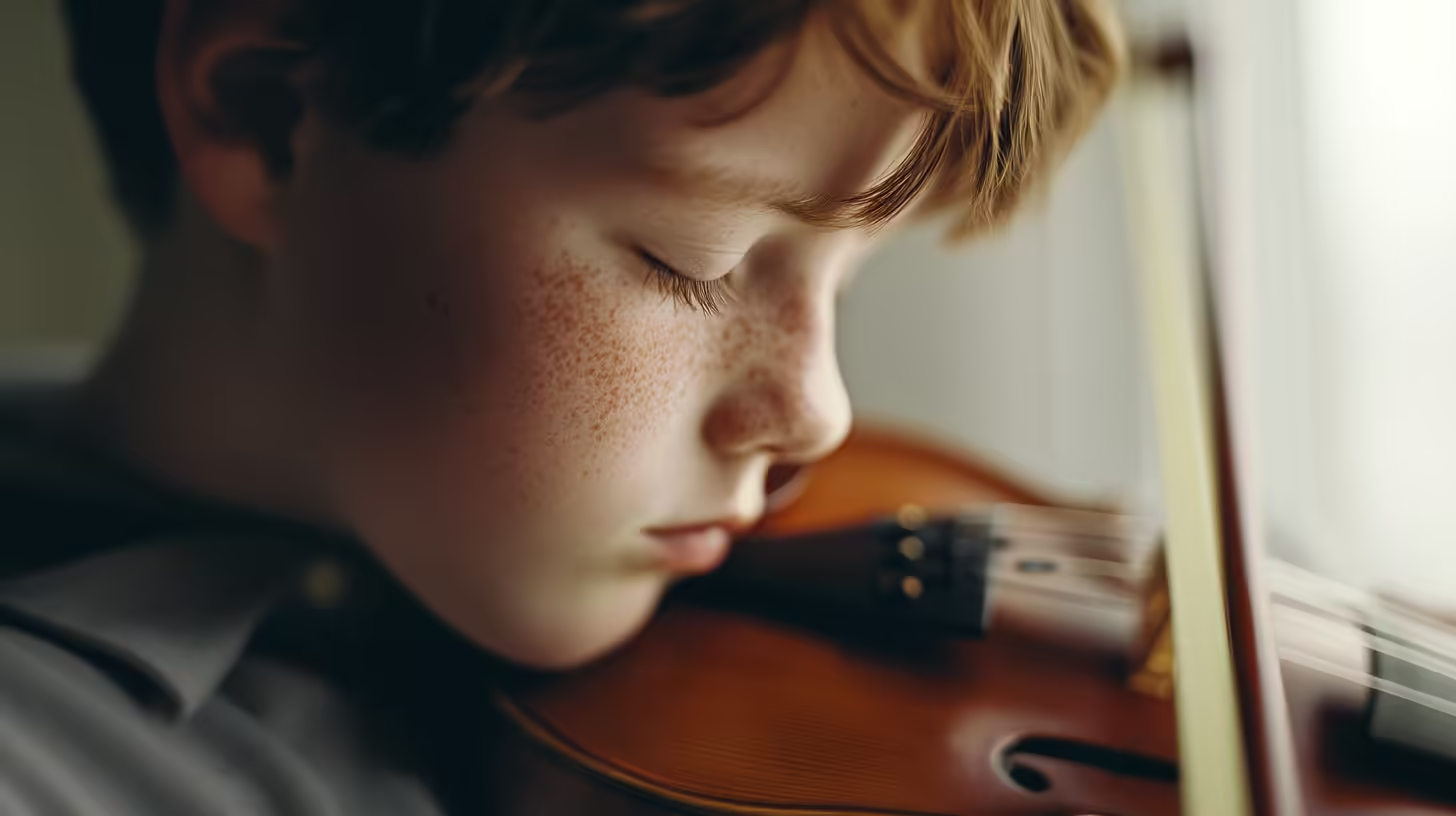
Playing music trains attention because it requires strong focus. You cannot lose focus for long and still stay on beat. You have to watch, listen, plan, and react simultaneously.
Cognitive Skills Used in Music
| Skill | What It Does | Music Example |
|---|---|---|
| Working memory | Keeps notes or rhythm in mind | Remembering the next measure |
| Selective attention | Focus on one sound or part | Following your melody in a group |
| Processing speed | Hear and react quickly | Fixing a wrong note fast |
| Executive function | Plan, monitor, and switch tasks | Reading ahead while keeping the beat |
What Happens to a Child’s Brain When They Learn Music?
Parents ask this often, and for good reason. Childhood is a time of rapid brain development, so experiences matter a lot.
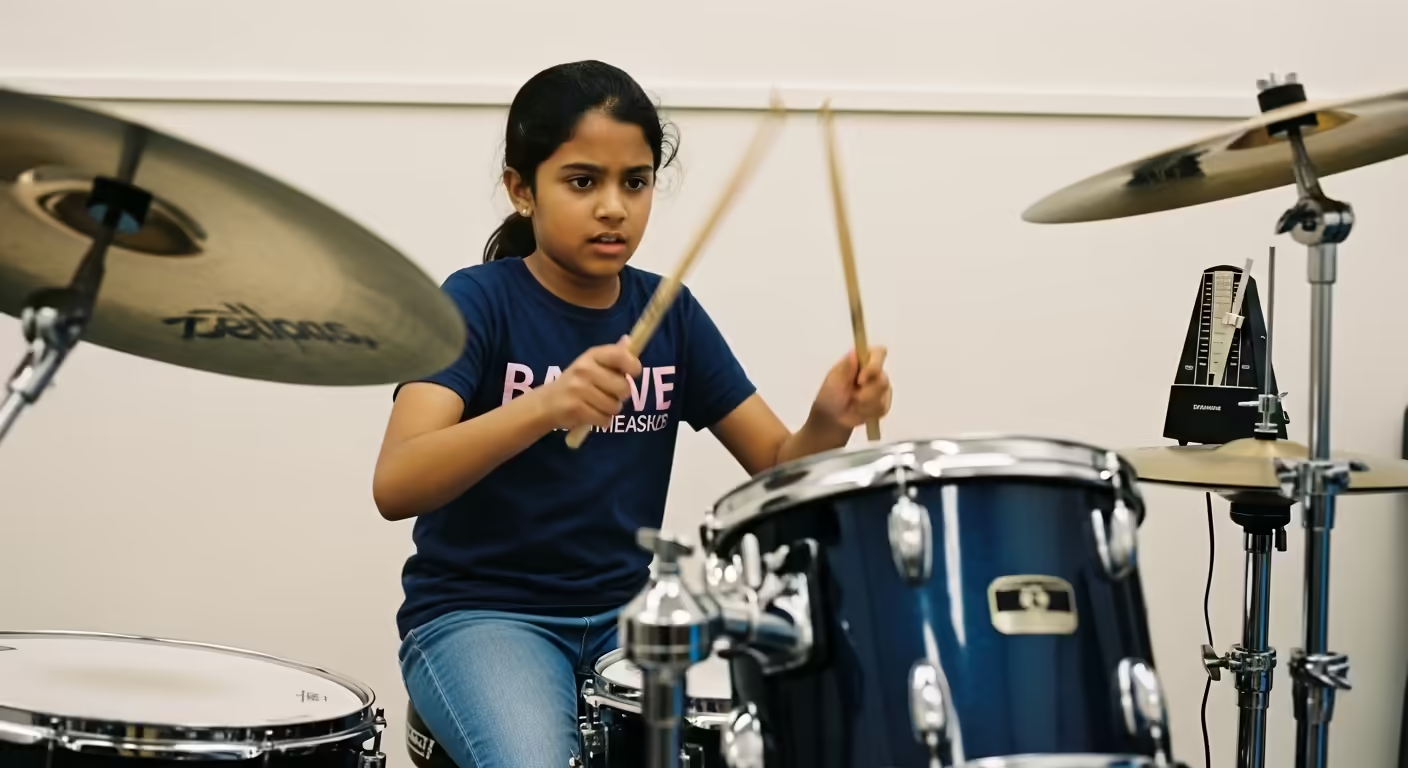
Studies show that some brain regions can be larger in musicians than in nonmusicians. These changes are often easier to see in people who started music early.
Music may support skills linked to sound, language, and communication. This is because music trains the brain to notice timing, pitch, patterns, and change — the same skills that underlie speech.
Possible Benefits for Children
- Better listening for sound patterns
- More comfort with repetition and practice
- Stronger rhythm awareness
- Support for memory and attention
- A healthy way to build patience and routine
- Creative and compositional development
At the same time, stay realistic. Music lessons can help, but they are not a shortcut to genius. The benefits depend on interest, quality teaching, frequency, and time.
What Happens to an Adult Brain When You Play Music?
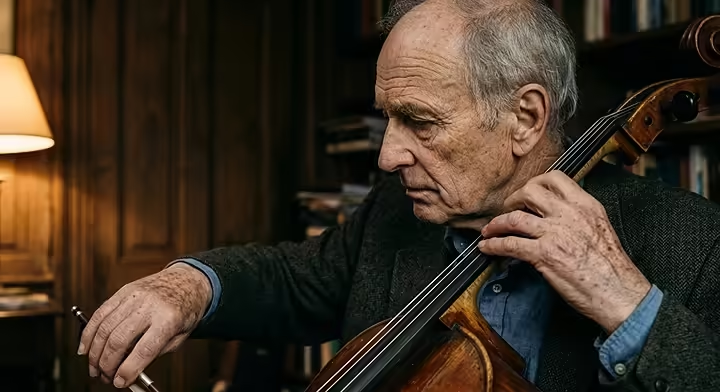
Adults often assume they missed the window. That idea is wrong. The adult brain can still learn. Neuroplasticity does not disappear after childhood. It continues across life, even if learning sometimes feels slower.
Over time, regular musical practice can help improve memory, focus, mood, coordination, and cognitive ability. Adults often bring strengths that children do not — clearer goals, more patience, and better self-awareness. (Read more about adult music lessons and why it is never too late.)
Why Adults Often Enjoy Music Study
- It gives the brain a fresh challenge
- It can reduce stress after work
- It creates focused, screen-free time
- It adds a sense of progress and pleasure
Do Different Instruments Affect the Brain in Different Ways?
Yes, at least to some degree. All music uses hearing, timing, and memory. Yet each instrument leans harder on certain systems.
| Instrument | Brain Focus | Common Challenge |
|---|---|---|
| Piano | Two-hand coordination, reading music, timing | Doing different things with each hand |
| Guitar | Finger placement, touch, chord memory | Clean chord changes, hand strength |
| Drums | Beat, coordination, timing | Steady patterns with hands and feet |
| Violin | Pitch control, fine motor, careful listening | Playing exact pitch without frets |
| Voice | Breath, pitch, language, emotion | Matching pitch and holding clear tones |
Piano often pushes coordination. Drums lean hard on rhythm. Violin demands close pitch listening. Singing combines music with breath and language. The general answer stays the same — your brain gets a workout — but the details shift by instrument.
Better Practice Habits for the Brain
The biggest gains come from steady repetition. One long session once a month will not do what shorter weekly practice can. Brain pathways get stronger when used and weaker when ignored.
- Practice a little, often
- Repeat small sections
- Slow down hard parts
- Rest when attention drops
- Sleep after learning — sleep helps memory settle
Common Myths About Music and the Brain
| Myth | Reality |
|---|---|
| Playing music makes you smarter in every way | Music supports specific skills — it is not a universal IQ boost |
| Only children get brain benefits | Adults benefit too |
| You need natural talent | Talent may affect speed, but practice matters more |
| Listening and playing are the same | They overlap but are not identical. Playing adds movement and rapid feedback |
| More practice is always better | Focused practice beats noise and endless repetition |
What Happens to Your Brain When You Play Music?
In simple terms, your entire brain lights up. It hears, predicts, moves, feels, remembers, and learns. That is why how playing music affects the brain is such a rich topic in neuroscience. Music is a brain workout, an emotional tool, and a learning system all at once.
The best part: you do not need to be an expert to benefit. A beginner on piano, a child in band, an adult with a guitar, or an older person taking voice lessons — all give the brain useful work.
Try one simple step this week:
- Learn one short song
- Spend ten minutes on rhythm practice
- Sing with a backing track
- Restart an instrument you used to play
Ready to give your brain something beautiful to do? Book your free trial lesson with K&M Music Company and start building new brain connections this week.
Frequently Asked Questions
Does playing music make your brain stronger?
It can help strengthen brain pathways through repeated use. Neuroscience research links long-term musical training with structural and functional brain changes.
Does music release dopamine?
Yes. Pleasurable music has been linked with dopamine release in reward-related brain systems. Nature Neuroscience published key findings on this topic.
Is playing music good for memory?
Yes. Music uses recall, repetition, and pattern learning — all of which exercise memory. Musical practice activates hippocampal regions consistently.
Is playing music good for stress?
For many people, yes. Music can shift attention, support mood, and help create calm. Musical interventions including music therapy have been studied for anxiety, depression, pain, and stress.
Do you need years of training to get brain benefits?
Long-term training is where bigger changes show up in research. Still, short-term learning already improves focus, mood, and the ability to process musical input more efficiently.
Is singing good for the brain too?
Yes. Singing uses hearing, breath, timing, memory, and language. It is a strong whole-brain activity.
Do different instruments affect the brain differently?
Yes. All music uses hearing, timing, and memory, but each instrument leans harder on certain systems. Piano pushes coordination, drums lean on rhythm, violin demands pitch listening, and singing combines music with breath and language.