
Learning piano feels exciting at first. You picture playing your favorite songs for friends or just relaxing after a long day. But the reality is often harsher: many adults quit within the first year.
This article explains exactly why people quit piano and, more importantly, how to stick with it. We will cover common mistakes, warning signs, and simple steps to ensure you keep improving and enjoying music for a lifetime.

🎹 Cheat Sheet: Why People Quit & The Fix
| The Problem | The Solution |
|---|---|
| Expecting Fast Progress | Set small weekly goals. Basic songs take 3–6 months. |
| “I Have No Time” | Use “Micro-Practice” (5–10 mins). Consistency beats duration. |
| Boring Practice | Play songs you actually like from day one. |
| Physical Pain | Fix bench height and posture immediately. Take breaks. |
| Practicing Alone | Join an online group or find a “practice buddy.” |
The Hard Truth About Quitting
The numbers are sobering. Research suggests that 80-90% of piano students quit within their first year. This dropout rate is higher than guitar (70%) or violin (75%). Adult learners face even steeper odds than children.
Most people who quit piano possess the ability to succeed. They simply lack the right strategies and mindset. Understanding these numbers helps you prepare mentally. You’re entering a challenging journey, but one that’s absolutely achievable.
- The 3-Month Wall: The initial excitement fades. Basics are learned, but music doesn’t sound “pro” yet.
- The 6-Month Plateau: Skills that improved weekly now seem to stall. This is the highest risk period.
The entire first year represents the highest risk period. However, if you make it past 12 months, retention rates improve dramatically. The goal is simply to survive these early danger zones.
Top Reasons Why People Quit
1. Unrealistic Expectations
Most new students have wildly unrealistic timelines. They think, “I’ll play like a professional in six months.” Social media makes this worse. You see 10-second clips of amazing performances, but not the 10,000 hours behind them.
YouTube videos with titles like “Learn Piano in 30 Days” create false expectations. Here is what real progress looks like:
- 3-6 Months: Simple melodies, hands together slowly.
- 1 Year: Popular songs in simplified arrangements.
- 3+ Years: Advanced repertoire and freedom.
2. Poor Time Management
“I’m too busy” is the most common excuse. But is it really true? Most people spend 2-3 hours daily on social media. The problem isn’t time; it’s priorities.
The solution is Micro-Practice. Five minutes before breakfast. Ten minutes during lunch. Another ten before bed. These short bursts add up. If you are a parent trying to manage this for your child, read our guide on finding the right piano practice time for kids.
3. Not Enjoying the Process
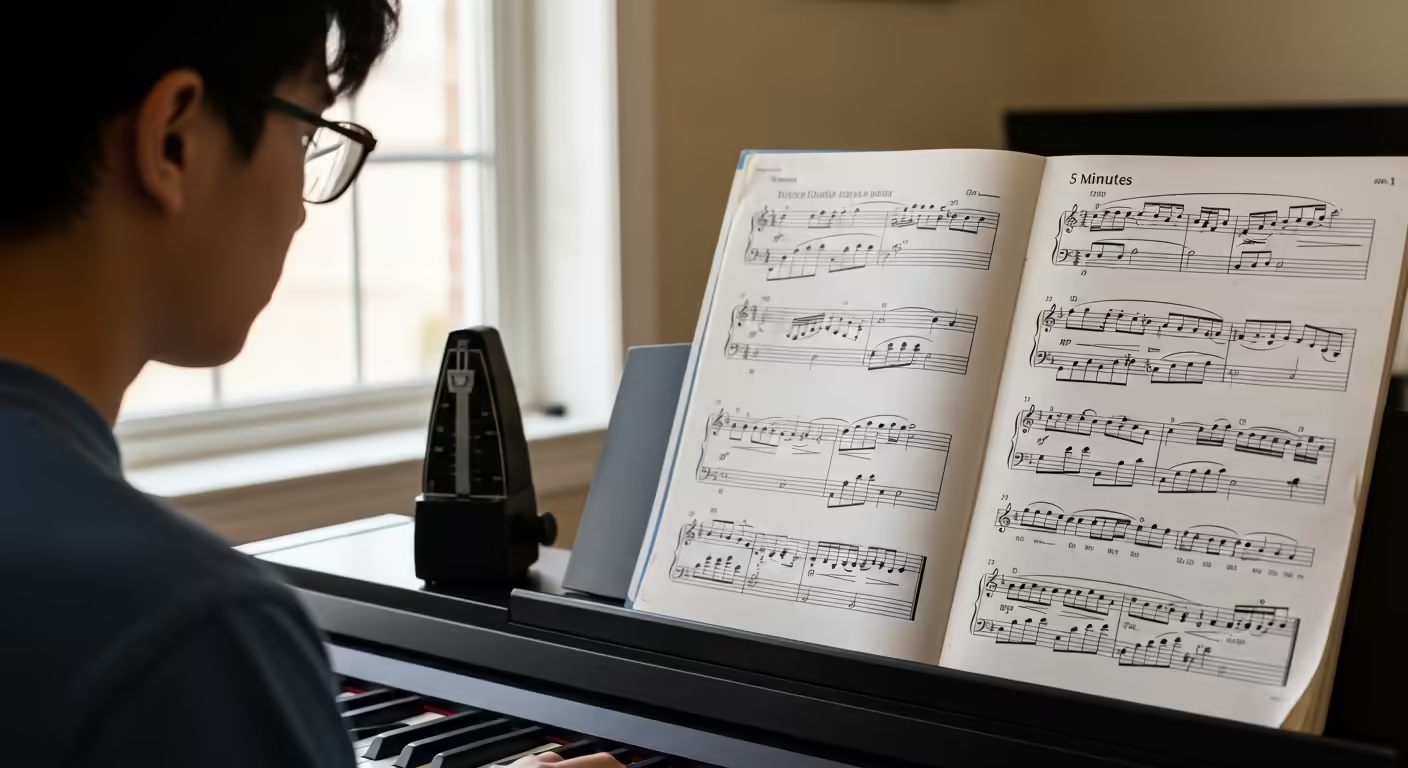
Many students dread sitting down to practice. Why? Because practice often means boring exercises and repetitive scales. If you don’t feel like a musician, you feel like a robot.
The solution is simple: play music you actually like. From day one, work on simplified versions of your favorite songs. Mix technique exercises with real music. Spend 60% of practice time on songs you love.
4. Wrong Teacher or Learning Method
Not all teachers match every student. Your teacher might be excellent but wrong for you. Are they only teaching classical when you want pop? Do they lack encouragement? For help on this, check out our insights on what makes a great music teacher.
5. Frustration with Difficult Techniques
Hand independence is a massive hurdle. Your left hand plays one rhythm while your right plays another. Your brain rebels. This feels impossible at first.
The Fix: Slow down. Cut your tempo in half. Isolate the hands (practice left alone, then right alone). Patience prevents frustration.

🛠️ The Piano Motivation Rescue App
Feeling like quitting today? Click the button that matches your feeling for an instant, science-backed fix.
6. Lack of Clear Goals
Practicing without clear goals is like driving without a destination. You wander aimlessly through method books. “Get better” is not a goal. “Learn the first page of Fur Elise by Friday” is a goal.
Try the SMART framework: Specific, Measurable, Achievable, Relevant, Time-bound. Write your goals down and review them monthly.
7. Isolation and Community
Piano is a solo instrument. You practice alone in a room for hours. This isolation wears on people. Online communities (like r/piano) or local groups are vital. Share your progress videos, even if they are imperfect.

8. Physical Discomfort and Injury
Physical pain drives many students away. Wrist pain develops from poor hand position. Back and neck strain come from bad posture. If you hurt, you will quit.
The Fix: Ensure your bench height allows your forearms to be parallel to the floor. Take breaks every 20-25 minutes to stretch.
9. Financial Constraints
Money matters. Private lessons can be expensive, and buying a piano is an investment. However, you don’t need a Steinway to start. A weighted-key digital piano is perfectly fine for beginners. If you are worried about pricing, check out how much piano lessons cost in San Diego to get a realistic budget.
10. Loss of Initial Excitement
The “Honeymoon Phase” ends around month 3. The novelty wears off, and practice feels routine. This is when motivation (a feeling) must be replaced by habit (a discipline). Don’t rely on excitement; rely on your schedule.
Strategies to Stick With It
Build a Support System
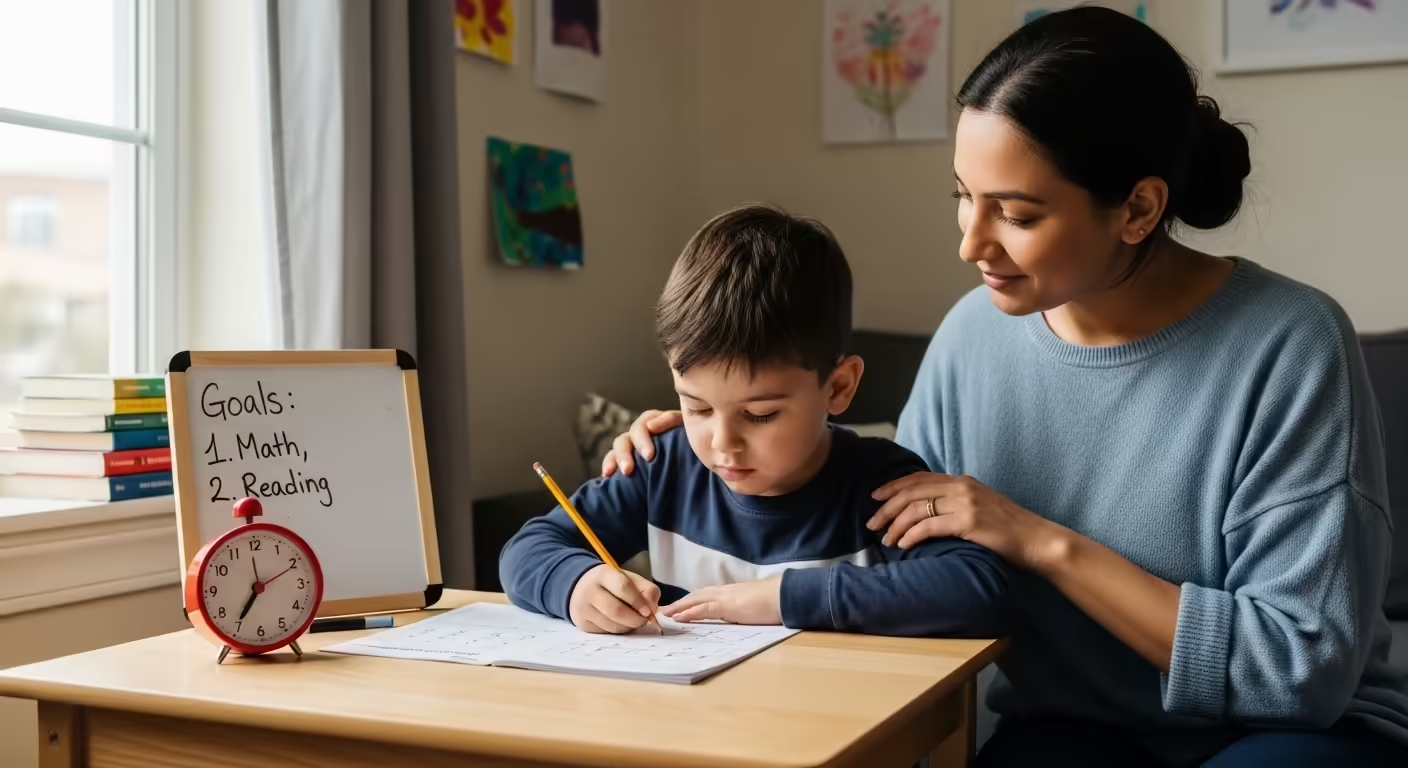
Involve your family. Play for them weekly, even if it’s just 30 seconds of progress. Their support matters more than perfection.
If you are a parent, sitting with your child during practice (even just reading a book nearby) increases retention rates significantly. It turns isolation into family time.
The 80/20 Rule
Focus on the 20% of exercises that give you 80% of the results. Don’t mindlessly noodle. Deliberate practice of tricky sections yields better results than playing the whole song through repeatedly.
Take Strategic Breaks
There is a difference between a break and quitting. A break is planned (“I’m taking 5 days off for vacation”). Quitting is giving up entirely.
Often, a short break allows your brain to consolidate learning. Many students return from a week off playing better than before because the pressure is released.
Check out our tips on staying motivated during lessons (the psychology applies perfectly to piano too!).

Your 90-Day Anti-Quit Plan
-
📅 Month 1: Building Foundation
Establish a basic routine. Practice 15 minutes daily at the same time. Focus on ONE song you love. Join an online piano community for support. -
🚀 Month 2: Developing Momentum
Increase to 20 minutes daily. Add one technical exercise (like scales). Record yourself playing (even if you delete it later, it tracks progress). -
💎 Month 3: Solidifying the Habit
Perfect one piece to performance quality. Play it for a friend or family member. Set your goals for the next 90 days.
Frequently Asked Questions
Is it really possible to learn piano as an adult?
Absolutely. Adults actually have advantages over children, including better focus, understanding of abstract concepts, and genuine self-motivation. While you may not become a concert virtuoso starting at 40, you can certainly reach a high level of proficiency and enjoyment.
How much practice is actually enough?
Consistency matters more than duration. 20 minutes a day, 5-6 days a week, is far superior to a single 2-hour session on the weekend. Your brain needs sleep intervals to consolidate muscle memory.
Do I need a real acoustic piano to start?
No. A weighted-key digital piano (88 keys) is perfectly sufficient for the first several years of study. They are cheaper, require no tuning, and allow you to practice with headphones.
What should I do if I hate the song my teacher gave me?
Speak up! A good teacher wants you to be motivated. Ask if there is a different piece that teaches the same technical skill but fits your musical taste better. If they refuse to adapt, it might be time to find a new teacher.
I haven’t practiced in weeks. Should I just quit?
No! Life happens. Don’t let the “all-or-nothing” mindset win. Just sit down today for 5 minutes. That’s it. Restarting the habit is the only thing that matters, not the gap in your history.
Don’t Be Another Statistic
You now understand why most people quit piano. You know the warning signs. You have specific strategies to overcome each common challenge. This knowledge gives you an unfair advantage over students who stumble through blindly.
The piano doesn’t care about your natural ability. It responds to consistent effort, smart strategies, and genuine love for music. You have everything you need to succeed.
Your future self is either a person who plays piano or a person who quit. Which version do you want to meet five years from now?
Start Your Journey With Us