
Last Updated: March 2026 | By K&M Music Company | San Diego, California
Guitar music lessons build skills faster than going solo. Discover why structured lessons beat self-teaching — and how to start playing sooner.
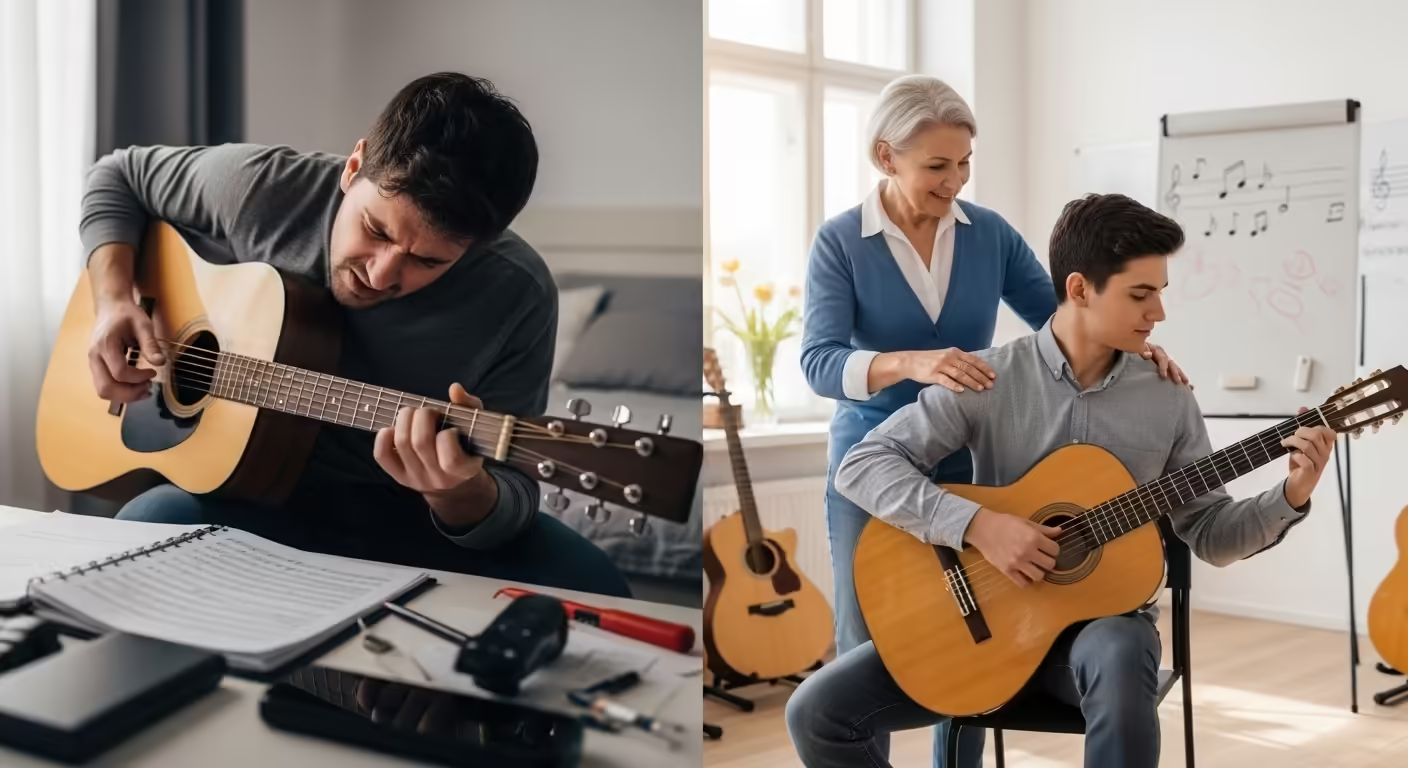
Have you tried learning guitar from YouTube tutorials but still feel stuck after months? You’re not the only one. Many novice players and self-taught beginners spend hours watching online video lessons without making real progress.
While online courses like TrueFire, JamPlay, and GuitarTricks provide decent step-by-step video lessons—and act as a good middle ground between free tutorials and one-on-one lessons—nothing beats the rapid skill-building that comes from direct human feedback. We put significant effort into researching this guide so you can understand exactly why structured lessons work, and how to get started on your musical journey today.
🎸 Quick Takeaways
| Detail | What to Know |
|---|---|
| Speed advantage | Lessons help most students improve 2–3x faster. |
| Self-taught plateau | Many self-taught players get stuck after 6–12 months. |
| Cost comparison | Online interactive lessons are often cheaper than in-person. |
| First song timeline | A first simple song is possible in about 4–8 weeks with good lessons. |
| Typical price | Private guitar lessons often cost about $40–$100 per hour. |
Guitar Lessons vs. Self-Teaching:
What’s the Real Difference?
Let’s be honest. Self-teaching has real appeal. It’s free, flexible, and you can start right now. Platforms like YouTube and Yousician make it easier than ever to pick up a few chords. And yes, plenty of famous guitarists—Jimi Hendrix, Eric Clapton, Kurt Cobain—were largely self-taught. But even those guitar gods eventually learned from other great musicians around them.
Here’s what most people don’t tell you: Self-teaching works until it doesn’t.
Most self-taught players hit a hard wall between 6 and 12 months. They plateau, get frustrated, and either quit or keep playing the same chords to the same songs over and over. That plateau is a direct result of learning without structure or feedback.
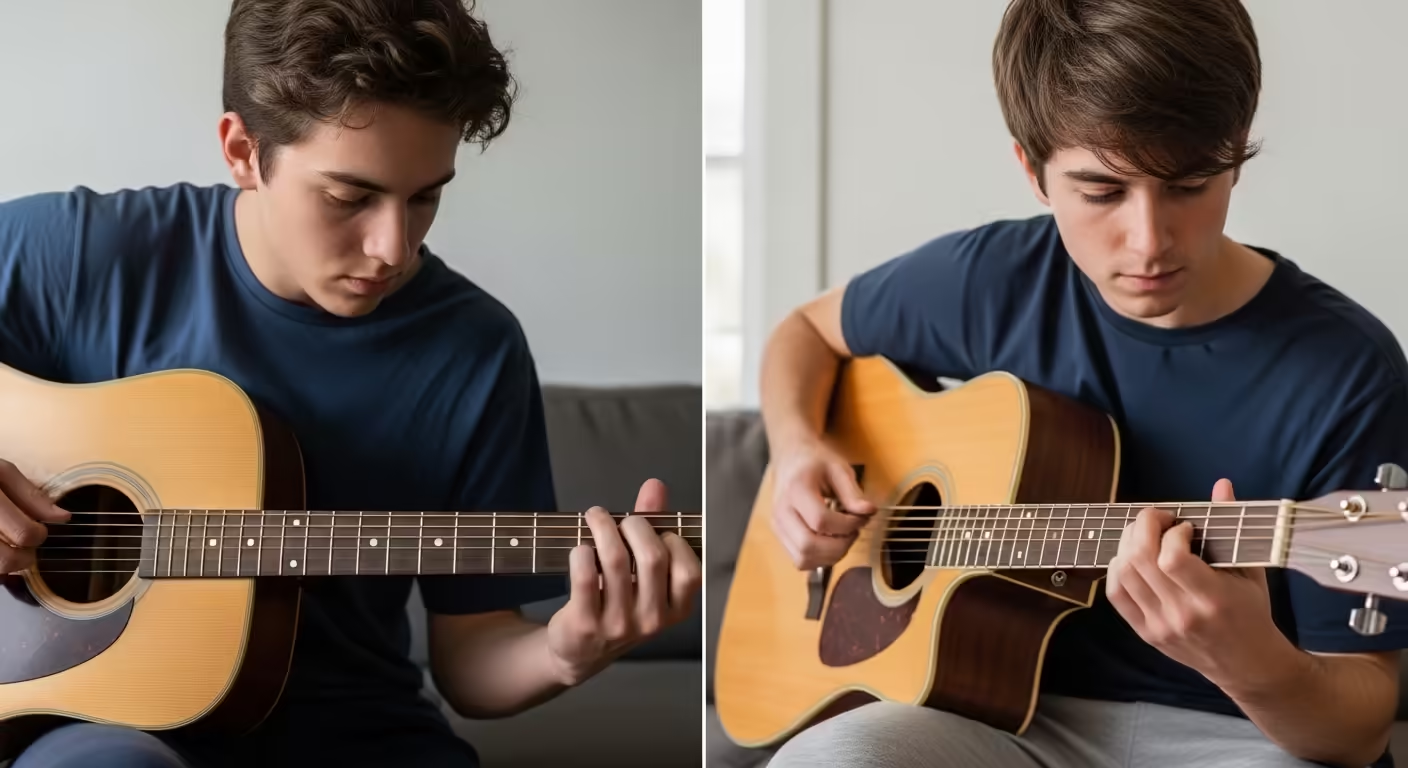
Guitar music lessons that build skill faster than self-teaching address that problem from day one. A qualified tutor gives you a clear progression path. They catch your mistakes before they become habits. They push you forward when you feel stuck.
What Self-Teaching Gets Right
- Zero cost barrier — YouTube tutorials are accessible to everyone.
- Full flexibility — Practice whenever suits your schedule.
- Creative freedom — Explore music styles without rigid structure.
- Low pressure — No judgment or performance anxiety.
Where Self-Teaching Falls Short
- No real-time feedback — You can’t see your own bad habits forming.
- Random learning paths — Jumping between videos with no clear structure.
- Theory gaps — Most self-taught players skip musical theory entirely.
- Injury risk — Poor basic technique leads to wrist and finger strain over time.
6 Reasons Structured Lessons Work Faster
So what makes real lessons so much more effective? It comes down to six core reasons. Each one directly addresses a weakness in the self-teaching approach.
1. Instant Feedback on Mistakes
The biggest benefit of lessons is fast feedback. A teacher watches your hands, listens to your sound, and fixes problems right away. This stops bad habits like gripping too hard or muting strings. A common self-taught mistake is using your thumb incorrectly during barre chords. A teacher can fix it in the first lesson; on your own, it might hold you back for years.
2. A Proven Learning Path
When you teach yourself, you often jump between random YouTube videos with no plan. A good guitar teacher follows a structured curriculum that builds on itself—one skill at a time, in the exact right order. A clear plan is what turns slow drifting into real progress.

3. Teachers Introduce Music Theory
Most self-taught players avoid music theory because it sounds intimidating. But skipping theory is why players plateau. A great teacher introduces it gradually. To really grasp this, check out our guide on music theory for guitar and its essential fundamentals.
4. Injury Prevention
Poor guitar technique causes real physical injuries like tendinitis and carpal tunnel syndrome. A teacher ensures you hold the guitar correctly. If you’ve ever felt wrist pain, you’ll want to read about proper posture and pick grip for electric guitars to protect your hands for life.
5. Personalization
A 10-year-old learning pop needs a completely different curriculum than a 40-year-old learning blues. Unlike apps, real teachers adapt to your goals and select appropriate repertoire.
6. Accountability
We work harder when someone is watching. Knowing you have a weekly guitar lesson means you actually practice during the week. External accountability drives consistency.

How Fast Do You Learn? (Timelines)
The data is clear. Students with qualified guitar teachers progress significantly faster than those going solo—building an advanced skill level in a fraction of the time.
| Timeline | With Lessons | Self-Taught |
|---|---|---|
| Weeks 1–4 | Learn easy chords (G, C, D), basic technique | Struggle with hand position, learn 2–3 chords |
| Months 3–6 | Barre chords, basic scales, simple solos | Hit first major plateau |
| Years 1–2 | Play many styles, read music confidently | Slowly improve through trial and error |
⏱️ 20-Minute Practice Routine Generator
Lessons alone don’t make you fast—practice does. Select your current skill level to generate a highly efficient 20-minute daily practice block.
Can Adults Learn Guitar Faster Than Kids?
Adults and children learn differently—but neither group has a permanent advantage. Adults understand concepts faster and are more goal-oriented. Children develop finger dexterity naturally and absorb patterns quickly.
If you are an older learner, do not let age stop you. Reading our guide on learning guitar after 40 can provide excellent encouragement. The right teacher adapts to the student’s age and goals, making lessons effective for everyone.
Types of Guitar Lessons & Costs
Choosing the right format makes a big difference in both cost and results.
- Private One-on-One: The gold standard for fast skill development. Best for serious learners and beginners. Average cost: $40–$100/hr.
- Live Online Lessons: Sites like TakeLessons connect you with teachers directly via Zoom. You get real feedback but with more scheduling flexibility. Average cost: $30–$75/hr.
- Group Lessons: A more affordable entry point that creates a social learning environment. Average cost: $15-$50/session.
- Self-Paced Video Courses: Platforms like TrueFire or GuitarTricks. More organized than YouTube, but lacking live feedback. Average cost: $15-$30/month.

Common Mistakes & Choosing the Right Teacher
If you are attempting to learn on your own, watch out for these massive pitfalls that delay progress:
- Bad Hand Position: Holding the guitar or wrist the wrong way slows you down and can cause pain.
- Skipping Music Theory: Without learning scales and chord families, you cannot improvise or truly understand songs.
- Only Learning Songs: Songs are fun, but technique exercises help you play better and cleaner. You need both.
- Inconsistent Practice: Practicing only when you feel like it means you waste guitar time without improving.
How to Choose the Right Guitar Teacher
Pick a teacher who plays your style. A jazz guitar specialist and a rock instructor teach very differently. Don’t just look for a good teacher — look for the right fit.
- Check Experience: Being a good guitarist doesn’t mean someone is a good teacher. Choose someone who has worked with beginners.
- Check Credentials: Degrees from music colleges or certifications from groups like MTNA show the teacher takes their training seriously.
- Take a Trial Lesson: Pay attention to whether they explain concepts clearly, listen to your goals, and make you feel comfortable asking questions.
- Look for Clear Policies: A professional teacher provides written policies covering rates, cancellations, and practice expectations.
Frequently Asked Questions
Is it faster to learn guitar with lessons or by yourself?
Lessons are significantly faster. Students with teachers typically progress 2–3x quicker than self-taught learners because of real-time feedback, structured progression, and consistent accountability.
Can I teach myself guitar without any lessons?
Yes—but most self-taught players develop bad habits and plateau within 6–12 months. Self-teaching works best as a supplement to formal instruction, not a replacement.
How long does it take to learn guitar with weekly lessons?
With a weekly lesson and daily practice, most students can play simple songs in 4–8 weeks, reach an intermediate level in 6–12 months, and become a competent guitarist within 1–2 years.
What age is best to start guitar lessons?
Most children are ready at ages 6–7. Adults can begin successfully at any age. Both groups benefit enormously from structured instruction.
How much do guitar lessons cost in the US?
Private guitar lessons average $40–$100 per hour across most of the United States. Online lessons typically cost 20–30% less than in-person sessions. Music schools typically charge $80–$150 per month for a package.
Do I need a guitar at home before starting lessons?
Yes. Practicing between lessons is essential for progress. You don’t need an expensive instrument—a basic, nice guitar in the $100–$200 range works fine. Your teacher can help you choose.
What is the hardest part of learning guitar for beginners?
Building finger strength and smooth chord transitions are the two biggest early challenges. Both improve quickly with daily practice—most students see noticeable improvement within the first 4 weeks.
Final Thoughts — Why Lessons Beat Self-Teaching
Self-teaching can be a fun extra—and there’s nothing wrong with it as a supplement. But if you want to learn guitar faster, play with better techniques, and enjoy the process more without hitting a plateau, a good teacher is the best choice.
The encouragement and structure they provide are what turn musical pursuits into real, lasting skill. Even top guitar players have teachers and coaches. Getting help is normal. It’s what separates great guitar players from the rest.
Start Your Journey With Us Today