

Master fingerpicking ukulele techniques in just 30 days. Learn advanced fingerpicking skills, improve your rhythm, and play your favorite songs with ease. Start your journey to fingerpicking mastery today!
Learning to fingerpick on the ukulele can transform your playing and open up a world of new musical possibilities. If you’re eager to master fingerpicking techniques and want to see significant improvement in just 30 days, you’ve come to the right place. This comprehensive guide will walk you through everything you need to know to achieve Advanced Ukulele Lessons: Fingerpicking Mastery in 30 Days.
| Skill Level | Techniques | Brands |
|---|---|---|
| Beginner | Simple patterns, strumming, picking | Kala, Lanikai, Mahalo |
| Intermediate | Arpeggios, hammer-ons, pull-offs | Martin, Opinika, Luna |
| Advanced | Syncopation, vibrato, improvisation | Taylor, Cordoba, Kala |
Why Learn Fingerpicking on the Ukulele?
The ukulele is a versatile instrument that’s easy to learn and fun to play. Fingerpicking, also known as fingerstyle, allows you to create intricate rhythms and melodies using just your fingers. Here’s why learning fingerpicking is a great idea:
The Benefits of Fingerpicking
Fingerpicking offers numerous advantages:
- Enhances finger dexterity: Regular practice improves your finger strength and agility.
- Improves rhythm and timing: Fingerpicking helps you develop a better sense of rhythm and timing.
- Adds depth and complexity: It allows you to play more complex songs and compositions.
- Makes you a more versatile musician: Fingerpicking skills are valuable in various musical settings.
Why 30 Days?
A 30-day plan is an achievable and motivating goal. Consistent practice over 30 days can yield noticeable improvements. Plus, it’s a realistic timeframe for seeing significant progress.

Music Lessons in San Diego with K&M Music School
Expert Music Lessons
We offer Piano, Violin, Cello, Saxophone, Bassoon, Harp, Voice, and Toddler group lessons for students of all ages and skill levels.
Why Choose Us?
- 🎶 Boosts focus and self-discipline
- 🎵 Strengthens cognitive skills
- 🎼 Enhances cultural understanding
- 🎤 Builds confidence through recitals and performances
We Welcome Adults Too!
Book Your Free Lesson NowGetting Started: Essential Tips for Beginners
Before diving into advanced techniques, let’s cover the basics. Here are some essential tips to get you started:
Choosing the Right Ukulele
Selecting the right ukulele is crucial for your fingerpicking journey. Consider these factors:
- Types of ukuleles: Soprano, concert, tenor, and baritone ukuleles are popular choices. Sopranos are smaller and easier for beginners.
- Tuning: Standard tuning (GCEA) is common, but you can explore different tunings for unique sounds.
- Material: Wooden ukuleles are traditional, while plastic ukuleles are lighter and more durable.
Basic Fingerpicking Techniques
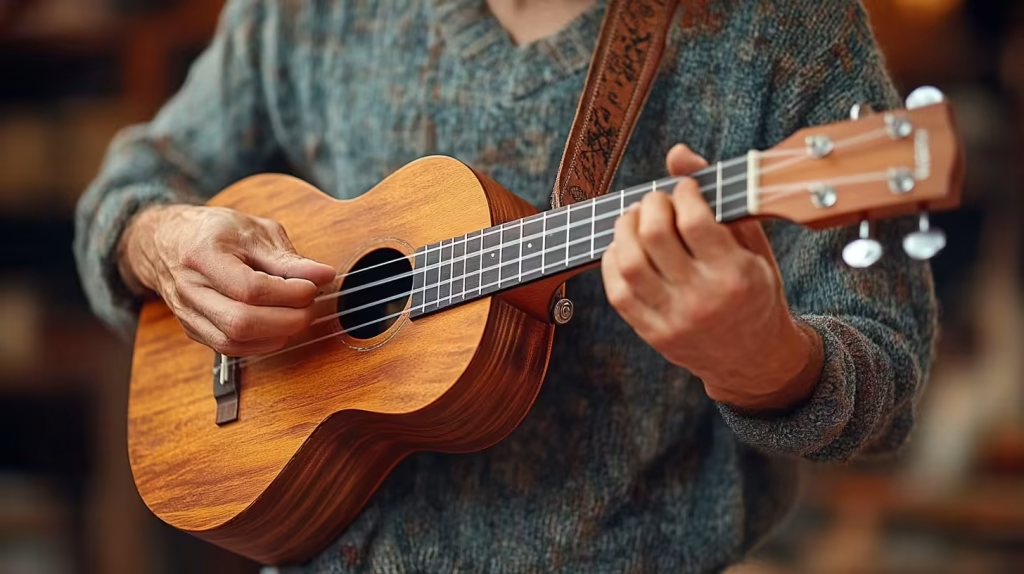
Fingerpicking involves using your fingers to pluck the strings. Here are some basic techniques to start with:
- Introduction to fingerpicking patterns: Learn simple patterns like thumb-strumming and fingerpicking.
- Basic strumming and picking techniques: Practice strumming and picking separately before combining them.
- Tips for developing a steady rhythm: Use a metronome to keep your rhythm steady.
The 30-Day Fingerpicking Mastery Plan
Now that you have the basics down, let’s dive into a structured 30-day plan to master fingerpicking.
Day 1-7: Foundational Skills
In the first week, focus on building a strong foundation:
- Warm-up exercises: Start each practice session with warm-up exercises to loosen your fingers.
- Simple fingerpicking patterns: Practice basic patterns like thumb-strumming and fingerpicking.
- Basic chord progressions: Learn simple chord progressions to apply your new techniques.
Day 8-14: Building Speed and Accuracy
Week two is about improving your speed and accuracy:
- Advanced fingerpicking patterns: Learn more complex patterns and techniques.
- Techniques for increasing speed: Practice slowly at first, then gradually increase your speed.
- Tips for maintaining accuracy: Focus on precision and avoid rushing.
Day 15-21: Expanding Your Repertoire
In week three, expand your musical horizons:
- Learning new chords and progressions: Explore new chords and progressions to play.
- Incorporating fingerpicking into songs: Apply your fingerpicking skills to your favorite songs.
- Practice routines for different genres: Experiment with different musical styles to keep things interesting.

Day 22-28: Refining Your Skills
Week four is about refining your skills:
- Advanced techniques and variations: Learn new techniques and variations to keep your playing fresh.
- Improvisation and creativity: Experiment with improvisation to add your own touch.
- Performance tips and tricks: Practice performing to build confidence.
Day 29-30: Final Touches and Review
In the final days, review and refine:
- Review of key techniques: Go over the techniques you’ve learned.
- Performance practice: Practice performing for an audience or recording yourself.
- Setting new goals: Set new goals for continued improvement.
Common Challenges and Solutions
Mastering fingerpicking can be challenging, but with the right strategies, you can overcome obstacles:
Overcoming Frustration
Practice can be frustrating, but here are some tips:
- Tips for staying motivated: Set small, achievable goals and celebrate your progress.
- Techniques for handling practice plateaus: If you hit a plateau, try a different approach or take a break.
Improving Finger Strength
Strong fingers are key to successful fingerpicking:
- Exercises for building finger strength: Incorporate finger exercises into your practice routine.
- Stretching and warm-up routines: Warm up before practice to prevent injuries.
Developing a Consistent Practice Routine
Consistency is key to progress:
- Tips for creating a daily practice schedule: Set aside dedicated practice time each day.
- Tools and apps for tracking progress: Use apps to track your progress and stay motivated.

Resources for Advanced Ukulele Lessons: Fingerpicking Mastery in 30 Days
There are plenty of resources to help you on your fingerpicking journey:
Recommended Books and Online Courses
- Top books for advanced fingerpicking: “Ukulele Fingerpicking for Dummies” and “Ukulele Fingerstyle Mastery” are great choices.
- Online courses and tutorials: Websites like Udemy and YouTube offer numerous courses for all skill levels.
Community and Support
Joining a community can provide invaluable support:
- Joining ukulele forums and groups: Websites like Reddit and Facebook have active ukulele communities.
- Finding local ukulele meetups and workshops: Attend local events to connect with other players.
Advanced Fingerpicking Techniques
Now that you have the basics down, let’s dive into some advanced fingerpicking techniques to take your playing to the next level.
Arpeggios
Arpeggios are broken chords played one note at a time. Here’s how to play them:
- Major arpeggios: Play the root, third, and fifth notes of a major chord.
- Minor arpeggios: Play the root, flat third, and fifth notes of a minor chord.
- Seventh arpeggios: Add the seventh note to major and minor arpeggios.
Hammer-ons and Pull-offs
Hammer-ons and pull-offs are essential techniques for smooth transitions between notes:
- Hammer-ons: Play a note, then quickly press down another finger on the same string to play a higher note.
- Pull-offs: Play a note, then quickly lift your finger to play a lower note.
Slides
Slides involve sliding your finger up or down the fretboard to create smooth transitions:
- Slide up: Play a note, then slide your finger up to play a higher note.
- Slide down: Play a note, then slide your finger down to play a lower note.
Vibrato
Vibrato adds expression and emotion to your playing:
- Natural vibrato: Gently rock your finger back and forth to create a natural vibrato.
- Artificial vibrato: Use your thumb to create a more pronounced vibrato.
Syncopation
Syncopation involves playing notes off the beat to create a more complex rhythm:
- Basic syncopation: Play notes on the “and” of the beat instead of the beat itself.
- Advanced syncopation: Incorporate more complex rhythms and patterns.
Fingerpicking for Different Genres
Fingerpicking can be used in various musical genres. Here are some examples:
Fingerpicking in Folk Music
Folk music often features simple, melodic fingerpicking patterns:
- Example: “Scarborough Fair” by Simon and Garfunkel.
- Tips: Focus on clean, clear picking and simple rhythms.
Fingerpicking in Blues Music
Blues fingerpicking often features more complex rhythms and bends:
- Example: “Cross Road Blues” by Robert Johnson.
- Tips: Experiment with bends, slides, and vibrato.
Fingerpicking in Jazz Music
Jazz fingerpicking requires a good sense of rhythm and improvisation:
- Example: “So What” by Miles Davis.
- Tips: Practice improvisation and complex rhythms.
Fingerpicking in Country Music
Country fingerpicking often features simple, catchy melodies:
- Example: “Wabash Cannonball” by Hank Williams.
- Tips: Focus on clean, clear picking and simple rhythms.
Fingerpicking for Different Skill Levels
Fingerpicking can be enjoyed by players of all skill levels. Here are some tips for different skill levels:
Beginners
For beginners, focus on simple patterns and rhythms:
- Tips: Start with simple fingerpicking patterns and gradually increase complexity.
- Resources: Look for beginner-friendly tutorials and courses.
Intermediate Players
Intermediate players can explore more complex techniques:
- Tips: Experiment with arpeggios, hammer-ons, and pull-offs.
- Resources: Look for intermediate-level courses and tutorials.
Advanced Players
Advanced players can focus on improvisation and complex rhythms:
- Tips: Experiment with syncopation, vibrato, and advanced techniques.
- Resources: Look for advanced courses and tutorials.
Fingerpicking for Different Ukulele Sizes
Different ukulele sizes have their unique characteristics. Here’s how fingerpicking works for each size:
Soprano Ukulele
Soprano ukuleles are the most common and easiest for beginners:
- Tips: The smaller size makes it easier to press down strings.
- Techniques: Focus on simple fingerpicking patterns and rhythms.
Concert Ukulele
Concert ukuleles have a deeper sound and a larger body:
- Tips: The larger size makes it easier to play complex rhythms.
- Techniques: Experiment with arpeggios, hammer-ons, and pull-offs.
Tenor Ukulele
Tenor ukuleles have a lower pitch and a larger body:
- Tips: The larger size makes it easier to play complex rhythms.
- Techniques: Experiment with syncopation, vibrato, and advanced techniques.
Baritone Ukulele
Baritone ukuleles have the lowest pitch and a larger body:
- Tips: The larger size makes it easier to play complex rhythms.
- Techniques: Experiment with syncopation, vibrato, and advanced techniques.
Fingerpicking for Different Musical Styles
Fingerpicking can be used in various musical styles. Here are some examples:
Fingerpicking in Pop Music
Pop music often features simple, catchy melodies:
- Example: “Knockin’ on Heaven’s Door” by Bob Dylan.
- Tips: Focus on clean, clear picking and simple rhythms.
Fingerpicking in Rock Music
Rock fingerpicking often features more complex rhythms and bends:
- Example: “Smoke on the Water” by Deep Purple.
- Tips: Experiment with bends, slides, and vibrato.
Fingerpicking in Classical Music
Classical fingerpicking requires a good sense of rhythm and technique:
- Example: “Pavane” by Gabriel Fauré.
Conclusion
Mastering fingerpicking on the ukulele in just 30 days is an achievable goal that can significantly enhance your musical skills and enjoyment. By following the structured plan outlined in this guide, you’ll develop advanced techniques, improve your rhythm, and gain the confidence to play complex songs with ease. Whether you’re a beginner or an experienced player, dedicating time each day to practice and refine your fingerpicking will open up new musical possibilities and make you a more versatile musician.
Music Lessons in San Diego with K&M Music School
Expert Music Lessons
We offer Piano, Violin, Cello, Saxophone, Bassoon, Harp, Voice, and Toddler group lessons for students of all ages and skill levels.
Why Choose Us?
- 🎶 Boosts focus and self-discipline
- 🎵 Strengthens cognitive skills
- 🎼 Enhances cultural understanding
- 🎤 Builds confidence through recitals and performances
We Welcome Adults Too!
Book Your Free Lesson NowCall to Action
Ready to elevate your ukulele skills? Start your journey to fingerpicking mastery today! Sign up for advanced ukulele lessons, grab your ukulele, and commit to the 30-day plan. With consistent practice and the right resources, you’ll be amazed at how quickly you progress. Don’t wait—begin your transformation into a skilled fingerpicking artist now! Share your progress and experiences with the ukulele community, and let the music inspire you every step of the way.
FAQs
What is fingerpicking?
Fingerpicking, also known as fingerstyle, involves using your fingers to pluck the strings of the ukulele. It allows for more complex rhythms and melodies compared to strumming.
How long does it take to master fingerpicking?
With consistent practice, you can see significant improvement in just 30 days. However, mastering fingerpicking takes time and dedication.
What type of ukulele is best for fingerpicking?
A soprano ukulele is a great choice for beginners due to its smaller size and easier strings to press down. However, any ukulele can be used for fingerpicking.
Are there any specific tools or apps for practicing fingerpicking?
Yes, there are numerous tools and apps designed to help you practice fingerpicking. Metronomes, tuners, and practice apps can be very helpful.
What are some advanced fingerpicking techniques?
Advanced techniques include arpeggios, hammer-ons, pull-offs, slides, vibrato, and syncopation. These techniques add depth and complexity to your playing.
How can I improve my finger strength?
Incorporate finger exercises into your practice routine. Warm up before practice to prevent injuries and use tools like resistance bands to build finger strength.
What resources are available for learning fingerpicking?
There are numerous books, online courses, and tutorials available for learning fingerpicking. Websites like Udemy and YouTube offer courses for all skill levels, and joining ukulele forums and groups can provide valuable support.