
Last Updated: April 3, 2026 | By K&M Music Company | San Diego, California
The 10-Minute Practice Rule helps you build skill faster with short sessions, better focus, and lasting results.

If you have ever wondered whether the 10-minute practice rule really works, this guide is for you. It explains why short practice sessions often work better than long, tiring ones. We will look at 10-minute daily practice and spaced practice — and show how this can help with music, sports, language learning, writing, art, coding, and study habits.
Here are the main ideas:
- Short practice can work better for many learners because focus stays higher, fatigue stays lower, and repetition happens more often
- Daily practice helps build memory and habit — it is better to practice most days, even if the session is short
- Ten minutes is a starting point, not a limit — small wins make it easier to stay consistent
- Research shows spaced practice often helps people remember better than cramming into one sitting
Many people think skill only comes from long practice. However, research shows a different pattern. One focused 10-minute session done often can beat one long messy session done once in a while. That is the heart of the 10-minute practice rule. Whether you are learning piano, guitar, or any other instrument, this approach can transform your progress.
What You’ll Learn in This Guide
- What Is the 10-Minute Practice Rule?
- The Science Behind Short Practice
- Why Short Sessions Beat Long Ones
- Why It Works So Well for Habit Building
- The Rule for Different Skills
- When Short Practice Works Best
- When 10 Minutes May Not Be Enough
- How to Use the Rule the Right Way
- A Simple 10-Minute Practice Template
- Short vs. Long Sessions Compared
- Common Mistakes That Ruin Short Sessions
- Signs the Rule Is Working
- FAQ
Quick Answer
For many people, short practice sessions help build skill faster than long ones. This is because they improve focus, reduce mental tiredness, and make it easier to practice again the next day. Short sessions also match the idea of spaced practice — learning works better when practice is spread out over time instead of packed into one long session.

What Is the 10-Minute Practice Rule?
The 10-minute practice rule means this: practice a skill for ten focused minutes, most days, with one clear goal. That goal might be one guitar riff, one drawing drill, one coding concept, one paragraph, one scale, or one speaking pattern.
This rule is not about doing the bare minimum forever. It is about using a small, repeatable session to make starting easy and progress steady. For beginners, it can be enough on its own. For advanced learners, it can be the floor that keeps the habit alive.
What the 10-Minute Practice Rule Is Not
- Mindless repetition
- Background practice while scrolling your phone
- Random work with no target
- A claim that every skill only needs ten minutes
Instead, the rule is about focused reps, active recall, and daily contact with the skill.
Why the Rule Feels So Good in Real Life
Most people do not fail because they hate learning. They fail because the plan is too big for normal life. A one-hour goal sounds fine on Sunday night. It feels very different on Tuesday at 7:40 p.m.
That is where 10-minute daily practice becomes powerful. It is small enough to start even when your energy is low. A short session tells your brain, “I can do this now.” A long session often says, “Maybe later.” Later often turns into next week.
The Science Behind the 10-Minute Practice Rule
Spaced Practice vs. Massed Practice
A key idea here is spaced practice, also called distributed practice. This means you spread learning over multiple sessions. The opposite is massed practice, where you do a lot at once — like cramming before a test or drilling one skill for an hour until your focus drops.
Learning experts show the same pattern: spacing usually helps people learn better than cramming. What feels slower at first often works better later.
Why Spacing Helps Memory
When you return to a skill after a gap, your brain has to retrieve what you learned before. That retrieval effort strengthens memory. It makes the brain work a little harder, and that effort helps learning stick.
If you practice vocabulary, scales, footwork, or math daily in short blocks, you are giving your brain more chances to pull the skill back up. That is very different from one long session where the skill stays fresh only because you never stopped doing it.
Why the Rule Also Helps Motor Learning
The 10-minute practice rule is powerful because it makes learning easier to repeat. Short practice sessions help you start, stay focused, and come back before the skill fades. This matters for guitar, violin, piano, and any instrument that requires physical coordination.
Why Short Practice Sessions Often Beat Long Practice Sessions
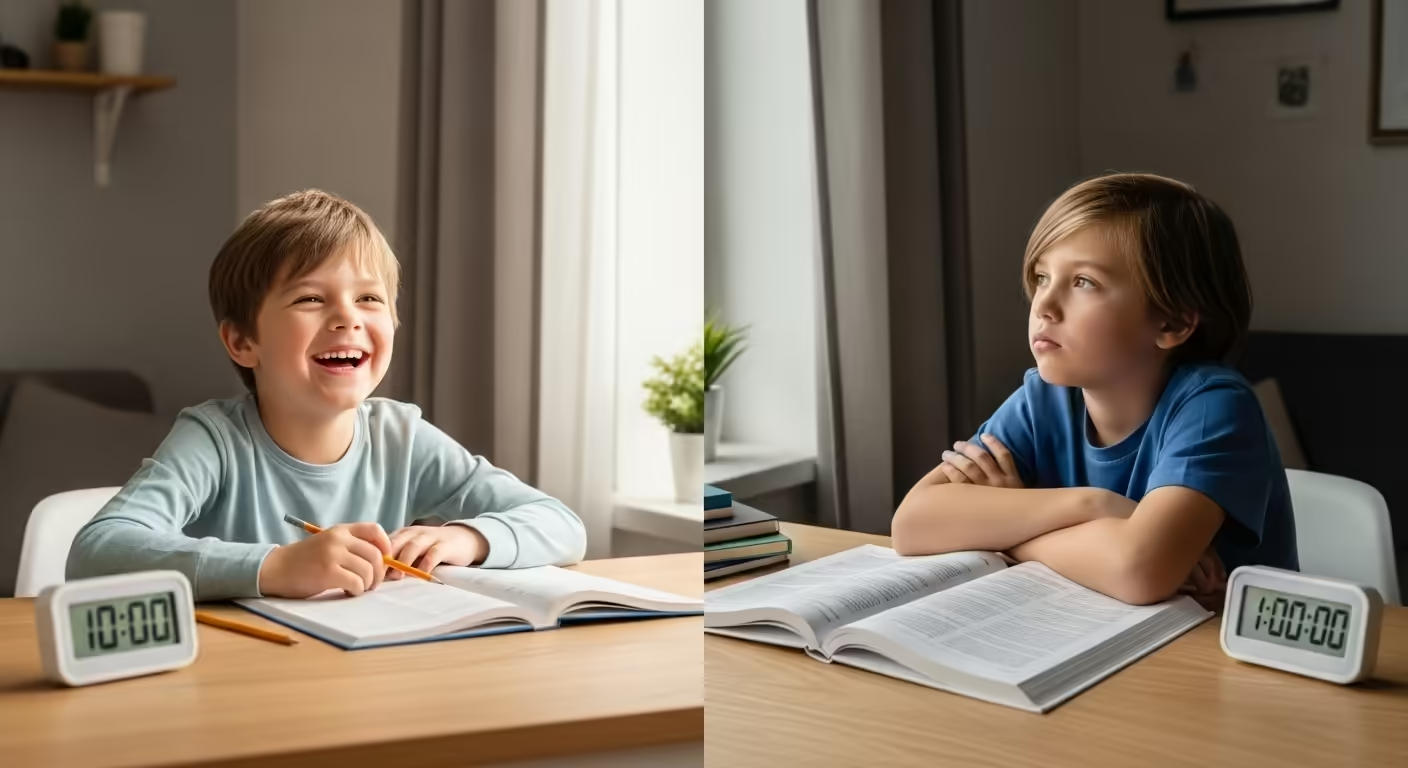
1. Focus stays high. Attention is limited. Ten minutes is short enough that many people can stay locked in. Forty or sixty minutes is often long enough for drift, frustration, and sloppy reps.
2. Fatigue stays lower. Long sessions can lead to mental fatigue, physical fatigue, or both. Once that happens, people often repeat errors. They stop listening, stop adjusting, and just push through.
3. You practice more often. A 10-minute task is easier to repeat than a 90-minute task. That means you get more practice starts, more retrieval cycles, and more chances to improve over time.
4. The habit becomes easier. Starting is usually the hardest part. A short session lowers resistance. This is why the 10-minute practice rule works so well for habit formation, procrastination, and consistency.
5. You avoid “false progress.” Long sessions can create a warm, fluent feeling. Everything feels easy because you just did it twenty times. But the real test is what you can still do tomorrow. Short, repeated sessions expose whether learning actually stayed.
| Practice Style | Focus | Repeatability | Long-Term Retention |
|---|---|---|---|
| 10 min × 6 days | Very high | Very high | Very high |
| 30 min × 3 days | High | High | High |
| 60 min × 1 day | Medium | Medium | Medium |
| 120 min once in a while | Low | Low | Low |
A plan you can repeat usually beats a plan you admire but rarely follow.
Why the 10-Minute Practice Rule Works So Well for Habit Building
Many people think motivation drives practice. In daily life, friction matters more. Friction means all the little things that make starting harder — time pressure, low energy, setup time, and fear of doing badly.
The 10-minute practice rule reduces friction. That is its hidden strength.
Small Goals Feel Safer
A short practice block feels less heavy. This lowers avoidance. It also reduces the inner voice that says, “I do not have enough time, so I should skip today.”
Daily Practice Builds Identity
When you practice every day, even briefly, you start to think of yourself as someone who shows up. That identity matters. It makes the next session easier.
Consistency Beats Intensity for Most Beginners
Beginners often improve fastest from steady contact with the basics. They do not need heroic effort. They need useful repetition. A student who practices guitar for ten minutes a day often learns more than a student who practices one hour every Sunday and then disappears.
The 10-Minute Practice Rule for Different Skills
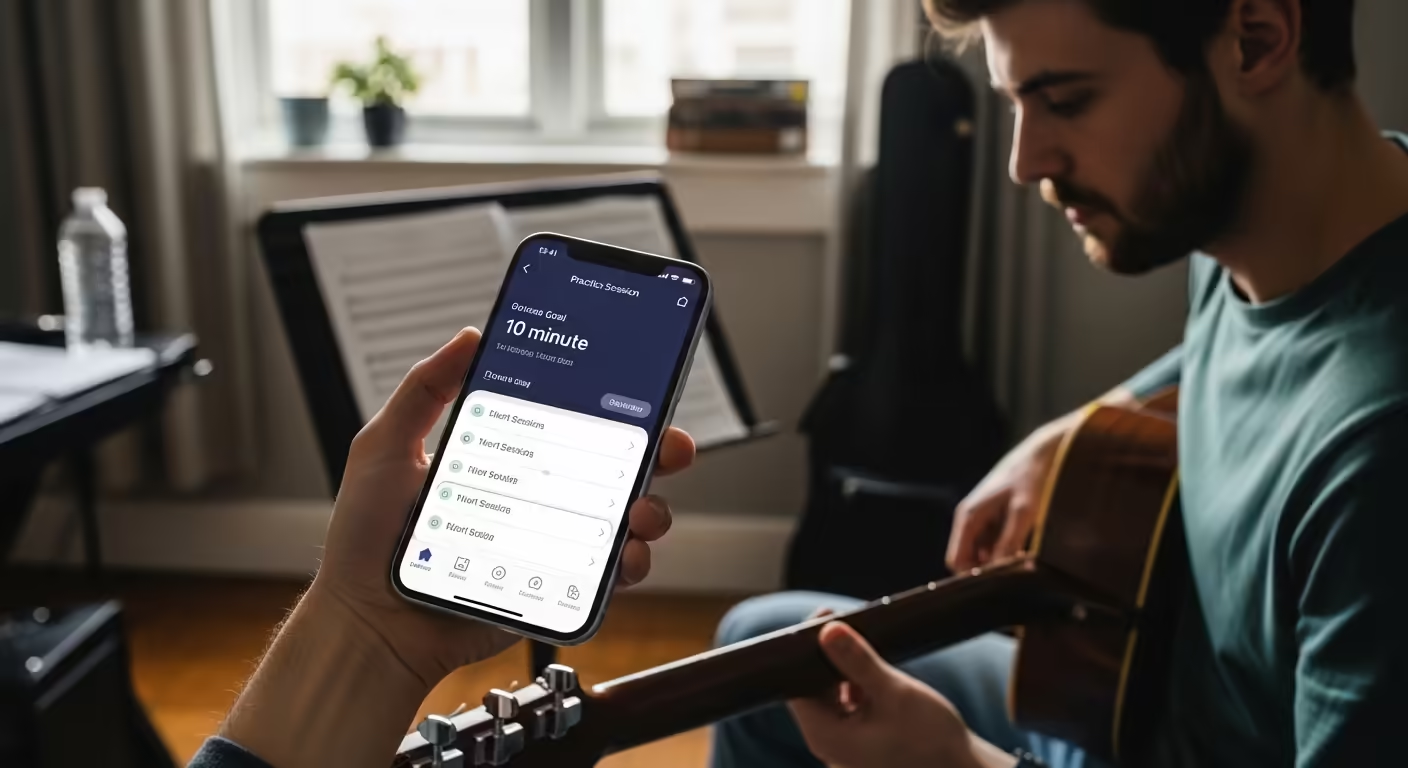
For Music Practice
Music is a perfect fit for short practice. A ten-minute block can cover:
- 1 minute: set the goal
- 2 minutes: warm up
- 5 minutes: one hard bar, phrase, or chord switch
- 2 minutes: play it cleanly and stop
This works well because music skill grows through repetition, timing, tone, ear training, and motor control. Those improve well with frequent contact. If you want to learn how this fits into a structured lesson, explore our music lessons.
For Language Learning
A short language session can include 3 minutes of vocabulary recall, 3 minutes of speaking out loud, 2 minutes of one grammar pattern, and 2 minutes of listening and repeating. This gives you retrieval practice and active use, which is far better than passively staring at notes.
For Writing
Writing practice does not have to mean a full essay. Ten minutes can mean one paragraph, one rewrite, one transition drill, or one opening sentence exercise. That is enough to improve fluency, structure, and clarity over time.
For Drawing or Art
Try 2 minutes of lines and circles, 3 minutes of gesture sketching, 3 minutes of shape study, and 2 minutes to review what looked better. That is enough to build hand control and visual awareness.
For Sports and Fitness Skills
Short practice works well for footwork, ball handling, mobility drills, throwing form, swing mechanics, and balance. It is especially useful when the goal is technique, not full conditioning.
When Short Practice Sessions Work Best
- Best for beginners: Beginners need reps, confidence, and habit. Short sessions give them all three.
- Best for busy people: If work, school, children, or commuting eat your day, ten minutes may be the only plan that survives contact with real life.
- Best for skill retention: If you already know a skill but want to keep it alive, short practice is excellent. It stops rust from building.
- Best for people who procrastinate: A short task is easier to start. Progress comes from starting more than from planning.
When 10 Minutes May Not Be Enough
Ten minutes is strong, but it is not magic.
Advanced learners may need more time. If you are preparing a recital, coding a full app, training for a game, or drafting a long paper, you may need longer sessions too. However, the 10-minute rule can still serve as your daily base.
Some work needs setup time. Certain tasks need more than ten minutes just to begin. Lab work, team practice, and full performance runs are examples.
The Best Blend Is Often This
- Short daily sessions for habit and retention
- Longer sessions once or twice a week for deeper work
That gives you the best of both worlds.
How to Use the 10-Minute Practice Rule the Right Way
Pick One Narrow Goal
Do not say, “I will practice piano.” Say, “I will fix the left-hand rhythm in measure 8.” Clear goals create better reps.
Remove Setup Friction
Keep your guitar out. Leave your notebook open. Save the coding file. Put the flashcards where you can see them.
Use a Cue
Attach practice to something you already do: after coffee, after lunch, after work, before dinner, or right after brushing your teeth.

Track Small Wins
Use a simple checklist. Write one line after each session: What did I practice? What felt easier? What still needs work?
Stop While Focus Is Still Good
This point matters. If you stop before burnout, tomorrow feels easier. That is how the habit stays alive.
A Simple 10-Minute Practice Template
This small structure cuts decision fatigue. You do not waste half the session deciding what to do.
| Minute | What to Do | Why It Matters |
|---|---|---|
| Minute 1 | Name one goal | Removes confusion |
| Minutes 2–3 | Warm up or review | Wakes up your memory |
| Minutes 4–8 | Focused drill | Builds the skill |
| Minute 9 | One clean repeat | Ends with quality |
| Minute 10 | Write a quick note | Tracks your progress |
Daily, Weekly, and Monthly Examples
Daily: Practice the same skill at the same time each day for 10 minutes. Example: 7:30 p.m. — guitar chord changes. Goal — smooth switch between G and C.
Weekly: Monday to Friday: 10-minute focused sessions. Saturday: 15 to 20-minute review. Sunday: rest or light recall.
Monthly: Choose one skill theme for four weeks. Examples: piano rhythm, Spanish verb recall, basketball footwork, better sentence openings, faster typing accuracy. A month gives you enough time to notice real change.
Short Practice Sessions vs. Long Practice Sessions
Each practice format has a different strength.
| Format | Best For | Strength |
|---|---|---|
| 10-minute sessions | Building habits, memory, beginner skills | Easy to start and repeat |
| 20–30 minute sessions | Intermediate learning | More depth while keeping focus |
| Long sessions (60+ min) | Performance practice, putting skills together | Full run-throughs and bigger tasks |
The point is not that long sessions are bad. The point is that long sessions are often overused and poorly timed. Many people need short sessions first because short sessions are what they will actually do.
Common Mistakes That Ruin Short Practice Sessions
Practicing without a target. A short session with no goal disappears fast. Keep it narrow.
Switching too often. If you change the target every day, progress slows. Repeat the same drill long enough to improve it.
Going too hard too soon. Do not turn ten minutes into a pressure test. Build the routine first.
Treating practice like performance. Practice is where you slow down, isolate errors, and repeat with control. Performance is where you run the whole thing.
Expecting fast mastery. The rule works through repetition. It is simple, but it still needs time. (If you are wondering why most people quit piano, impatience is often the reason.)

Signs the 10-Minute Practice Rule Is Working
You may not notice progress each day. That is normal. Instead, look for these signs:
- You start faster
- You skip fewer days
- You remember more from the last session
- You make fewer repeat mistakes
- The skill feels less awkward
- You need less warm-up time
- You feel less resistance before practice
These are strong signals that learning is taking hold.
The 10-Minute Practice Rule Works Because It Makes Learning Repeatable
The 10-minute practice rule is powerful because it makes learning easier to repeat. Short practice sessions help you start, stay focused, and come back before the skill fades. They also match the science of spaced practice — an idea strongly supported by learning and memory research.
If you want better results, do not ask, “How long can I force myself to practice?” Ask, “What short session can I repeat almost every day?” That is the better question.
Here is a simple next step. Pick one skill. Pick one fixed time. Practice for ten minutes a day for the next seven days. Then notice what changes.
Ready to put this into action with music? Book your free trial lesson with K&M Music Company and see how much progress 10 focused minutes a day can create.
Frequently Asked Questions
Does the 10-minute practice rule really work?
Yes. Short sessions often work better because they reduce tiredness and let you practice more often over many days. They also help you remember better and make habits easier to build.
Is 10 minutes of practice enough each day?
For beginners, yes, it can be enough to make real progress. For advanced learners, it may be the minimum daily contact that keeps momentum alive.
Is daily 10-minute practice better than one long weekly session?
For many skills, yes. Daily short practice usually gives better retention and easier habit building than a single long weekly session.
Does this work for music, sports, study, and language learning?
Yes. The rule fits any skill that improves through repetition, feedback, recall, and control.
Should I ever do longer practice sessions?
Yes. Longer sessions still matter for performance runs, projects, and higher-level integration. Many people do best with a mix of short daily sessions and a few longer sessions each week.
Why do short sessions build skill faster than long ones?
Short sessions keep focus high, reduce mental tiredness, and let you practice more often over many days. They also match the science of spaced practice, which helps memory retention.