
Last Updated: April 2, 2026 | By K&M Music Company | San Diego, California
Learning music as an adult feels hard, but your brain can grow, adapt, and surprise you quickly.

Learning music as an adult is more possible than many people think. If you are wondering whether it is too late, this guide is for you. Whether you want to take adult music lessons on piano, guitar, drums, or voice, the neuroscience is clear: your brain still learns, adapts, and builds new connections at every age.
Here are the main ideas:
- Your brain still learns through repetition, attention, and emotion — you are not too old
- Adults have real strengths: better focus, clear goals, deeper listening, and smarter practice
- Progress comes from small, steady steps — you do not need to rush
- This guide gives you simple plans, helps you choose an instrument, and answers common questions
Maybe you once wanted to play piano, guitar, bass guitar, electric guitar, clarinet, jazz saxophone, or sing — but life got busy. Maybe you tried as a kid and stopped. Or maybe you are starting from zero and want a simple answer. The short answer is this: learning music as an adult can be challenging, but it is very possible, and your brain is better at it than you may think.
What You’ll Learn in This Guide
- Why Adult Music Learning Feels Harder Than It Is
- How Your Brain Actually Learns Music
- Why Adults May Be Better Learners Than They Think
- What Is Honestly Harder for Adults
- Adults vs. Children — A Fair Comparison
- The Real Benefits of Learning Music
- Best Instruments for Adult Beginners
- Practice Plans That Work
- Your First 30 Days
- Common Mistakes to Avoid
- Is It Too Late at 30, 40, 50, 60?
- FAQ
Quick Summary
| Topic | What to Know |
|---|---|
| Can adults learn? | Yes — your brain still changes through neuroplasticity |
| Key adult strengths | Focus, goals, pattern recognition, deeper listening |
| Real challenges | Less time, perfectionism, fear of looking unskilled |
| Best practice plan | 15–30 minutes, 4–6 days a week |
| First song timeline | Many adults play a simple song within weeks |
| Best first instruments | Piano, guitar, ukulele, voice, drums |
| Brain health benefits | Better memory, cognitive function, and overall brain health |

Why Learning Music as an Adult Feels Harder Than It Really Is
A lot of adults believe music belongs to children. That idea sticks because many professional musicians started young — often through early music exposure and childhood music programs. However, that does not mean adults cannot learn well. It only means the path looks different.
The real issue is often not age. It is time, stress, and self-judgment. Adults juggle work, family, bills, and tired minds. So, when musical practice feels slow, people blame age even though the bigger problem may be a full life and high expectations.
There is also a hidden emotional barrier. Adults are used to being good at things. Starting as a beginner can feel awkward — it requires a growth mindset that many adults have not needed in years. A child will hit wrong notes and keep going. An adult may hit two wrong notes and think, “Maybe I am just not musical.” That thought stops more people than age ever does.
Can adults learn music? Yes. Adults can learn music from scratch. Adults can learn a musical instrument. Adults can build strong musical skill if they practice in a smart, steady way.
Success does not have to mean performing at a concert hall. For many people, success means playing favorite songs, keeping steady rhythm, reading simple music, singing with more confidence, or joining a choir or jam session. A better goal is simple: become more musical than you are today.
How Learning Music as an Adult Works in the Brain
Your Adult Brain Still Changes
The key idea here is neuroplasticity — a concept from cognitive neuroscience that means the brain can change by building and strengthening connections. Adults still have neuroplasticity. It is not gone after childhood. It may work differently, and it may need more repetition, but it is still there.
Every time you repeat a rhythm, find a note, or correct a chord shape, your brain is doing wiring work. A brain pathway forms — weak at first, then clearer and faster with steady use. That is why the first week can feel clumsy, while month three feels much smoother.
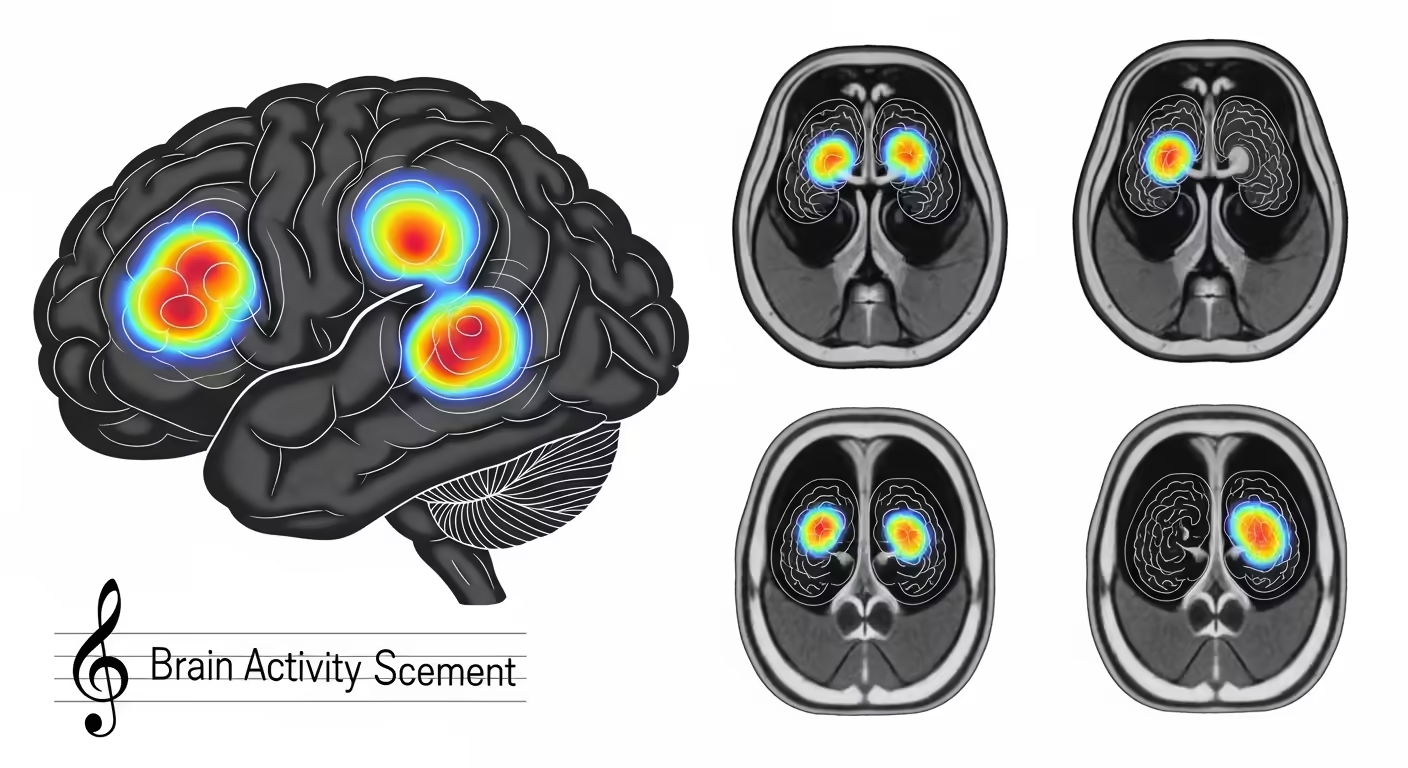
Music Uses Many Brain Regions at the Same Time
Neuroscience research shows that music can activate almost all brain regions and networks — including the auditory cortex (which processes sound), the motor cortex (which controls movement), and areas linked to emotion, memory, and cognition. When you practice, you are not just “learning notes.” You are asking the brain to connect sound, touch, time, and feeling in one task.
Repetition Makes Brain Pathways Stronger
There is a simple rule in brain science: use a brain pathway and it stays strong; ignore it and it fades. That is why short, regular practice often beats one huge session once a week. The brain likes frequent reminders. A calm 20-minute session done five times can enhance learning more than one long, scattered session where attention drops.
Music May Support Overall Brain Function Later in Life
Research shows that learning music can support brain health and overall brain function over time. A large study looked at over 25,000 adults over 40 and found that people who play an instrument often have better memory and problem-solving skills. Even more, those who keep playing later in life get the most brain benefits.
Why Adults May Be Better at Learning Music Than They Think
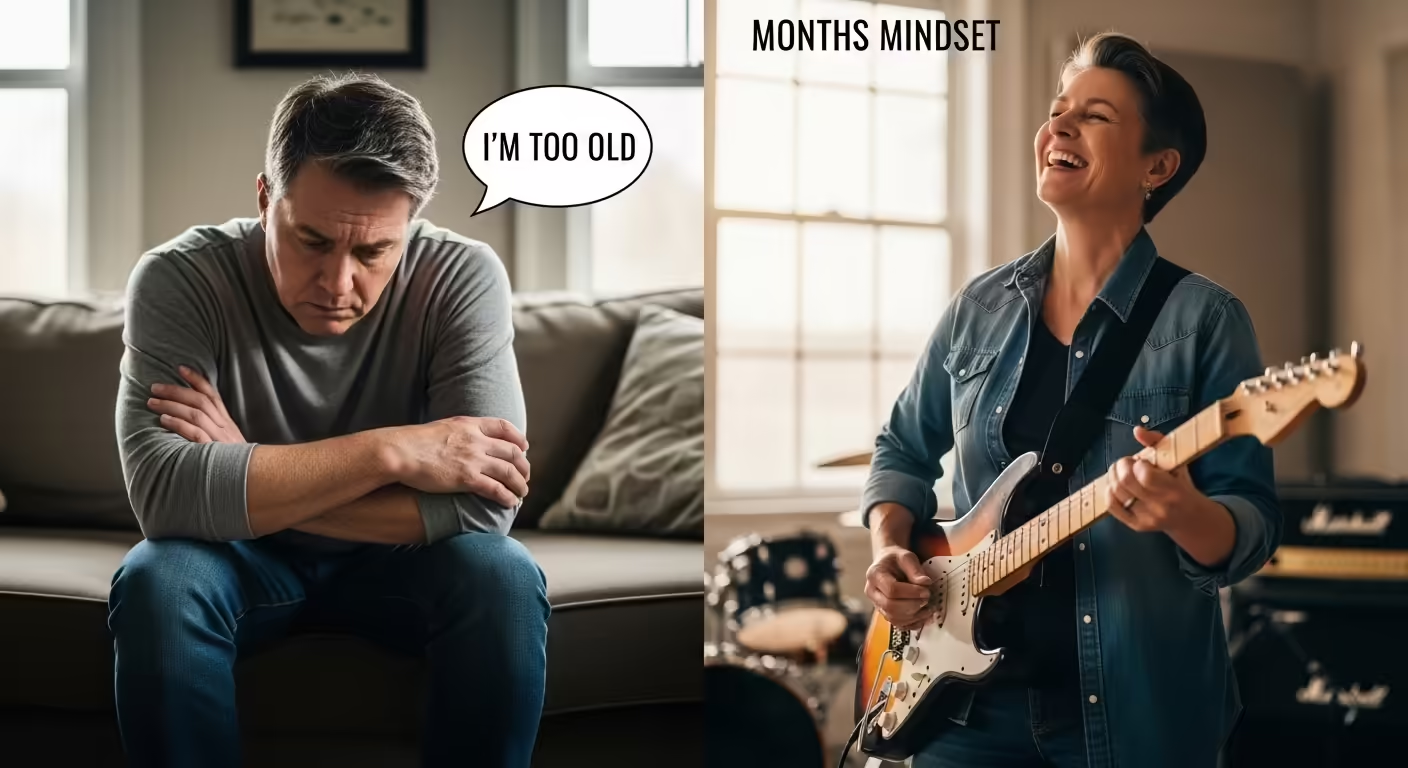
Adults Usually Have Stronger Reasons to Learn
Children often learn because a parent signs them up. Adults usually learn because they deeply want to. That matters. Motivation shapes consistency. If you want to learn guitar so you can play songs you love, that goal has emotional force. Purpose creates momentum.
Adults Can Think in Patterns
Adults often see structure well. They notice verse and chorus. They hear repetition. They can grasp why a chord progression repeats or why a rhythm feels stable. A child may memorize four chords one by one. An adult may notice that the same four chords appear in many songs. That one insight can speed up progress dramatically.
Adults Can Practice Smarter
Adults may have less time, but they can often use time better. They can break a hard part into smaller pieces. They can use a calendar, track goals, and review mistakes. They can say, “Today I will fix bars three and four,” instead of vaguely playing the whole song again. Smart practice is one of the biggest advantages in learning music as an adult.
Adults Often Listen More Deeply
Adults can hear and see things in music that escape children. Adult learners may notice harmony, mood, and phrasing with more depth because they bring years of listening experience. While a child may copy quickly, an adult may understand music more deeply. That deeper listening supports expression, musical taste, and long-term enjoyment.
What Is Harder About Learning Music as an Adult
It helps to be honest here. Adult learning has real challenges.
| Challenge | Why It Matters |
|---|---|
| Time | Adults must squeeze practice between work, errands, and sleep |
| Perfectionism | Adults want to sound good too soon — but music asks you to be bad first |
| Fear of looking unskilled | Fear of failure is a major issue, especially for people who feel competent elsewhere |
| Physical tension | Hands, shoulders, and jaw may hold tension — warm-ups and slow tempo matter |
| Mindset | Adopting a growth mindset — believing you can improve — is essential but does not come naturally |
Learning Music as an Adult vs. Learning Music as a Child
| Factor | Adults | Children |
|---|---|---|
| Goals | Clear and personal | Often need outside motivation |
| Practice planning | Better at self-direction | Need more structure |
| Listening depth | Deeper from life experience | Fresh ears, less self-consciousness |
| Available time | Usually less | Usually more flexible |
| Fear of mistakes | Often stronger | Usually less afraid |
| Habit building | Strong if routine is set | Easier with early music exposure |
Children often learn with less self-consciousness. Adults often learn with more music awareness. Both paths work — they are just different. The goal is not to beat a child’s pace. The goal is to build your own musical life in a way you can sustain.
The Benefits of Learning Music as an Adult
Brain and Memory Benefits
Music uses your memory, timing, attention, and focus — it is like a workout for your cognitive function. Research shows that people who keep playing music often have better thinking skills, stronger cognition, and improved brain health. One study found that keyboard and brass players had better working memory, while woodwind players did better with goal-setting tasks.
Mood, Stress Relief, and Well-Being
Music gives you a break from screens and daily stress. Studies show that people who stay active with music often feel happier and have stronger brain function, even after age 50. Playing an instrument — whether it is uptempo music that energizes you or background music that calms you — improves well-being measurably.
Confidence and Identity
There is a special kind of confidence that comes from learning something new as an adult. It says, “I can still grow.” Music also gives identity. You stop saying, “I wish I played.” You start saying, “I play piano,” or “I am learning guitar.” That shift is powerful.
Social Connection
Music can be private, but it can also be shared. Lessons, choirs, jam groups, community music groups, and local ensembles help like-minded adults meet through a common interest.
What Research Says in Simple Numbers
| Finding | Source |
|---|---|
| 69% of music event attendees report “very good” brain health vs. 52% of non-attendees | AARP / Global Council on Brain Health |
| 68% of people with childhood music exposure feel confident learning new things vs. 50% without | AARP |
| 25,000+ adults studied — instrument players showed better memory and problem-solving | University of Exeter |
| Continuing to play into later life shows the strongest brain benefits | NIHR |
Best Instruments for Learning Music as an Adult
The “best” instrument is the one you want to keep picking up. Interest matters more than image.
| Instrument | Why Adults Choose It | What’s Hard at First |
|---|---|---|
| Piano | Easy to understand, good for theory | Two-hand coordination |
| Guitar | Play popular songs quickly, portable | Finger soreness, chord changes |
| Ukulele | Small, gentle learning curve, quick wins | Fewer notes than guitar |
| Voice | No instrument needed, direct and personal | Confidence, pitch control |
| Drums | Fun, physical, great for rhythm | Volume, space needed |
| Violin | Beautiful, expressive | Tone and intonation are hard early |
| Saxophone | Rich sound, good for jazz | Embouchure, breath control |
Do You Need to Read Music to Start?
No. You do not need to read standard notation on day one. Many adults begin with chord charts, tabs, ear training, and video guidance. However, basic note reading helps over time — it improves rhythm, expands your repertoire, and lets you use more lesson materials.
Can You Learn Music as an Adult Without a Teacher?
Yes, many adults start alone with apps, videos, and books. Still, a teacher can speed things up. A good teacher spots tension, timing problems, posture issues, and weak habits early. If you are considering music lessons, even a hybrid model works well: one lesson a week or month, self-practice between sessions, and one clear goal at a time.

The Best Practice Plan for Learning Music as an Adult
Most adults do better with short, frequent musical practice than rare marathon sessions. This helps memory, focus, and habit. Weekly target: 15–30 minutes, 4–6 days a week, one clear focus per session.
A Simple 20-Minute Practice Routine
| Step | Time | What to Do |
|---|---|---|
| Warm-up | 3 min | Hands, breath, or basic rhythm |
| Skill work | 5 min | One chord change, scale, or technique |
| Song section | 7 min | A tiny part of one song |
| Fun playing | 3 min | Play something you enjoy |
| Review | 2 min | Note what to fix next time |
Practice Frequency Chart
| Schedule | Result |
|---|---|
| 5 × 20 min/week | Strong learning, steady growth |
| 3 × 30 min/week | Good progress — great for busy adults |
| 2 × 45 min/week | Helpful, but more forgetting between sessions |
| 1 × 2 hours/week | Harder to build habits — least effective |
Touch the instrument often. Keep each session clear. Small steps add up.
Your First 30 Days of Learning Music as an Adult
| Week | Focus | Goal |
|---|---|---|
| Week 1 | Set up success | Choose instrument, set practice time, learn posture and first sounds |
| Week 2 | Learn a small musical unit | 2–4 chords, 5 notes, or 1 rhythm pattern |
| Week 3 | Start a real song | Use a familiar song — it reduces mental load |
| Week 4 | Review and record | Compare week 1 to week 4 — you will usually hear clear progress |
How Long Does It Take to Get Good at Music as an Adult?
| Timeline | What to Expect |
|---|---|
| 2 weeks | Basic posture, first notes, first rhythms |
| 1 month | One or two very simple songs |
| 3 months | Real control over beginner material |
| 6 months | Steady growth, better confidence, emerging performance ability |
| 12 months | Clear musical identity and real progress |
Consistency matters more than speed. Music is rarely a straight line — it is more like stair steps. Nothing seems to happen, then suddenly a hard thing feels easier.
Common Mistakes Adults Make When Learning Music
Starting with songs that are too hard. Early wins matter. Choose music that lets you improve and enjoy.
Practicing without a goal. “Practice piano” is vague. “Fix left-hand rhythm in bars five to eight” is clear. Clear beats vague every time.
Ignoring rhythm. Many adults chase notes and forget time. But rhythm is the frame that holds music together. A simple song with steady timing sounds better than a hard song with shaky timing.
Quitting in the awkward stage. Every learner has an awkward stage. Fingers feel slow. The sound feels rough. This stage is normal — not a sign you lack ability. (If you have felt this way about quitting piano, you are not alone.)
Comparing yourself with children or internet stars. Compare yourself with your last week, not someone else’s year ten. Adopt a growth mindset and measure your own progress.
Is It Too Late to Learn Music at 30, 40, 50, 60, or Beyond?
No. It is not too late at any age. What changes is how you should learn:
- Keep goals smaller
- Use smarter practice
- Protect joy and well-being
- Respect recovery
- Value consistency over intensity
An adult at 50 may learn more slowly than a child in some narrow ways. Yet that same adult may stay more committed because the goal means more. In real life, commitment often beats early speed. The brain needs stimulation at every age — and music is one of the best ways to provide it. (If piano is calling you, read our guide on whether you are too old to learn piano.)
Learning Music as an Adult Is a Real, Worthwhile Goal
Learning music as an adult is not a lost chance. Your brain still changes. It still builds new brain pathways through repetition, attention, and emotion. Music gives the brains of adults a rich task — blending sound, timing, memory, movement, and feeling in one practice.
Adults bring real strengths. You likely know what music moves you. You can set goals. You can plan practice. You can notice patterns. You can choose meaning over pressure. These strengths matter more than many people realize.
So, if you have been waiting for a sign, this is it. Pick one instrument. Pick one small goal. Give it 20 minutes a day for a month. Let the first month be simple. Let it be imperfect. Let it begin.
Ready to start? Book your free trial lesson with K&M Music Company and see how much progress you can make in your first month.
Frequently Asked Questions
Can adults really learn music from zero?
Yes. Many adult beginners start with no background and make strong progress. Adult music lessons are designed for exactly this situation.
What is the easiest instrument for adult beginners?
Piano, ukulele, guitar, and voice are common first choices. The best instrument is the one you want to return to often.
How often should an adult practice?
Aim for four to six short sessions a week. Even 15 minutes counts — the brain benefits from frequency more than duration.
Does music improve memory and cognitive function?
Research strongly suggests yes. Musical engagement activates multiple brain regions and supports memory, cognition, and overall brain function — especially for adults who continue playing into later life.
Do I need a teacher to learn music as an adult?
No, but a teacher can help you improve faster and avoid bad habits. Many adults find that even monthly lessons paired with daily self-practice produce excellent results.
How soon can I play a real song?
Many adults can play a simple song in the first few weeks if the material matches their level and their instrument is set up properly.
Am I too old to learn piano or guitar?
No. Adults of many ages learn both. Piano and guitar lessons are two of the most common choices for learning music as an adult.