
Last Updated: March 2026 | By K&M Music Company | San Diego, California
Real timelines, practice tips, and beginner expectations — by instrument.
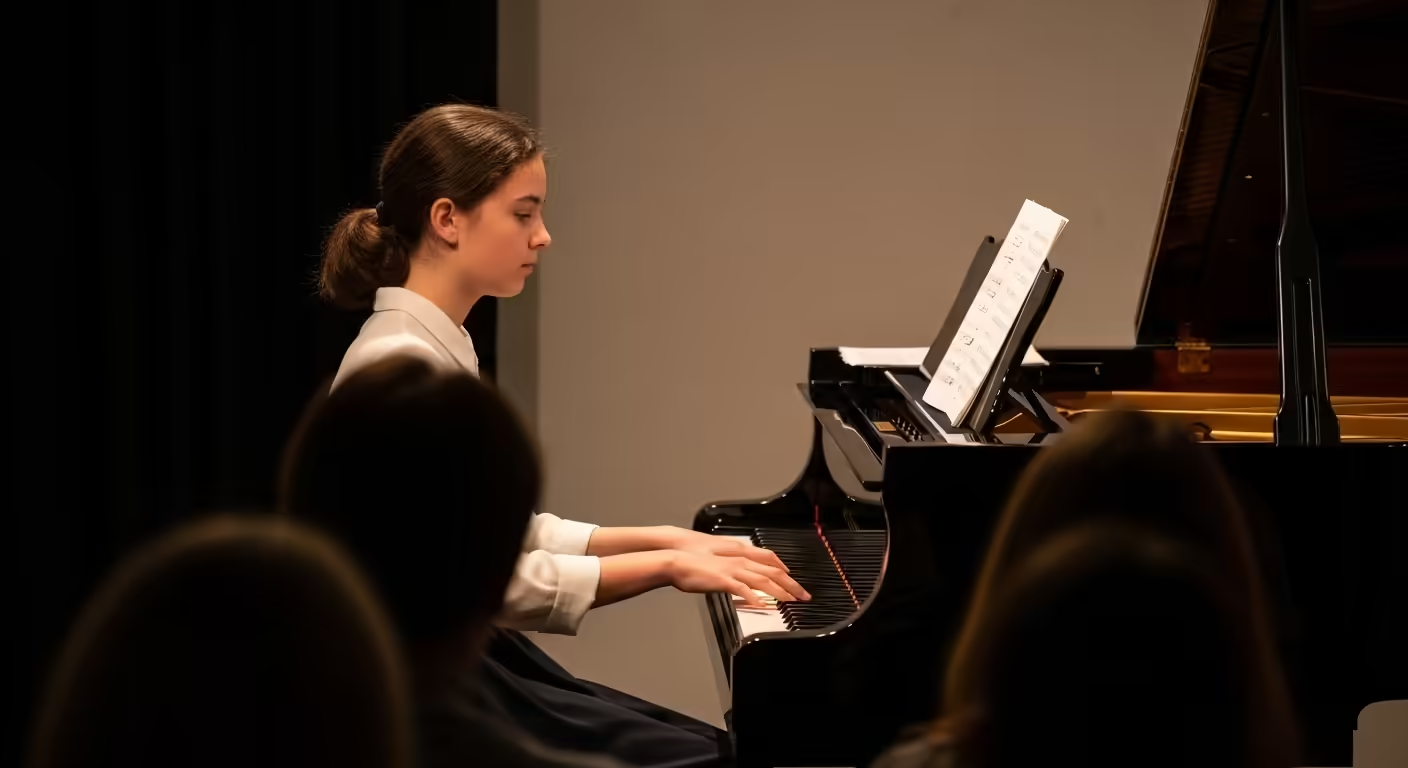
This guide explains how long it really takes to learn an instrument. It shows what progress usually looks like, how practice changes your speed, and why some instruments feel easier at the beginning. Whether you are an adult learner starting piano lessons for the first time or a parent helping a child choose their first instrument, the realistic timeframes below will help you set goals and stay motivated.
Here are the main ideas:
- First results: Many beginners can play very easy songs in 1–3 months
- Real progress: Getting to an intermediate level often takes 1–3 years
- Best shortcut: Short daily practice of 20–30 minutes works better than one long session once a week
- Music mastery: True musicianship unfolds over years — but enjoyment starts much sooner
If you have ever asked, “How long does it take to learn an instrument?” the honest answer is both simple and personal. Most people can make real progress faster than they expect, but deep skill takes longer than many ads and viral videos suggest. Still, you do not need to wait years to enjoy music. In many cases, you can start playing short tunes, grooves, or chord patterns within weeks if you practice often and keep your musical goals clear.
What You’ll Learn in This Guide
- Quick Timelines by Goal
- What “Learn an Instrument” Actually Means
- Realistic Timelines by Instrument
- Which Instrument Is Fastest (and Slowest) to Learn?
- How Much Practice You Need
- What Affects Your Pace
- Adults vs. Kids
- Learning With or Without a Teacher
- How to Learn Faster Without Burning Out
- Signs You’re on Track
- Common Myths
- FAQ
Short Answer: How Long Does It Really Take to Learn an Instrument?
If you practice most days, many instruments let you play basic material in 1 to 3 months. A comfortable beginner level often takes 3 to 6 months. Intermediate skill often takes 1 to 3 years. Advanced playing can take 3 to 5 years or more, and long-term mastery may require a decade of dedicated work. The real pace depends on the instrument, your goals, your instructor, and your practice quality.
Quick Answers by Goal
| Goal | Typical Timeline |
|---|---|
| Play one easy song | A few weeks to a few months |
| Play for fun with confidence | About 6–18 months |
| Reach intermediate level | About 1–3 years |
| Advanced skill | Usually 5+ years |
Timeline Chart: Realistic Progress by Stage
| Stage | What It Looks Like |
|---|---|
| 1–4 weeks | You can hold the instrument and make a basic sound |
| 1–3 months | You can play simple songs or patterns slowly |
| 3–6 months | You feel more comfortable and understand the basics better |
| 6–12 months | Your timing, sound, and control improve a lot |
| 1–3 years | You can play more smoothly with fewer mistakes |
| 5–10+ years | You play with strong control, style, and expression |
What Does “Learn an Instrument” Really Mean?
This is where many people get stuck. “Learn an instrument” can mean very different things. One person wants to play a few campfire songs. Another wants to pass graded exams, join a band, or perform at a recital on stage. Those musical goals need very different amounts of time.
Learning One Song Is Not the Same as Learning the Instrument
You can learn a simple song fast. That is great. But learning the instrument means building:
- Hand position and posture
- Rhythm and rhythmic timing
- Tone and dynamics
- Technique and control
- Musical memory
- Reading or listening skills — including the ability to hear melodies clearly
- Performing under pressure
A guitarist may learn three chords in a few weeks with comfortable chord changes developing soon after. Pianists may learn a simple melody in the first month. That does not mean they are finished. It means they have started well.
Four Clear Levels Most Readers Can Understand
| Level | Description |
|---|---|
| First contact | Learning posture, grip, hand shape, and how the instrument works |
| Early playing | Playing very simple material, but stopping often and thinking through each move |
| Comfortable beginner | Finishing easier songs with better rhythm precision and fewer pauses |
| Intermediate and beyond | Showing tone control, musical phrasing, stronger timing, and better technique |
Even advanced musicians still keep learning. That is normal. Music takes years to master. But the good news is this: you can start enjoying it much sooner than you think.
Realistic Timelines by Instrument
Here is the big-picture comparison many readers want first. These realistic timeframes assume steady practice, usually around 20–30 minutes on most days, with solid guidance and clear goals.
| Instrument | Comfortable | Intermediate | Advanced |
|---|---|---|---|
| Piano | 3–6 months | 1–2 years | 5+ years |
| Guitar | 2–4 months | 1–2 years | 5+ years |
| Violin | 6–12 months | 2–3 years | 5–10 years |
| Drums | 3–6 months | 1–2 years | 4–6 years |
| Clarinet | 3–6 months | 1–2 years | 5+ years |
| Saxophone | 4–8 months | 1–2 years | 5+ years |
These numbers do not mean one instrument is “good” and another is “bad.” They show how long it often takes to feel comfortable. Some instruments give quick wins early. Others demand more control before they sound pleasant.
How Long Does It Take to Learn Piano?
Piano is one of the clearest instruments for beginners. You press a key, and you hear the note right away. That makes early learning feel more direct. Many beginners can play simple tunes within 1 to 3 months, feel more comfortable in 3 to 6 months, and reach intermediate level in 1 to 2 years. Advanced classical piano work usually takes 5 years or more — and jazz pianists often spend even longer developing improvisation skills.
Why piano feels easier at the start:
- The notes are laid out in a clear pattern
- You can see high and low pitches
- You can get a clean sound fast
- It builds music reading well
- Piano lessons are widely available in almost every city
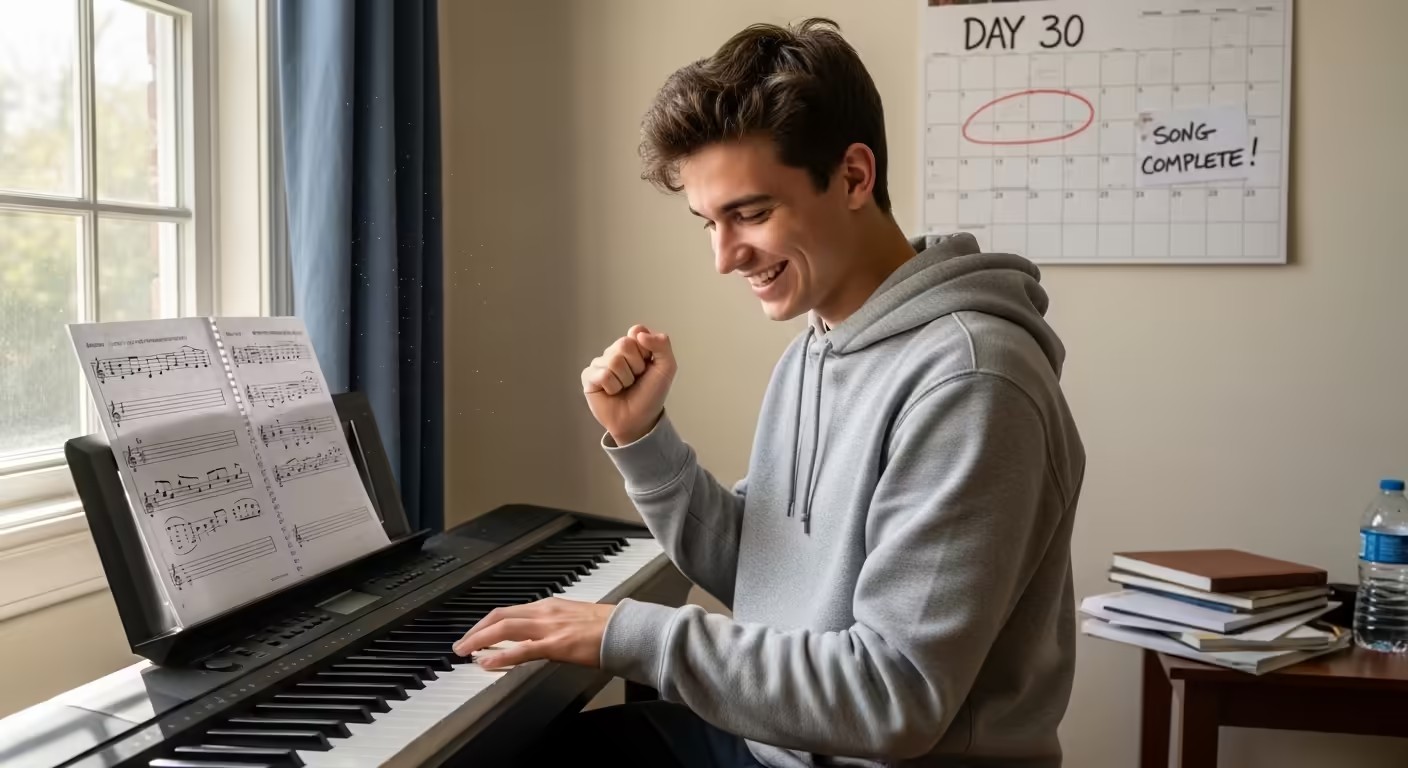
What makes piano harder later: Two-hand coordination, finger independence, scales and arpeggios, sight-reading, and dynamics all become more demanding. A beginner may feel quick success, but strong piano playing still takes years of work.
| Stage | Timeline |
|---|---|
| First notes and hand position | 1–2 weeks |
| First easy tune | 2–8 weeks |
| Comfortable beginner level | 3–6 months |
| Early intermediate | 1–2 years |
| Advanced control | 5+ years |
How Long Does It Take to Learn Guitar?
| Stage | Timeline |
|---|---|
| Early chords | About 1 month |
| Simple songs | 1–3 months |
| More comfortable playing | 2–4 months |
| Intermediate level | 1–2 years |
| Advanced playing | 5+ years |
Guitar feels fast in the beginning because a few chords can let you play many songs. People often stay motivated because they want to sing, play with friends, or learn songs they already love.
What slows guitar progress: Finger pain, buzzing notes, slow chord changes, weak rhythm accuracy, and trouble singing and strumming together. These are normal. They do not mean you are bad at guitar — they mean your hands are learning a new pattern.
Acoustic vs. electric guitar: Electric guitar can feel easier on the fingers because the strings are often lighter. Acoustic guitar builds hand strength well but may feel tougher at first. The better choice is often the one that makes you want to practice more.
How Long Does It Take to Learn Ukulele?
Ukulele is often one of the fastest instruments for a beginner to enjoy. It has fewer strings, easy basic chords, and a friendly size. Many people can play very simple songs in a few weeks, then move into a comfortable beginner stage within 1 to 3 months. For many beginners, ukulele is easier than guitar — the smaller size and simpler chord shapes make the start smoother.
How Long Does It Take to Learn Drums?
Drums can feel exciting from day one. Many beginners can play a basic beat sooner than they can play a full song on some other instruments. Still, strong timing, limb independence, and groove take time. Beginner comfort often takes 3 to 6 months, intermediate skill 1 to 2 years, and advanced control 4 to 6 years.
| Stage | Timeline |
|---|---|
| Stick grip, counting, simple beats | First month |
| Steadier basic grooves | 1–3 months |
| Fills and better tempo control | 3–6 months |
| Stronger coordination and feel | 1–2 years |
| Stronger style, dynamics, live performing | 4+ years |
How Long Does It Take to Learn Violin?
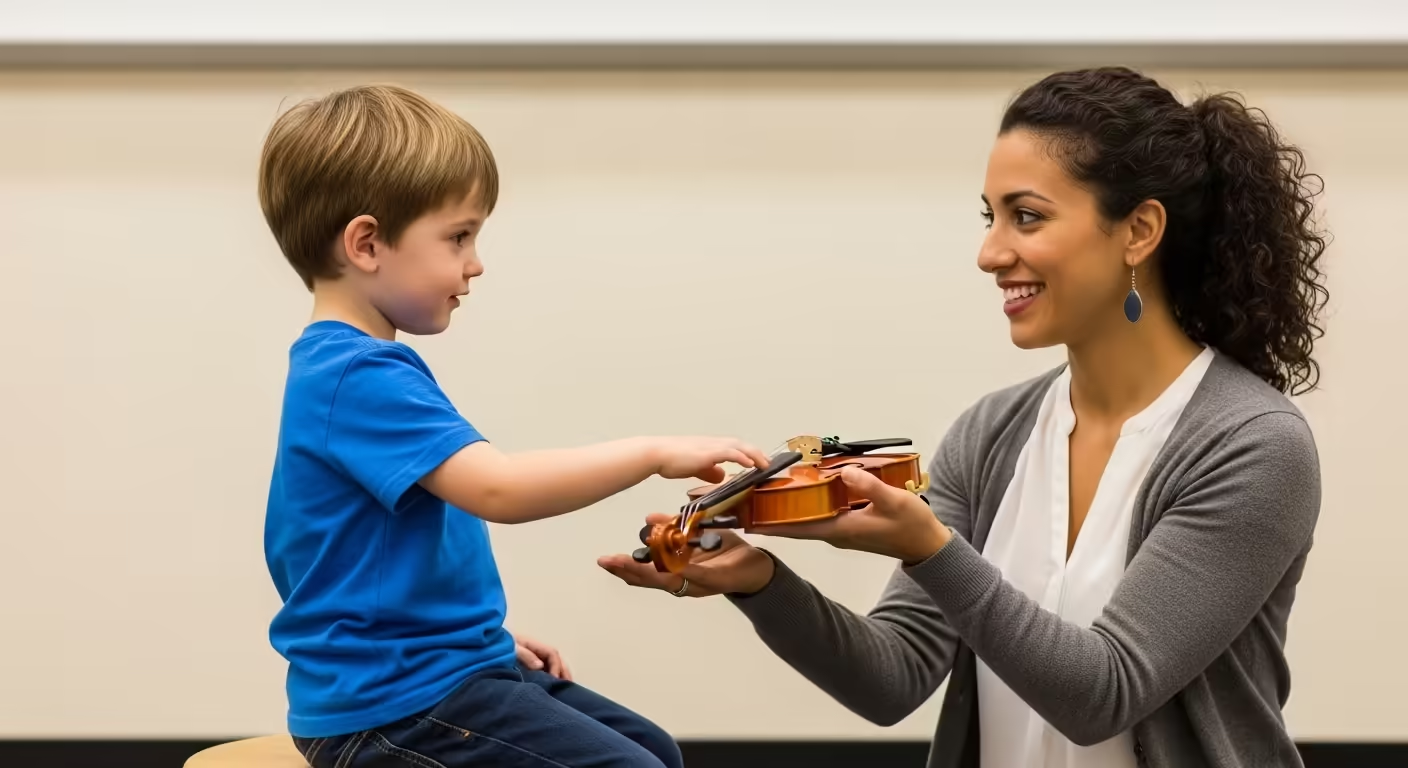
Violin often takes longer at the start than piano, guitar, or ukulele. The reason is simple. You need good bow control, good hand shape, and good intonation from the start. Because the violin has no frets, your fingers must land in the right place by feel and ear.
Beginner comfort often takes 6 to 12 months, intermediate skill 2 to 3 years, and advanced playing 5 to 10 years.
Why violin feels slower early on: Many beginners spend weeks just learning how to make a clean, steady sound. That is normal. Violin asks for bow angle control, stable left-hand shape, pitch accuracy, ear training, and relaxed posture.
| Stage | Timeline |
|---|---|
| Open strings and posture | 1–4 weeks |
| Simple melodies | 2–6 months |
| Basic tone and tuning | 6–12 months |
| Intermediate level | 2–3 years |
| Advanced playing | 5–10 years |
Should you still choose violin? Yes, if you love the sound. A slower start is fine if the instrument truly pulls you in. Love for the sound often beats “easy” in the long run.
How Long Does It Take to Learn Bass Guitar?
Bass guitar can feel easier at the start because beginners often play one note at a time. However, bass is not really easy. Good bass playing needs strong rhythm, good timing, control, and careful listening to the whole band.
| Stage | Timeline |
|---|---|
| Simple root-note patterns | 1–2 months |
| Cleaner fretting and steadier groove | 3–6 months |
| Better fills, timing, and song knowledge | 1–2 years |
| Strong feel, style, and band control | 3–5 years |
Wind and Brass Instruments
Woodwind and brass instruments often sit in the middle. Some beginners produce a good note fairly soon. Others need time to develop embouchure, breath support, fingering, and tone. Saxophone often shows beginner comfort in a few months. Trumpet can feel harder early because lip control matters a lot. Voice lessons follow a similar pattern — basic improvement can come quickly, but building range, control, and stamina takes dedicated time.
School band question: Many music students can join a school band in the first year if they practice steadily and follow their instructor’s plan. The first goal is usually good tone, basic note reading, and steady rhythm.
Which Instrument Is Fastest to Learn?
If your goal is quick beginner success:
- Ukulele
- Keyboard or piano
- Basic acoustic or electric guitar
- Recorder for young beginners
That said, the fastest instrument to learn is often the one you want to pick up every day. Motivation shortens the learning curve. A learner who loves drums may progress faster on drums than on ukulele, even if ukulele looks easier on paper.
Which Instrument Takes the Longest to Learn?
In many cases, violin, cello, oboe, French horn, and some brass instruments feel slower at the start. They need more control before they sound smooth. The journey toward musicianship is the reward.
How Much Practice Do You Need to Learn an Instrument Faster?
Practice time matters, but practice quality matters more. An instructor will often suggest 20 to 30 minutes a day for beginners because that is enough to build habit and skill without overload. Short daily sessions usually beat one long weekly session.
| Daily Practice | Result | Hours/Month |
|---|---|---|
| 10 minutes | Slow but steady progress | ~5 hours |
| 20–30 minutes | Strong beginner progress | ~10–15 hours |
| 45–60 minutes | Faster progress if focused | ~20–30 hours |
| 90+ minutes | Best for advanced students | ~45+ hours |
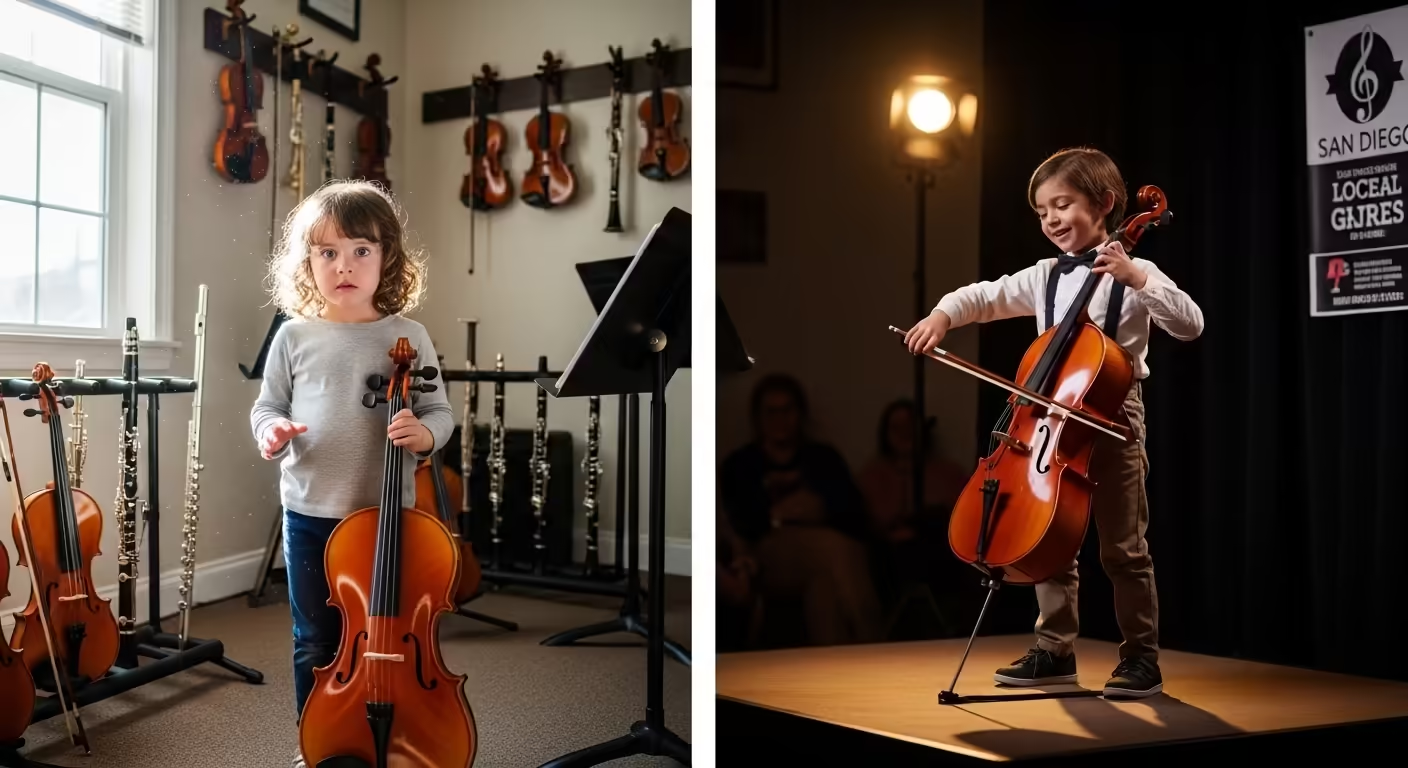
Why Short Daily Practice Works
Daily practice helps memory, finger control, and rhythm stay fresh. A weekly three-hour session often feels productive, but much of that time can turn into repeated mistakes or fatigue. Music grows well with repetition over time — not in long periods of exhausting marathons. Short sessions keep things manageable, especially when you are balancing practice with other schedules and responsibilities.
Consistency beats intensity. Twenty minutes every day will take you further than three hours once a week.
What Affects How Long It Takes to Learn an Instrument?
If you want a realistic answer, you need to look beyond the instrument itself. Several key factors shape your pace.
1. Your Goal
Are you trying to play one favorite song, relax after work, join a school band, pass exams, perform at a recital, improvise, or compose? The bigger the goal, the longer the timeline.
2. Your Practice Quality
Focused practice beats mindless repetition. Good practice often includes a warm-up, one small technical goal, one song section, slow repetition, and a quick review. Good time management — knowing when to work on technique versus songs versus music theory — makes every session more productive.
3. Teacher Support
A good instructor spots problems early. That saves time. It helps with posture, tension, finger placement, rhythm accuracy, and tone. Even a few lessons can fix habits that might slow you down for months. If you are exploring music lessons, starting with a teacher is one of the best investments you can make.
4. Age and Focus
Younger children often learn well, but they may need longer to build motor control and focus. Adults often move faster in theory and self-management. Adult learning has unique advantages — stronger discipline, clearer goals, and better self-direction. So adults are not “too late,” and kids are not always “faster.”
5. Your Musical Environment
An instrument that is easy to reach gets played more. A guitar on a stand gets used more than one stored in a closet. A keyboard that is ready to go is better than one buried in cables. Your musical environment — the space, the schedule, and the people around you — shapes how consistently you practice.
Adults vs. Kids: Who Learns an Instrument Faster?
Adults often learn faster at the start because they know why they are learning. They can follow a plan and use short practice time well. Kids often benefit from long-term habit building and many years of growth. Both can do very well.
Good News for Adults
Every adult learner brings real strengths: better focus, clearer musical goals, stronger self-direction, and more patience with structure. That is why many adults make solid progress in the first 6 to 12 months.
Good News for Kids
Kids often grow into music over time. If lessons are steady and home support is good, children can build very strong foundations. Some programs suggest short daily practice for young learners — 10 to 15 minutes for ages 5 to 7 and 20 to 30 minutes for ages 8 to 12.

Can You Learn an Instrument Without a Teacher?
Yes, many people start that way. Apps, video lessons, chord charts, tabs, backing tracks, and slow-down tools are helpful. You can learn songs and basic patterns on your own.
Still, self-taught learners often struggle with posture, tension, timing, tone, and bad habits that stay hidden too long. The best middle path: teach yourself what you can, but get feedback from an instructor early if possible. Even a few music lessons can speed up progress dramatically.
A Simple Benchmark: ABRSM Grades
If you want a concrete way to measure progress, graded music systems help. ABRSM offers Initial Grade and Grades 1 to 8 for piano. Practical exams include pieces, scales and arpeggios, sight-reading, and aural tests.
| Grade Range | Level |
|---|---|
| Initial to Grade 2 | Beginner stage |
| Grades 3 to 5 | Early to mid intermediate |
| Grades 6 to 8 | Advanced student stage |
You do not need exams to enjoy music. But grade systems help answer a common question: “Am I progressing normally?” They give you visible steps between “just starting” and performing at an advanced level.
How to Learn an Instrument Faster Without Burning Out
Many beginners ask how to speed things up. The answer is not “practice until you are tired.” The answer is better structure.
Use This Simple Practice Routine
| Step | Time | What to Do |
|---|---|---|
| Warm up | 3–5 min | Scales, stretches, easy patterns |
| Technical skill | 5–7 min | One focused exercise |
| Song section | 7–10 min | Practice one small part slowly |
| Fun playing | 3–5 min | Play something you enjoy |
More Ways to Improve Faster
- Keep the instrument easy to reach
- Record yourself once a week
- Use a metronome for rhythm precision
- Practice slowly before speeding up
- Learn different musical styles you actually enjoy
- Break big goals into small steps
- Play with other musicians when possible — a short jam can teach timing, listening, and confidence in a way that solo practice cannot
Signs You Are Learning at a Normal Pace
It is easy to feel slow, especially online. Social media clips can make music learning look instant. Real growth is slower and steadier.
Signs You’re On Track
- In the first month: You can hold the instrument better, you know a few notes or chords, and you make fewer setup mistakes.
- In 2 to 6 months: You stop less often, your timing improves, a few short tunes feel familiar, and your hands respond faster.
- In the first year: You can finish easier songs, recover from mistakes better, hear more detail in your own playing, and practice feels more focused.
Signs You May Need Help
- Pain that does not go away
- Constant tension
- No clear practice plan
- Same mistakes every week
- Strong frustration with no progress over long periods
These do not mean failure. They usually mean you need better feedback from an instructor or a simpler plan. If any of these sound familiar, reach out to us — even a few guided lessons can get you back on track.
Common Myths About Learning an Instrument
Myth 1: You need natural talent. Talent can help, but steady practice matters more for most beginners. Good habits beat raw promise over time.
Myth 2: Kids always learn faster. Sometimes they do. Sometimes adults do. Age matters less than consistency, support, and focus.
Myth 3: You need hours every day. Many beginners improve well with 20 to 30 minutes on most days. A few focused hours per week is enough to build real skill.
Myth 4: If it feels hard, you picked the wrong instrument. Every instrument needs patience at some point. Friction is part of growth. The better question is: do you still want to come back tomorrow?
The Real Answer Depends on Your Goal, Instrument, and Practice
So, how long does it really take to learn an instrument? The honest answer: you can start enjoying music much sooner than many people think, but real skill grows over years. A few weeks can get you started. A few months can make you comfortable. A few years can make you solid. And if you keep going, music can stay with you for life.
The best instrument is not always the fastest one. It is the one you want to pick up again tomorrow. If you care about quick wins, try ukulele, keyboard, or beginner guitar. If you love the sound of violin, trumpet, or cello, accept the slower start and enjoy the deeper climb.
Consistency beats intensity. Small daily practice beats rare long sessions. Interest beats pressure.
Ready to start? Find an instructor, set a schedule, and commit to 20 minutes a day. That is all it takes to begin a journey that lasts a lifetime. Book your free trial lesson with K&M Music Company and see how much progress you can make in your first month.
Frequently Asked Questions
How long does it really take to learn an instrument?
Most people can play simple material in 1 to 3 months. Comfortable beginner skill often takes 3 to 6 months. Intermediate level often takes 1 to 3 years. Advanced playing often takes 5 or more years.
Can I learn an instrument in 6 months?
Yes, if your goal is basic playing. In 6 to 18 months, many learners can play easy songs, understand basics, and feel more comfortable. Six months is usually not enough for mastery.
What is the easiest instrument to learn quickly?
Ukulele, keyboard, and beginner guitar often feel easiest at the start. They give quick wins. Still, the best choice is the one you enjoy enough to practice often.
What instrument is hardest to learn?
Violin and some wind or brass instruments often feel harder early because tone and pitch control take more time. That does not make them bad choices — it just means the timeframes are longer at the start.
Is 30 minutes a day enough to learn an instrument?
Yes. For many beginners, 20 to 30 minutes on most days is enough for strong progress. Quality matters more than total hours invested.
Is guitar easier than piano?
It depends on your goal. Piano often feels clearer at the start because the notes are laid out in order. Guitar can feel more rewarding early if you want to strum songs and sing.
Can adults still learn music well?
Yes. Adults often have strong focus, clear goals, and better practice discipline. Every adult learner brings real strengths that younger students do not always have.
Do I need to read music to learn an instrument?
No, not always. Many players learn by ear, tabs, chord charts, or video. Still, learning music theory and reading notation can help you grow faster on some instruments and in formal study.
Should I buy an expensive instrument first?
Usually no. A decent beginner instrument that stays in tune and feels playable is often enough. A very cheap, poor-quality instrument does not serve you well either — find the middle ground.
How do I stay motivated when learning music?
Choose songs you like. Keep sessions short. Track small wins. Record yourself once a week. Celebrate progress you can hear, even if it feels small. Set a regular schedule so practice becomes a habit, not a chore.