Last Updated: April 14, 2026 | By K&M Music Company | San Diego, California
Easiest instruments to learn for adults who have never played music before: compare options, costs, and first steps.
If you are looking for the easiest instrument to learn as an adult beginner, this guide is for you. Many adults want a first instrument that feels simple, fun, and possible from the first day. With so many musical instruments available — from string instruments to woodwinds to keyboards — choosing can feel overwhelming. This guide makes it simple.
Maybe you have always wanted to learn music, but life got busy. That is very common. The good news is that adults can still learn well. (Read our full guide on adult music lessons for more on why adults often succeed faster than they expect.) In fact, adult beginners often succeed because they can notice patterns, follow routines, and practice with purpose. Short and steady practice usually works better than long, tiring sessions.
What You’ll Learn in This Guide
- Quick Summary
- Quick Answer — The Easiest Instruments
- Can Adults Really Learn From Scratch?
- What Makes an Instrument Easy?
- How to Choose Your First Instrument
- Full Breakdown of Each Instrument
- Comparison Table
- Which Instrument for Your Goal?
- Costs
- Lessons vs. Self-Teaching
- 30-Day Practice Plan
- Common Mistakes
- FAQ
Quick Summary
| Topic | What to Know |
|---|---|
| Easiest overall | Ukulele — small, affordable, fast first songs |
| Best for music basics | Keyboard or piano — clear note layout, great for theory |
| Cheapest to start | Voice, harmonica, or recorder |
| Best for rhythm | Cajon, hand drum, or handheld percussion |
| Best if you love guitar | Acoustic guitar — harder start, but deeply rewarding |
| Key adult advantage | Pattern recognition, goal focus, smarter practice |

Quick Answer: What Are the Easiest Instruments to Learn for Adults?
If you want the short answer first, these are the top choices:
- Ukulele — a fantastic starter instrument that is easy to hold
- Keyboard or piano — including acoustic piano and digital keyboards
- Harmonica — a great beginning instrument for blues and folk
- Recorder or tin whistle — lightweight, low cost, melody-first instruments
- Cajon, hand drum, or handheld percussion — for rhythm-first learning
- Voice — your built-in instrument, always available
- Acoustic guitar — popular for adults who love guitar music
Why These Are Easy Instruments for Adults
These instruments are popular with adult beginners for simple reasons:
- You can make a decent sound fast
- Many entry-level models are affordable
- You can find lots of free lessons and online resources
- Early songs are simple
- You do not need years of training before you enjoy them
- Each instrument offers a clear path from first note to first song
That matters. The first month shapes motivation. If an instrument gives you quick wins, you are more likely to keep going.
Can Adults Learn Music If They Have Never Played Before?
Yes. Adults can absolutely learn music from scratch. Many adults worry they started too late. However, a good music teacher will tell you that older beginners often do well. Adults typically have more patience, life experience, and better pattern recognition. (Curious about what happens in your brain when you start? Read how piano lessons sharpen the mind.)
Common Fears Adults Have
| Fear | Reality |
|---|---|
| “Am I too old to start?” | No — age does not limit learning |
| “Do I need natural talent?” | No — practice matters more than talent |
| “Can I learn without reading music?” | Yes — many start with chord charts and videos |
| “What if I have bad rhythm?” | Rhythm improves with practice |
| “What if my fingers hurt?” | Soreness is temporary — calluses form in weeks |
| “What if I buy the wrong instrument?” | This guide compares each instrument side-by-side |
Most adult beginners do not need to read sheet music on day one. Many start with chord charts, rhythm exercises, video lessons, and simple songs. The goal at first is comfort, confidence, and a steady habit.
What Makes an Instrument Easy for Adult Beginners?
An “easy” instrument is not effortless. Every instrument needs practice. But some are easier to start because they reduce friction.
Signs an Instrument Is Beginner-Friendly
- Makes a pleasant sound early
- Has simple first songs
- Does not cost too much
- Is comfortable to hold
- Does not need constant upkeep
- Fits your living space
- Music classes and lessons are easy to find
Signs an Instrument May Feel Harder at First
Some instruments can be a difficult choice for a total beginner because they need strong breath control, require hard finger positions, sound rough until technique improves, cost more, or feel heavy. Brass instruments like trumpet, woodwinds like clarinet or bassoon, and string instruments like violin or cello often fall into this category. That does not mean you should never choose them — it just means going in with clear expectations.
How to Choose the Best First Instrument as an Adult
1. What Music Do You Love?
Your musical style matters. If you love folk and acoustic music, ukulele or acoustic guitar makes sense. If you love jazz, an alto saxophone or piano might call to you. If you love pop and rock, keyboards or electric guitars could be the fit. The right instrument should match the styles you actually enjoy.
2. What Is Your Budget?
| Cost Level | Instruments |
|---|---|
| Free / very low | Voice |
| Low ($20–$60) | Harmonica, recorder, tin whistle |
| Low–medium ($50–$150) | Ukulele, handheld percussion |
| Medium ($100–$400) | Cajon, keyboards, acoustic guitars |
| Medium–high ($300–$700) | Digital piano, electric guitars, quality acoustics |
3. What Is Your Living Situation?
If you live in an apartment, noise matters. A digital keyboard with headphones is smart. Ukulele is also fairly quiet. Hand drums can be fun but may be too loud for thin walls.
4. What Is Your Goal?
- Play songs fast? → Ukulele or harmonica
- Sing and play? → Ukulele, guitar, or keyboard
- Learn music theory and note names? → Keyboard or piano
- Relax after work? → Any simple instrument
- Jam with friends or join a band? → Guitar, bass, cajon, or drums
- Write your own music? → Keyboard, guitar, or voice
Best Easiest Instruments to Learn for Adults: Full Breakdown
Ukulele: One of the Easiest Instruments to Learn
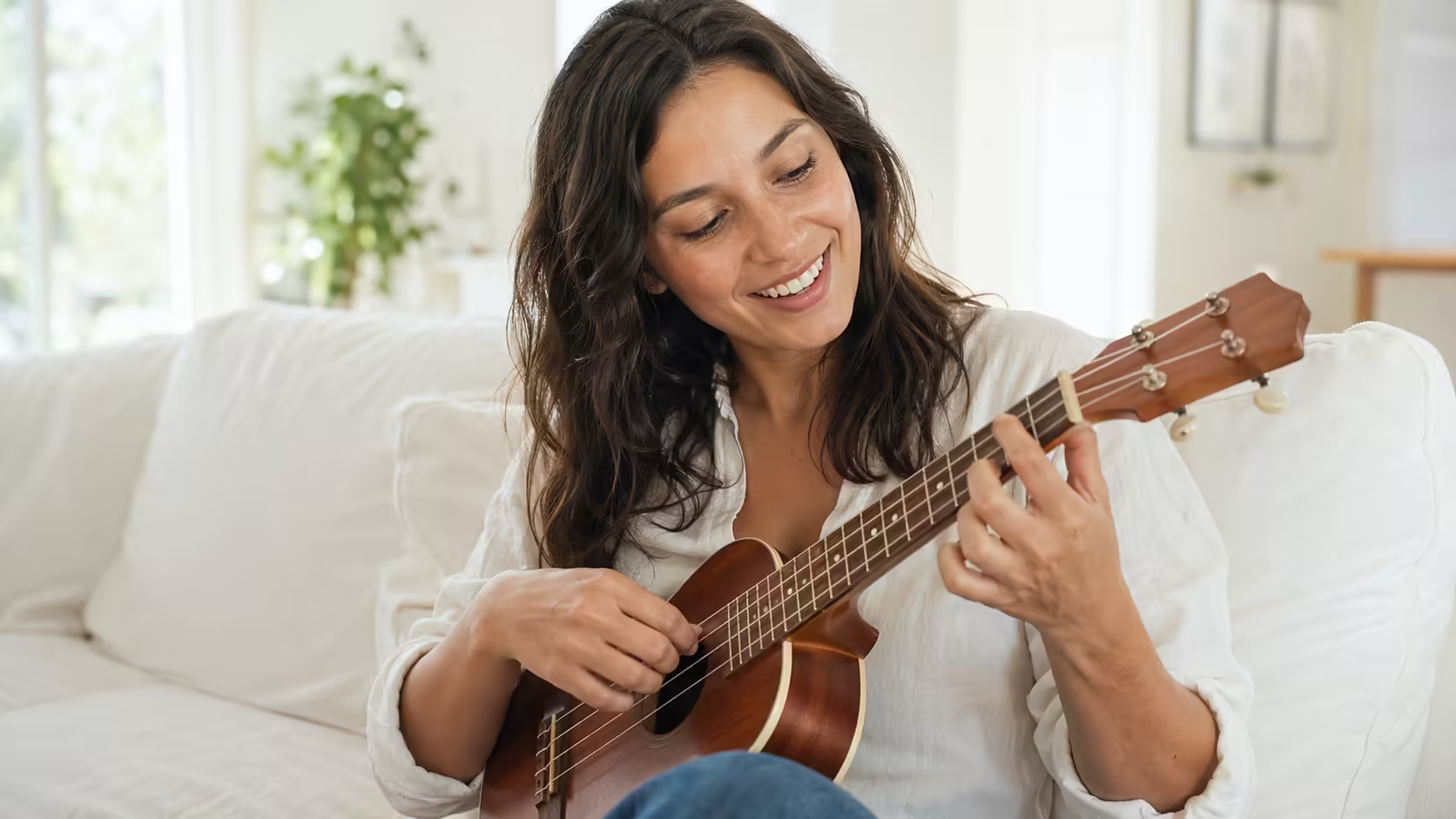
Ukulele is often the top choice for adults who want fast results. It has four strings instead of six, so it is easier to learn. The nylon strings feel softer than steel strings. It is small, light, and easy to hold — a truly portable instrument.
Why ukulele works so well: Easy chord shapes, small fretboard, low cost, portable, great for singing along.
Best for: Adults who want quick results, people who love pop or folk, busy learners with short practice sessions.
Main challenge: Some chord changes and strumming patterns get harder later. But the start is smooth.

Keyboard or Piano: Best for Learning Music Basics
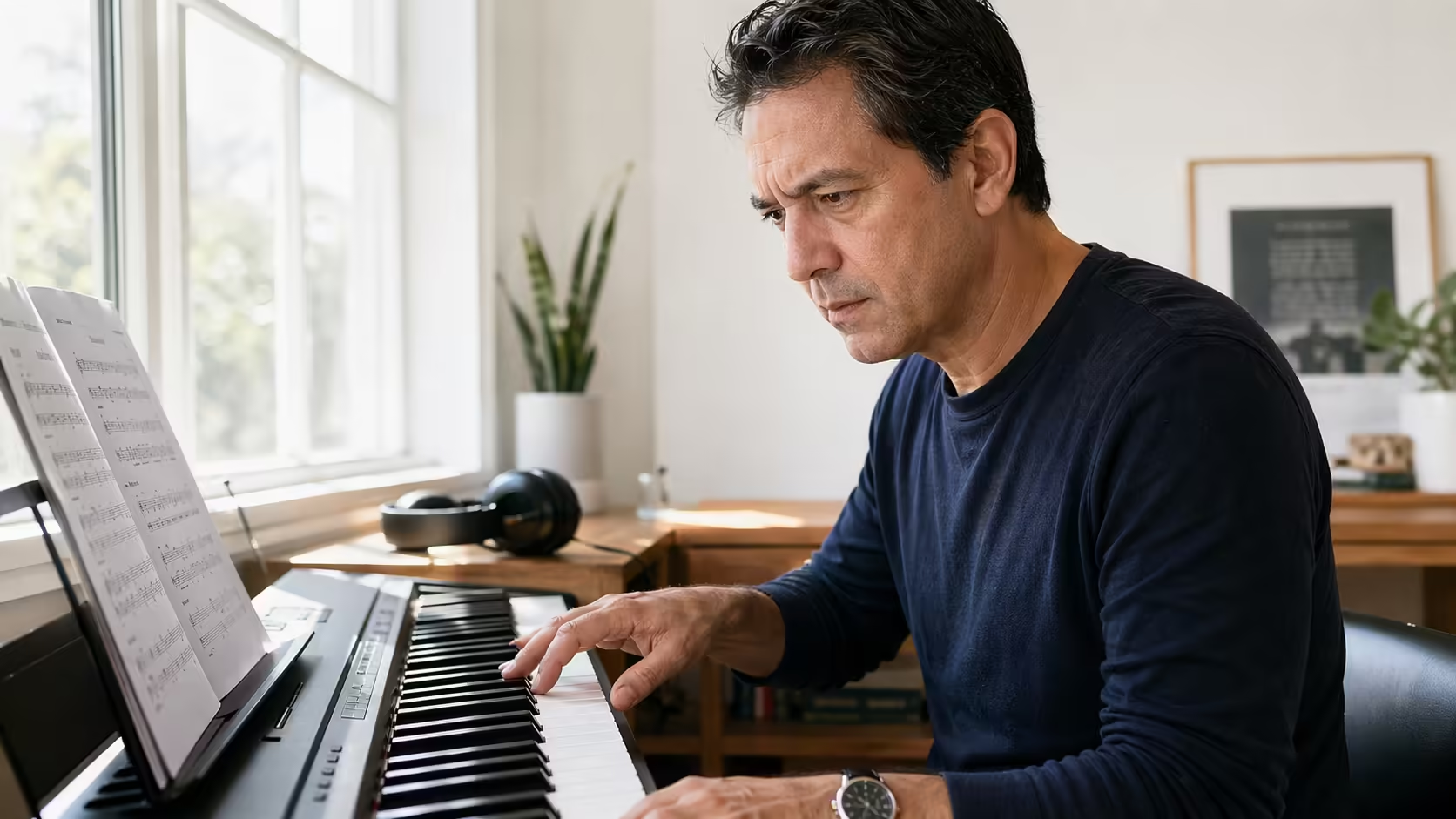
Keyboard is a strong choice because the layout is clear and visual. Notes move left to right. You can start with one hand. Digital keyboards let you practice with headphones — perfect for apartments. An acoustic piano offers richer tone but costs more.
Why keyboard is easy to start: Clear layout, simple one-note melodies, headphone practice on digital models. This instrument offers the clearest path to understanding basic music theory.
Best for: Adults who want a strong music base, learners who like patterns and structure, people who want quiet practice.
Main challenge: Hand independence gets tricky later. Still, the beginner stage is very friendly.
Harmonica: Small, Cheap, and Fun
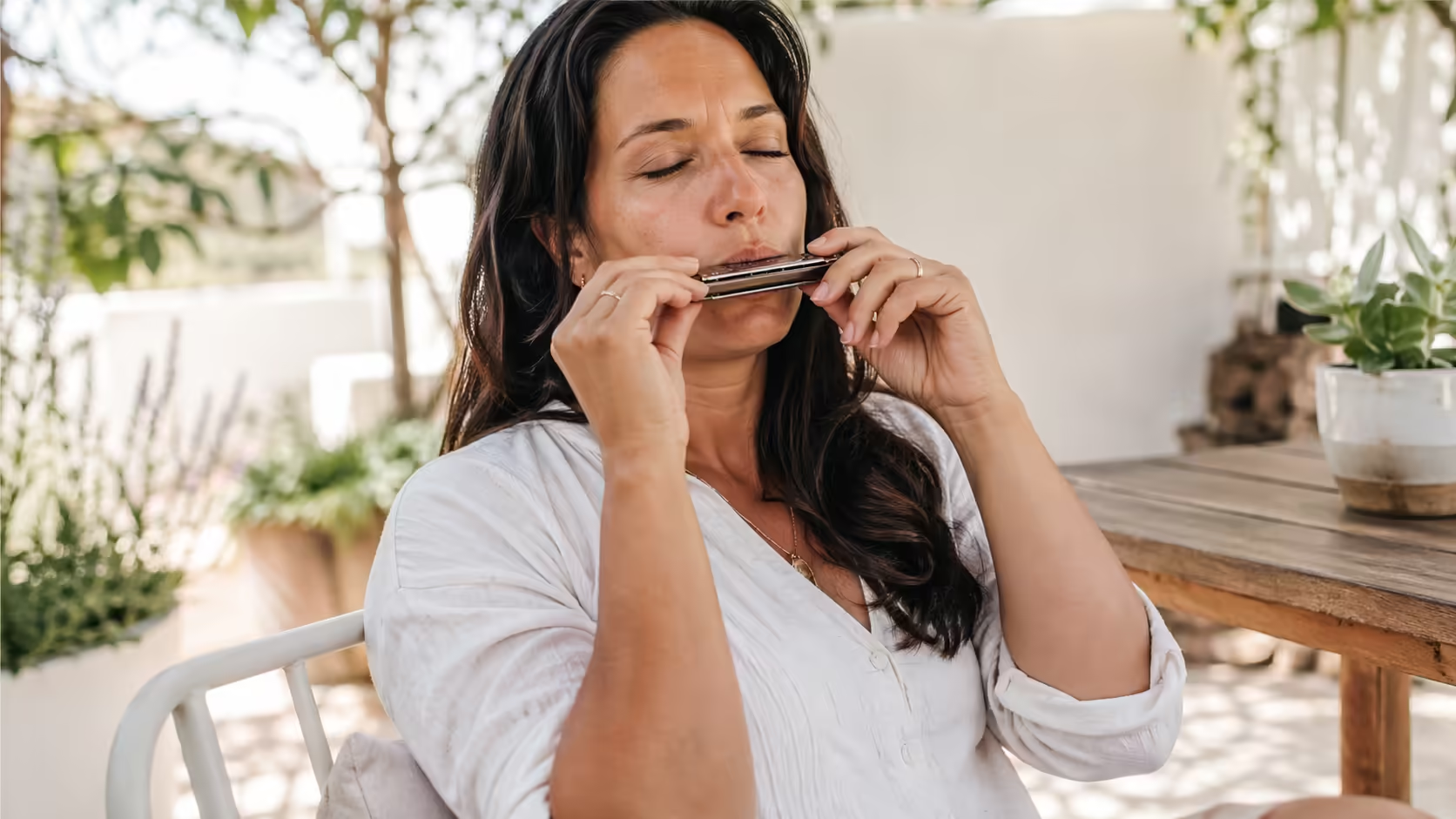
Harmonica is one of the easiest and most portable instruments. It is a great beginning instrument — small, low-cost, and satisfying from the first breath. Many harmonicas are made in one key, so beginners are less likely to play wrong notes.
Best for: Adults on a small budget, travelers, people who want a fun hobby they can carry anywhere.
Main challenge: Clean single notes and breath control take practice.
Recorder or Tin Whistle: Easy Wind Instruments
Recorder is often the first woodwind instrument people try. It is lightweight, low-cost, and easy to start. These melodic instruments help students learn breath control and finger placement without too much strain.
Best for: Adults who want melody first, learners who enjoy folk tunes or traditional music. Main challenge: Tone can sound rough if breath support is weak.
Cajon, Hand Drum, or Handheld Percussion: Rhythm-First Learning
If melody feels hard, start with rhythm. Basic percussion instruments — like bongos, congas, snare, tambourine, xylophone, bass drum, and maracas — can be great ways to start. You do not need to worry about scales or chords right away.
Best for: Adults who love beat and groove, social learners, people who want stress relief. Main challenge: True rhythmic control takes steady work.
Voice: Your Built-In Instrument

Voice is often forgotten on beginner lists, but it is one of the easiest ways to start music. You do not need to buy an instrument. Many adults think they cannot sing, but a voice teacher will tell you that pitch and tone improve with practice.
Best for: Adults on a tight budget, songwriters, people who want confidence with melody. Can also lead to other instruments later.
Main challenge: Shyness. Many adults judge their own voice too harshly.
Acoustic Guitar: Popular and Rewarding
Guitar appears on many beginner lists because it is a versatile instrument that allows players to explore many genres — from folk to rock to jazz. You can learn basic songs with a small set of chords, and there are endless online lessons. Acoustic guitars and electric guitars both work for beginners, though acoustic is more common as a first choice.
Why adults still choose guitar: Huge song library, great for singing, works for solo or group playing, easy to find a good teacher.
Best for: Adults who truly love guitar songs, people willing to push through the first few weeks.
Main challenge: Finger pain and clean chord changes. But many guitar students push through and never look back.

Comparison Table: Best Instruments for Adult Beginners
| Instrument | Cost | Noise Level | Portability | Early Success | Best For |
|---|---|---|---|---|---|
| Ukulele | Low | Quiet | Very portable | Fast | Singing, simple songs |
| Keyboard/Piano | Medium | Quiet (headphones) | Moderate | Fast | Theory, melody, chords |
| Harmonica | Low | Quiet | Very portable | Fast | Blues, folk, travel |
| Recorder/Tin whistle | Low | Moderate | Very portable | Fast | Melody, breathing |
| Cajon/Hand drum | Medium | Louder | Moderate | Fast | Rhythm, groups |
| Voice | Free | Quiet | Always with you | Moderate | Ear training, singing |
| Acoustic Guitar | Medium | Moderate | Portable | Moderate | Songs, chords, band |
Which Instrument Is Best for Your Goal?
| Goal | Best Instruments |
|---|---|
| Fast results | Ukulele, harmonica, keyboard |
| Understanding music theory | Keyboard or piano |
| Tight budget | Voice, harmonica, recorder |
| Sing and play | Ukulele, guitar, keyboard |
| Apartment living | Digital keyboard, ukulele, voice |
| Finger pain / weak grip | Voice, keyboard, handheld percussion |
| Social playing / band | Guitar, bass, cajon, drums |
| Creative expression | Any — passion drives practice |
Instruments That May Be Harder as a First Choice
Some instruments ask more from beginners in the first weeks. Violin, cello, double bass, saxophone, clarinet, bassoon, trumpet, and other brass instruments often have steeper learning curves. That does not mean you should avoid them — if you deeply love one of those instruments, choose it. Even hard instruments become manageable with the right support.
Still, if your main goal is the easiest possible start, the instruments above may ask more patience. Interest in an instrument helps you practice more — and practice leads to progress, regardless of difficulty.
How Much Does It Cost to Learn an Easy Instrument?
| Category | Examples | Cost Range |
|---|---|---|
| Low-cost | Voice, harmonica, recorder, tin whistle | Free–$30 |
| Mid-range | Ukulele, keyboard, guitar, cajon | $50–$400 |
| Hidden costs | Tuner, case, picks, stand, method book, app, lessons, strings | $10–$100+ |
A cheap instrument can help you start. But a very poor-quality instrument can slow you down. Aim for “good enough” — not “cheapest possible.”
Do Adults Need Music Lessons, or Can They Teach Themselves?
Both paths can work. Many popular instruments for self-teaching include ukulele, keyboard, harmonica, voice, and cajon. Online music education platforms make it easier than ever.
When lessons help most: If posture feels awkward, if pain starts, if you cannot tune the instrument, if rhythm feels confusing, or if motivation drops fast. A good music teacher — even once a month — can fix mistakes early and save weeks of frustration. Some adults also benefit from structured music lessons in group or private settings.
How Long Does It Take to Learn an Instrument as an Adult?
| Milestone | Timeline |
|---|---|
| First clean sound | Day 1–7 |
| First short exercise | Week 1 |
| First simple song | Week 2–4 |
| Steady practice habit | Month 1 |
| Play for someone else | Month 1–3 |
Short daily practice — even 5–10 minutes — builds memory and keeps burnout low. Music studies show that consistency beats duration every time.
A Simple 30-Day Practice Plan for Adult Beginners
| Week | Focus | Daily Time |
|---|---|---|
| Week 1 | Meet the instrument — hold, tune, make a clean sound | 10 min |
| Week 2 | Learn one core skill (2–3 chords, a 5-note pattern, or a steady beat) | 10–15 min |
| Week 3 | Build control — switch between skills slowly, use a timer | 15 min |
| Week 4 | Play one complete piece — record yourself, notice progress, celebrate | 15–20 min |
Common Mistakes Adult Beginners Make
Choosing based only on price. A very cheap instrument can fight you every step.
Picking an instrument you do not enjoy hearing. If you do not love the sound, practice feels flat. The musical style should excite you.
Practicing too long, too soon. A three-hour session feels heroic — then you quit for six days. Short daily practice works better.
Starting with hard songs. Easy songs build momentum. Start small.
Ignoring comfort. Hand pain, shoulder tension, or poor breathing can slow you down. Fix setup early.
Skipping basic music theory entirely. You do not need it on day one, but a little theory helps. Learn beat, rhythm, chord, note name, scale, and tempo. Keyboard is especially helpful here because the note layout is visual and clear.
Final Verdict: Which Is the Easiest Instrument?
- If you want the simplest, fastest start — ukulele is hard to beat.
- If you want the best long-term music base — choose keyboard or piano.
- If your budget is very small — start with voice, harmonica, or recorder.
- If you want rhythm and stress relief — choose cajon or handheld percussion.
- If you love guitar — start with guitar. Yes, it is a bit harder. But love for the instrument carries you through.
The easiest instrument to learn depends on your goal, your budget, and the musical styles you enjoy. For many adults, the best choices are ukulele, keyboard, harmonica, voice, or simple percussion. These are easier to start, less stressful, and help you make progress quickly.
Start small. Pick one instrument. Practice 10 minutes a day. Learn one easy song. Then another. That is how music begins for most people — with a small sound, a little courage, and one simple step.
Ready to begin? Book your free trial lesson with K&M Music Company and start your musical journey this week.
Frequently Asked Questions
What is the easiest instrument to learn for adults?
For many adults, ukulele is the easiest first instrument — small, simple, and quick to play. Keyboard is a close second for building musical skills and understanding basic music theory.
Is ukulele easier than guitar for adults?
Yes, for most total beginners. It has fewer strings, softer strings, and easier first chords than acoustic or electric guitars.
Is piano easier than guitar?
At the beginner stage, many adults find piano or keyboard easier because notes are laid out clearly. Guitar can hurt more at first but opens up quickly.
Can I learn an instrument at 40, 50, or older?
Yes. Adult beginners do very well. Young musicians may start earlier, but older adults often learn with more purpose.
What is the cheapest instrument to learn first?
Voice is free. After that, harmonica, recorder, and tin whistle are low-cost choices.
Which instrument is best if I live in an apartment?
A digital keyboard with headphones. Ukulele is another solid pick — it is quiet and portable.
Do I need to read music to start?
No. Many adults start with chord charts, tabs, or follow-along lessons. Reading music helps over time but is not required to begin.
What if I have no rhythm?
Rhythm improves with practice. Use a metronome. Clap along to songs. Try simple percussion if beat feels more natural than melody.
Can learning an instrument help my brain?
Yes. Music education and musical training are linked to better memory, focus, mood, and cognitive function.