
Last Updated: May 5, 2026 | By K&M Music Company | San Diego, California
How to know if you’re making progress in music lessons: spot wins, track growth, and stay motivated — even when it feels slow.
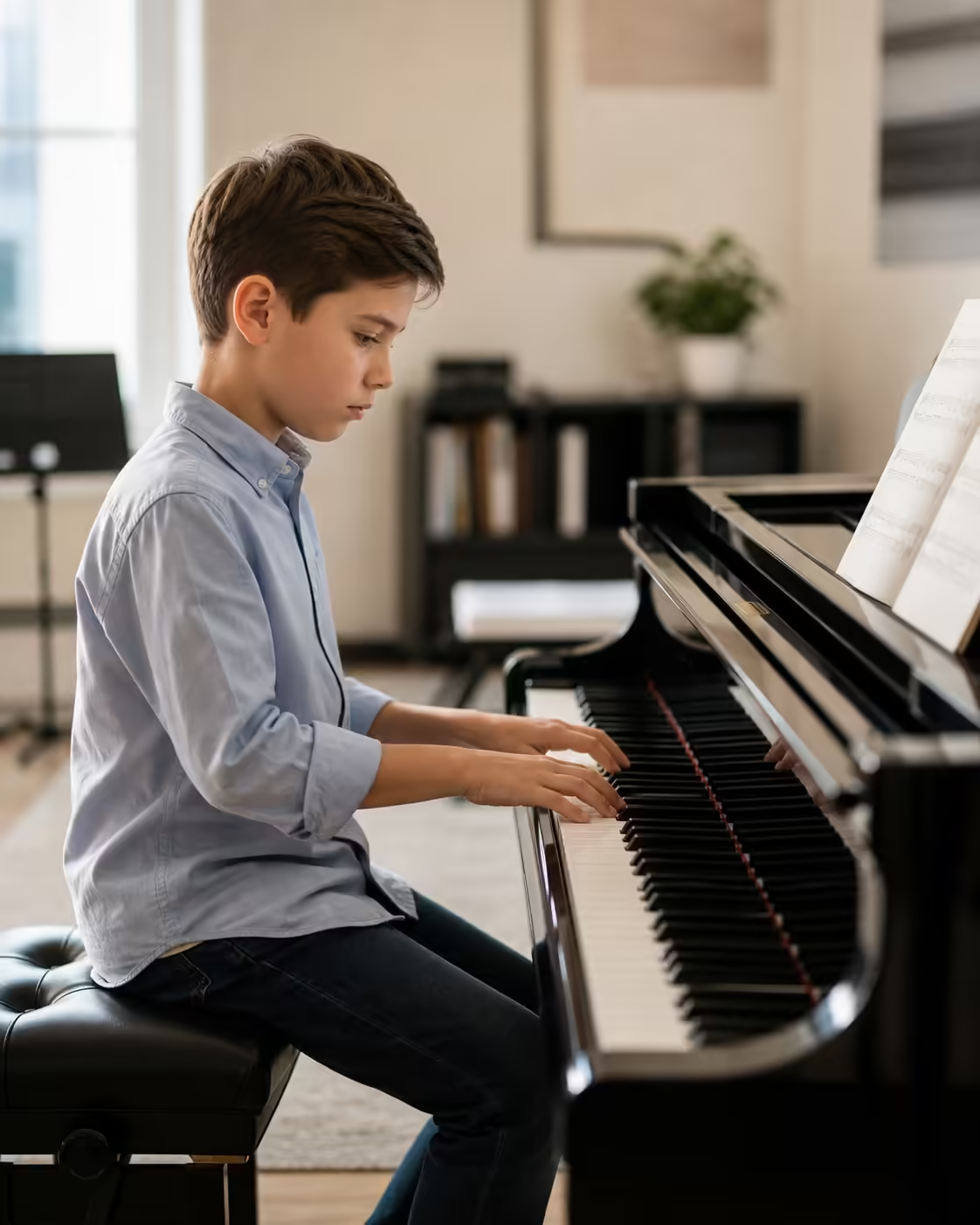
How do you know if you are making actual progress in music lessons? Many students and parents ask this question. Progress can feel slow, but that does not mean nothing is happening. Music does not always show improvement in dramatic leaps — often, the growth is quiet and gradual.
In this guide, you will learn:
- What real progress looks like
- Clear signs you are improving
- Why small wins matter
- How to track your growth
- Why progress is not always even — and why that is normal
A good first step is to record one practice session. Then compare it with a recording from one month later. Look for small changes in rhythm, focus, tone, confidence, and comfort with your instrument. Also, ask your music teacher for 3 things to watch for. These markers will help you see your progress more clearly.
What You’ll Learn in This Guide
- Why Progress Feels Slow
- The Short Answer — Yes, You Are Progressing
- 15 Clear Signs of Progress
- How to Measure Progress
- How Long Progress Takes
- Why Progress Is Not Linear
- What Counts Besides Harder Songs
- What to Do During a Plateau
- Progress by Instrument
- For Parents
- Red Flags to Watch
- How to Make Faster Progress
- FAQ
Quick Summary
| Question | Answer |
|---|---|
| Am I progressing? | If you can do more now than before — even small things — yes |
| Why does it feel slow? | Music builds in layers; ears improve before hands catch up |
| Best tracking method | Record yourself monthly and compare |
| How long for results? | Some progress in weeks; clearer gains in 3–6 months |
| Is slow progress normal? | Yes — very normal. Slow is still real |
| Key tip | Practice consistently — even 15 minutes daily beats one long weekly session |

Why Making Progress in Music Lessons Can Feel So Slow
One reason progress feels slow is simple: you see yourself every day. Small changes are easy to miss when they happen bit by bit. It is similar to seeing a child every day and not noticing how much taller they got until an old photo shows the difference.
Another reason is that music has many moving parts. You are working on rhythm, pitch, posture, tone, timing, memory, coordination, expression, and focus at the same time. On some instruments — like guitar, piano, or violin — you are also developing harder skills like hand independence, chord transitions, or bow control.
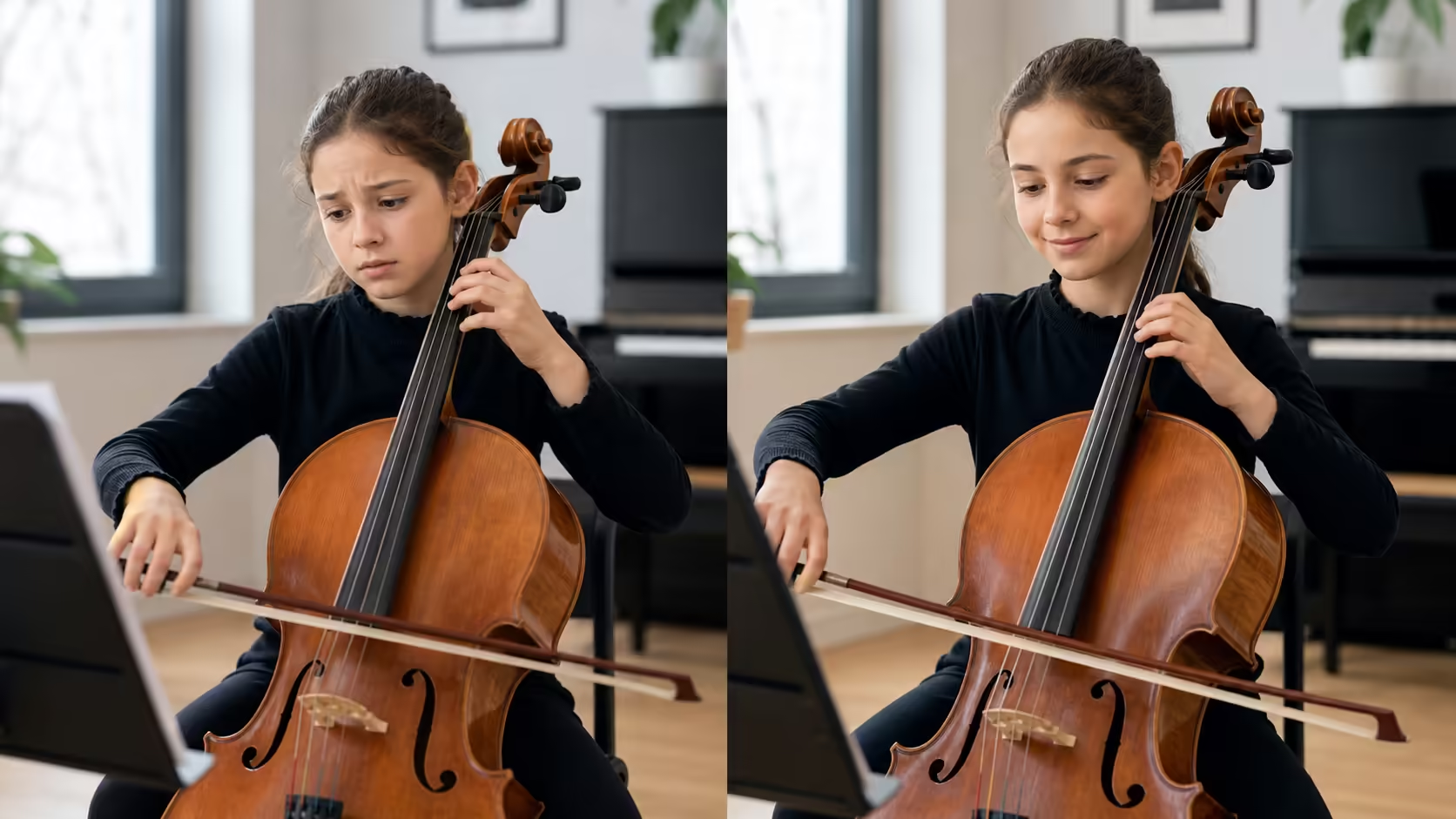
Also, your ears often improve before your hands, voice, or body can fully catch up. That can feel frustrating. You hear more mistakes — maybe a slight timing issue here, a pitch wobble there — so you assume you are getting worse. In fact, better self-awareness is often a sign that you are getting better.
Early progress can be hard to hear at first. During early learning stages, you may sit better, count better, focus more, or feel more confident before your sound changes noticeably. That still counts as real progress — even before audible progress arrives.
The Short Answer: Yes, You Are Making Progress — Even If It Feels Slow
You are making progress in music lessons if you can do more now than you could do before, even in small ways.
That “more” can look like:
- Keeping a steadier beat
- Stopping less often
- Remembering teacher feedback
- Reading notes faster
- Breathing better while singing
- Changing chords more cleanly
- Feeling calmer during lessons and recitals
- Noticing your own mistakes sooner
- Practicing with less resistance — practice feels more natural
These are all valid signs of growth. They count just as much as learning harder songs. Progress is not only about difficulty level — it is about quality, consistency, and musical awareness.
15 Clear Signs You’re Making Progress in Music Lessons
If you want to know how to measure progress in music lessons, start here. These signs are practical and easy to notice.
1. You Recover From Mistakes Faster
You still make mistakes. Every musician does. But now you can keep going instead of stopping. Recovery is a real skill — it shows stronger timing, better focus, and more confidence.
2. Your Rhythm Is More Steady
A steady beat is one of the clearest signs of progress. Maybe you still slow down in hard spots. Still, if your pulse is more even than it used to be, you are improving.
3. Your Tone Sounds Better
Tone is the quality of your sound. On piano, it may sound less harsh. On violin, smoother. In singing, more stable and less breathy. Better tone often comes from better control, not luck.
4. Hard Passages Feel Less Impossible
A few months ago, a scale, chord change, or phrase may have felt impossible. Now it feels hard, but possible. That shift means your harder skills are developing.
5. You Learn New Material Faster
Maybe a new warm-up takes two days instead of five. Maybe you need fewer repeats. Faster learning is a strong marker of musical growth.
6. You Can Hear Your Own Mistakes
This may feel bad at first. But it is actually good news. When you can hear a slight timing issue, wrong notes, weak pitch, or uneven dynamics, your ear training is improving.
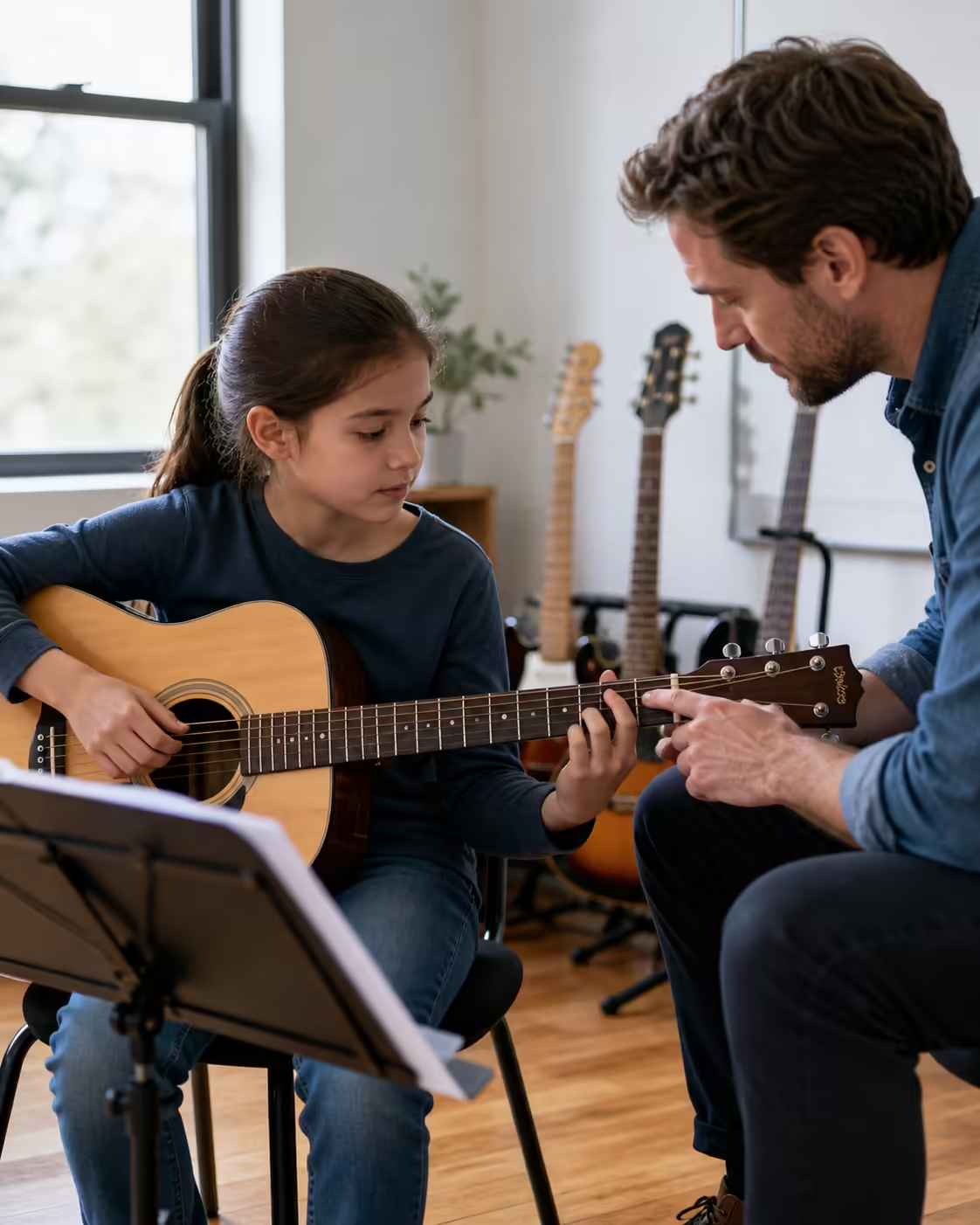
7. Your Practice Has More Focus
You spend less time just playing through and more time fixing a specific problem. Practice feels more purposeful when you know exactly what to work on.
8. Old Songs Feel Easier Now
One of the best ways to know if you are progressing is to revisit an older piece or a familiar song. If it feels easier now, that is proof. Compare how you play now to old videos.
9. Your Confidence Is Growing
If you walk into consistent lessons with less fear, ask better questions, or feel more willing to perform at recitals, that is growth. Confidence shows up in posture, willingness, and resilience.
10. You Keep a Better Tempo
Tempo control shows up in almost every instrument and voice lesson. If you stay closer to the beat, use a metronome with less stress, or keep a groove more easily, you are improving.
11. Your Reading Skills Are Better
You may recognize notes faster or pause less. You may read rhythm patterns with more ease. That is real progress.
12. Your Listening Skills Are Sharper
You notice phrasing, intonation problems, articulation, and dynamics. These are higher-level signs of musicianship.
13. Your Body Feels More Natural
Music is physical. Posture, breath support, hand position, finger pressure, and body tension all affect results. If your setup feels less awkward and more natural, that is progress.
14. You Practice More Consistently
Consistency itself is progress. If you used to avoid practice and now you show up most days — even on busy days — that is a real win. Some teachers measure progress partly by how positive and regular practice has become.
15. You Enjoy the Process More
If you feel more curious, more patient, or more connected to the music, you are growing in a way that supports long-term success. Do not ignore this sign.
Quick Progress Check Table
| Area | Progress Looks Like | Why It Matters |
|---|---|---|
| Rhythm | You count better | Better timing |
| Tone | Cleaner sound — audible progress | Better music |
| Reading | Faster note reading | Faster learning |
| Practice | More steady practice | More improvement |
| Confidence | Less fear | Easier performing and recitals |
| Technique | Better posture and hands | Safer playing |
| Listening | You catch mistakes sooner | Faster fixing |
| Expression | Better dynamics and phrasing | More musical playing |
How to Measure Progress in Music Lessons in a Real Way
Feelings can be misleading. One bad day can make you think you are stuck. That is why tracking matters.
1. Record Yourself Once a Week or Once a Month
Audio is useful. Video is even better because it also shows posture and confidence. Watch or listen after 30, 60, and 90 days. You will often hear growth you missed in the moment.
2. Keep a Simple Practice Log
Track: date, minutes practiced, what you worked on, one thing that improved, one thing that still feels hard. This creates proof.
3. Save Old Lesson Notes
After a few months, look back and ask: What was I struggling with then? Is that still hard now? What does my teacher mention less often?

4. Revisit an Old Piece or Familiar Song
Old songs reveal skill growth fast. If a familiar song that once felt difficult now feels easy, you have clear evidence.
5. Ask Your Teacher for a Progress Review
A good question: “What three things have improved most in my playing this month?” Teachers often see actual progress that students miss.
6. Use a Skill Checklist
- Do I stop less after mistakes?
- Do I keep a steady beat?
- Do I remember corrections?
- Do I learn small parts faster?
- Do I hear my own mistakes?
- Does my body feel less tense?
- Do I practice more often?
- Do I feel more confident?
How Long Does It Take to See Progress in Music Lessons?
The honest answer: it depends. But there are useful patterns.
| Timeline | What to Expect |
|---|---|
| First 2 weeks | Starting regular practice, early learning habits forming |
| 1–3 months | More confidence, less stopping, better focus |
| 3–6 months | Sound improves, songs feel recognizable |
| 6–12 months | Technique improves, harder skills developing |
| 1–3 years | Strong basics, real musical independence |
Many families see clearer progress after 3 to 6 months. This happens faster when students attend consistent lessons and practice regularly. Some progress happens inside first — understanding music, feeling rhythm, hearing detail — before the audible progress follows.
Why Progress in Music Lessons Is Not Always Even
Progress rarely moves in a straight line. One week you feel great. The next week you feel stuck. That is normal.
You might improve rhythm quickly but still struggle with tone. Or your reading may improve while your coordination still feels shaky. Music skills grow in layers, and each layer has its own pace. Progress is not a straight line for anyone — even professional musicians experience plateaus.
Do not compare yourself to another student. Everyone learns at a different speed. Some practice daily. Some miss lessons. Some already have experience. Some play harder instruments — like guitar, violin, or styles that demand physical coordination alongside musical skill.
What Counts as Progress Besides Playing Harder Songs?
Technical Progress
Better finger control, stronger breath support, cleaner articulation, smoother chord changes, improved intonation, steadier bow control, better stick control.
Musical Progress
Better phrasing, clearer dynamics, more expressive tone, better sense of style, stronger listening, improved timing with accompaniment.
Mental Progress
More patience, stronger concentration, better self-correction, less panic after a mistake, better memory during performance.
Habit Progress
Practicing more often, starting practice with less delay, knowing what to fix first, warming up with purpose, using feedback more effectively.
Emotional Progress
More enjoyment, less shame, more curiosity, more pride in effort, greater willingness to keep going — even when practice feels hard.
What to Do During a Plateau in Music Lessons
Plateaus happen to everyone. They do not mean you have failed. When progress feels stuck, focus on small wins. (If you are tempted to quit, read why most people quit piano and how to avoid it — the same principles apply to any instrument.)
Plateau Fixes
- Celebrate one small improvement each week
- Change the order of practice
- Start with a fun warm-up
- Listen to music that inspires you
- Ask your teacher for a fresh goal
- Reduce the size of the task
- Keep consistent lessons going — do not skip during plateaus
- Try playing a familiar song you love to remind yourself how far you have come
Plateau Reset Process
| Step | Action |
|---|---|
| 1 | Review recordings and lesson notes |
| 2 | Pick one small skill to improve |
| 3 | Practice it slowly for 7 days |
| 4 | Ask your teacher for feedback |
| 5 | Check again in 2–4 weeks |
How Progress Looks on Different Instruments
Progress depends partly on the instrument. Different instruments — like guitar, piano, violin, drums, and voice — show improvement in different ways.
Progress in Piano Lessons
Quicker note reading, stronger hand coordination, steadier rhythm, smoother scales, better balance between hands.
Progress in Guitar Lessons
Cleaner chord changes, less buzzing, better strumming patterns, stronger finger placement, better timing.

Progress in Singing Lessons
Better pitch accuracy, more breath support, steadier tone, easier high or low notes, clearer diction.
Progress in Violin Lessons
Smoother bow changes, better intonation, less tension, cleaner string crossings, fuller tone.
Progress in Drum Lessons
Steadier groove, better limb coordination, cleaner fills, stronger timing, more dynamic control.
How to Know If Your Child Is Making Progress in Music Lessons
Parents often ask this because progress can be hard to hear at home.
Look For:
- More willingness to practice
- Better focus during short sessions
- Less stopping
- Better memory of lesson feedback
- More comfort with the instrument
- More confidence after playing — especially before and after recitals
Questions Parents Can Ask a Teacher
- What has improved this month?
- What should we listen for at home?
- What is the next skill goal?
- Is practice quality or frequency the main issue?
Red Flags That Music Lessons May Need a Change
Slow progress is normal. But a few red flags are worth watching.
| Red Flag | What It Means |
|---|---|
| No clear goals | Student does not know what to practice |
| Same problem for months with no plan | Naming a problem is not enough — there should be a strategy |
| Poor teacher fit | The issue may be communication, not effort |
| Practice is missing entirely | Common and fixable — but must be addressed |
| Long-term motivation drop | Goals, routine, or teacher fit may need to change |
How to Make Faster Progress Without Burning Out
Practice more often, even if sessions are short. Fifteen to twenty-five minutes most days works better than one long session each week. Practice consistently — even on days when practice feels less exciting.
- Break music into small sections. Work on one line, one phrase, or one measure.
- Practice slowly. Slow practice improves timing, accuracy, and control.
- Use a metronome in small steps. Start below your limit. Increase gradually.
- Ask better questions in lessons. Try: “What should I focus on first this week?” or “What would good progress look like by next lesson?”
- Review old wins. Look at old recordings. Replay an older piece. This is both motivating and practical.
Simple Weekly Progress Plan
| Week | Focus | Track |
|---|---|---|
| Week 1 | Record yourself | Tempo, tone, confidence |
| Week 2 | Fix one problem | Mistakes and hard spots |
| Week 3 | Use teacher feedback | What you remember |
| Week 4 | Record again | What feels easier |
Slow Progress in Music Lessons Is Still Real Progress
If you are asking how to know if you are making progress in music lessons, that question alone shows that you care and that you are paying attention. Growth in music is often quiet before it becomes obvious.
Look for real proof, not just feelings. Record yourself. Save lesson notes. Play old songs again. Ask your teacher what has improved. Notice small wins in rhythm, tone, posture, confidence, and practice habits.
Keep going. Many students stop right before progress becomes clear. Whether you are working on piano, guitar, singing, drums, or any other instrument — the path is the same. Small steps, taken consistently, add up to something remarkable.
Need a fresh perspective on your progress? Book a free trial lesson with K&M Music Company and find out exactly where you are and where you can grow next.
Frequently Asked Questions
How do I know if I am getting better at music?
Compare what you can do now with one, three, or six months ago. Look for rhythm, tone, confidence, focus, and learning speed. Actual progress shows in the comparison, not in how you feel on any single day.
Why do music lessons feel slow?
Because music skill builds in layers. Many early gains happen inside your ears, body, and attention before the result sounds dramatic. Music does not improve in a straight line.
How often should I practice?
Short, regular practice works best. Daily or near-daily — even 15 minutes — beats one long session each week.
How long does it take to improve?
Some progress shows in weeks. Clearer results often appear after a few months of consistent lessons. Long-term skill takes years.
Is slow progress normal?
Yes. Very normal. Slow progress is still real progress.
Can I improve even if I still make mistakes?
Yes. Better musicians still make mistakes. The difference is that they hear them sooner and recover faster.
What is the best way to track progress?
Use recordings, lesson notes, and a simple practice log. Those tools give you proof that feelings alone cannot provide.