
Last Updated: May 7, 2026 | By K&M Music Company | San Diego, California
Why music lessons are the best after-school activity shows how kids grow smarter, calmer, more creative, and more confident — backed by research.

Music lessons can be a strong after-school choice for kids. They are fun, useful, and help children grow in ways that matter. Music lessons build focus, confidence, discipline, and emotional expression. They also develop listening skills, musical abilities, and better practice habits. Playing an instrument has been shown to reduce stress and improve mental well-being — for children and adults alike.
After school can feel rushed. A child gets home tired, maybe a little wired, and often pulled in ten directions at once. A good after-school activity should bring structure, joy, and steady growth. For many families, after-school music lessons do exactly that — and the research supports it.
What You’ll Learn in This Guide
- Quick Summary
- Why Music Lessons Are the Best
- What Counts as After-School Music
- Brain Development Benefits
- Academic Performance
- Confidence Building
- Emotional Growth
- Discipline Without Punishment
- Compared With Sports, Tutoring, Clubs
- Social Benefits
- Long-Term Growth
- What Research Says
- How to Choose Lessons
- FAQ
Quick Summary
| Benefit | How Music Lessons Help |
|---|---|
| Focus | Musical training improves attention and self-control |
| Confidence | Children see and hear their own progress |
| Academics | Linked to better reading, math, and academic achievement |
| Emotional health | Safe outlet for music and emotion expression |
| Discipline | Structure through steady musical practice |
| Social skills | Recitals, ensembles, and group programs build connection |
| Long-term value | Music can stay with a child for life — unlike seasonal activities |

Why Music Lessons Are the Best After-School Activity for Many Children
There is no single activity that fits every child. Still, music lessons come very close.
Music combines many benefits in one place. It gives children a creative outlet. It builds routine, attention, patience, and a real musical skill they can improve over time. Whether a child learns piano, guitar, drums, violin, or voice, the core benefits are remarkably similar.
Research supports this idea. Studies show that musical training influences executive function — the brain skills children need for self-control, flexible thinking, and impulse control. Musical training research from multiple institutions confirms these effects, especially for younger children.
Music lessons are not magic. They do not solve every challenge. Still, research suggests they can support important parts of child development — from musical development to academic achievement to emotional health.
Quick Answer: Why Are Music Lessons the Best After-School Activity?
Music lessons are a great after-school activity for many children. They combine creativity, structure, skill-building, emotional expression, and long-term value in one place.
They can help with: focus, self-control, confidence, memory, listening, goal setting, emotional expression, school connection, persistence, and joy. Unlike many extracurricular activities, music can stay with a child for years.
Fast Comparison Chart
| Activity Type | Fun | Skill Growth | Emotional Outlet | Long-Term Use |
|---|---|---|---|---|
| Music lessons | High | High | High | High |
| Team sports | High | High | Medium | Medium |
| Tutoring | Low–Medium | High | Low | Medium |
| General clubs | Medium | Medium | Medium | Medium |
| Screen-based activities | High | Low | Low | Low |
This does not mean sports or tutoring are bad. It means music lessons offer a rare mix of brain, heart, habit, and creativity in one steady routine.
What Counts as an After-School Music Activity?
When people hear “music lessons,” they may think of private piano lessons only. In truth, after-school music programs can take many forms:
- Private piano lessons and beginner piano formats
- Group piano lessons and small ensembles
- Guitar lessons and ukulele lessons
- Violin lessons, brass instruments, and other instrumental classes
- Drum lessons
- Voice lessons and singing lessons
- Beginner band programs and school band participation
- Songwriting classes and music production workshops
- Early childhood music education for the youngest learners (toddler group lessons)
Good after-school programs are high-quality, age-appropriate, voluntary, and led by qualified teachers. A good music lesson is not just “something to do” — it should be a real learning activity with a clear purpose and room for joy.
Why Music Lessons Are the Best After-School Activity for Brain Development
Parents want to know: does music learning actually help the brain? Yes — music education research suggests music lessons can help children. However, the benefits depend on the child’s age, lesson type, study length, and the musical skill being measured.
What Executive Function Means in Real Life
Executive function sounds technical, but the daily meaning is simple. These are the skills children use to:
- Wait their turn
- Listen closely
- Stick with a task
- Ignore distractions
- Follow multi-step directions
- Keep trying after mistakes
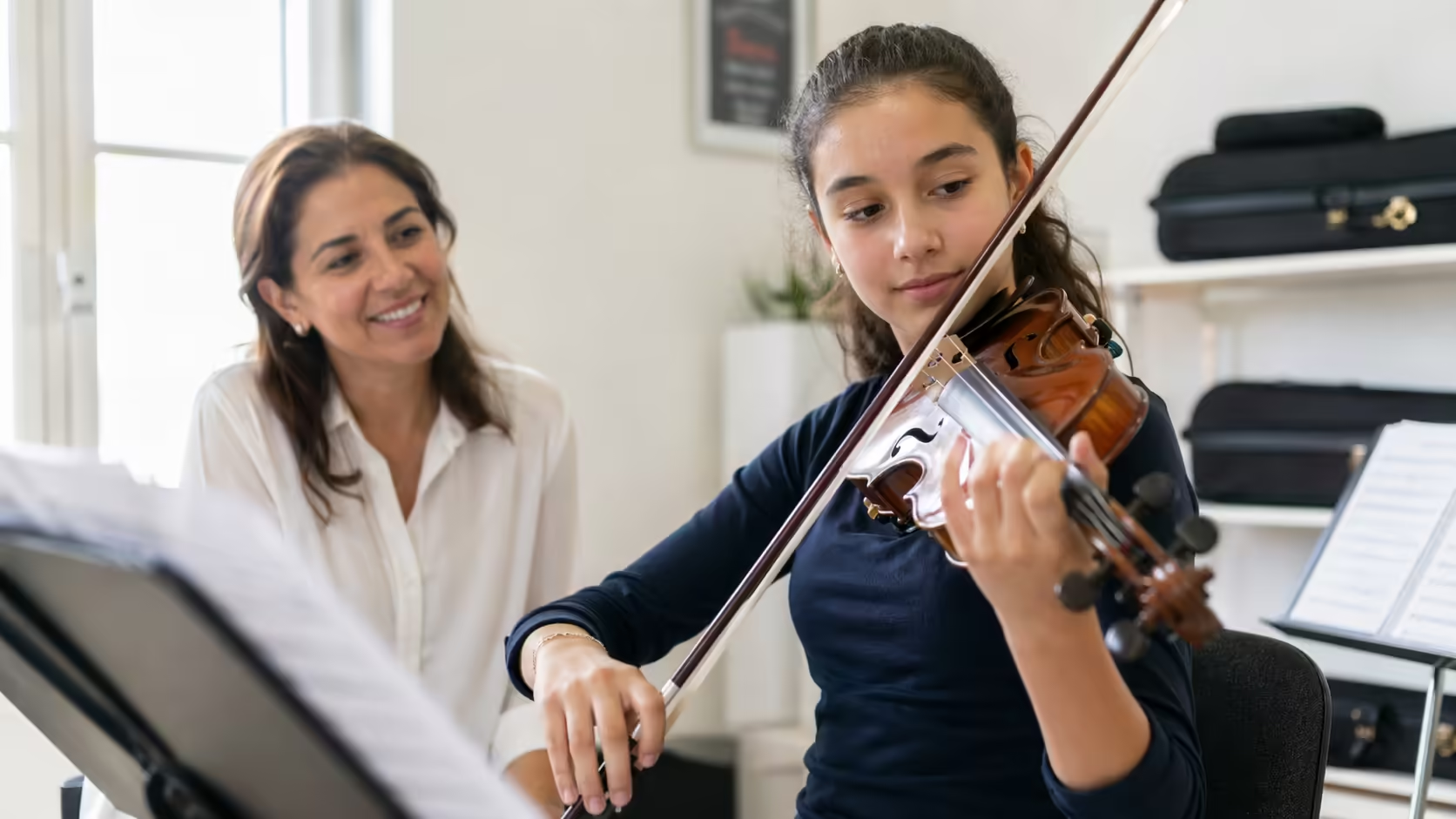
Music instruction trains these habits naturally. A child listens. Then responds. The child repeats, corrects, remembers, and improves. This cycle of musical activity shapes useful thinking habits over time. Musical training induces changes in how the brain processes information — what researchers call music-induced brain plasticity. (Curious about the deeper science? Read how piano lessons affect math and brain development.)
The Mozart Effect and Beyond
You may have heard of the Mozart effect — the idea that simply listening to classical music makes you smarter. The research on that is mixed. However, the evidence for active music making (not just listening) is much stronger. Playing music, reading sheet music, and learning notation all engage the brain more deeply than passive listening.
Music Lessons and Academic Performance
This is one of the biggest reasons parents search for benefits of music lessons for kids. The answer is encouraging. Studies connect music education with stronger academic achievement. Music lessons have been linked to higher IQ, stronger reading, better spelling, math skills, and higher grades. Longer music study may bring stronger benefits.
Why Music May Help School Skills
Music instruction asks children to read symbols (musical notes on sheet music), count beats and patterns (which helps with math), notice details, track sequence, remember instructions, practice consistently, and correct errors. These are school-friendly habits that support the school curriculum broadly.
Music education research shows connections to reading, math, writing, homework habits, and test readiness. Skills transfer from the piano bench to the classroom desk.
Does instrumental music program participation cause better grades? Research often shows a positive connection, but we should be careful — correlation is not always causation. Still, music participation matters across many studies.
Why Music Lessons Are the Best After-School Activity for Confidence
Some after-school activities are competitive from day one. Music can be different. A child does not need to score a goal or beat another student to feel progress. In music, progress is personal. A child can feel proud after learning one chord, one musical piece, or one smooth scale.
Why Confidence Grows in Music
| Step | What Happens |
|---|---|
| 1 | Try something hard — a new musical piece or technique |
| 2 | Practice and improve through musical practice |
| 3 | See clear progress — hear the difference |
Children hear their own growth. That is powerful. A shy child may not want to raise a hand in class, but that same child may light up when they can play melodies from memory. Music students who participate in recitals and performances gain confidence from sharing their musical ability with others.
Music Lessons Support Emotional Growth and Mental Wellbeing

After school, many children need more than a task. They need a healthy outlet. Music and emotion are deeply connected — classical musicians, jazz performers, and popular music artists all describe music as a way to process feelings.
While after-school music lessons are not music therapy sessions, they share something important: using music as a tool for emotional expression and regulation. A child who cannot fully explain stress may still show it through body language or frustration. Music gives that child a safe place to focus emotion into sound.
Emotional Benefits of Music Lessons
- Helps children express feelings through musical activity
- Gives a calming routine
- Supports self-esteem and musical potential
- Creates a sense of progress and musicality
- Offers a screen-free reset
- Can lower after-school stress
- Supports increased musicality and aptitude over time
This is where music education shows its deepest value — not just in what children learn, but in how they feel.
Music Lessons Build Discipline Without Feeling Like Punishment
This is one of the strongest reasons why music lessons are the best after-school activity.
A music lesson asks a child to show up, listen, repeat, slow down, fix mistakes, and keep going. That is discipline — but it does not feel like a chore in the same way school work often does. The child is working toward songs, a sound, or a musical skill. There is a reward built into the process. Music nurtures discipline through joy.
The Habit Loop in Music
This loop is one reason music can stick. Musical training results in visible progress that children can measure themselves. They learn that effort creates results. That lesson matters far beyond music itself.
Music Lessons vs Sports, Tutoring, and Other Options
Parents often compare music with sports, dance, art, coding, tutoring, and clubs. Time is limited — so choosing wisely matters.
Music Lessons vs Sports
Music may be better if your child needs a quieter activity, more personal progress, less pressure from competition, an outlet for focus and emotion, or a skill that can continue for life. Sports may be better if your child needs more physical movement, team-based energy, or a larger social group.
Music Lessons vs Tutoring
Music lessons often feel less stressful than more academic school work after school. Yet they still support attention, memory, and persistence. Tutoring helps with specific school curriculum gaps — but music supports learning in a lighter, more engaging way.
Music Lessons vs General Clubs
Clubs can be fun, but music gives a more measurable skill path. A child can hear progress. Parents can hear it too.
| Activity | Strength | How Music Compares |
|---|---|---|
| Sports | Fitness, teamwork | Music gives growth without score pressure |
| Tutoring | School help | Music supports learning in a lighter way |
| Art classes | Creativity | Music adds structure, repetition, discipline |
| Clubs | Social, fun | Music gives clearer long-term progress |
Why Music Lessons Are the Best After-School Activity for Long-Term Growth
Some activities are seasonal. Music can stay for life. A child can start first music lessons at six, pause at twelve, return at sixteen, and still carry the musical skill forward. Music can fit childhood, teen years, college, work, and adulthood. Adult musicians confirm this — music remains meaningful at every age. (Read more in our guide on adult music lessons for all skill levels.)
Long-Term Value
- Children gain a lifelong hobby and musical journey
- Teens can use music for identity and self-expression
- Adults can return to music later
- Families may enjoy shared music at home
- Music can become a source of confidence for years
- Musical expertise deepens over decades
What the Research Actually Says About Music Lessons for Kids
What Research Supports
- Musical training induces changes in executive function, especially self-control
- Music education is linked with confidence, wellbeing, and school connection
- Organized musical lessons have been associated with stronger IQ and grades
- Musical training increases auditory processing abilities
- Instrumental music training supports memory and flexible thinking
- Musical training yields measurable brain changes
- Intensive music training over years produces the strongest effects
- Music processing differs between musicians and non-musicians
- Music-specific domains (pitch, rhythm, timbre) transfer to language skills
- Musical training effect sizes are strongest for self-control
What Needs Caution
- Not every study finds the same training effect
- Not every benefit is large — results vary
- Family background can influence outcomes
- Lesson quality matters — a high-quality program produces better results
- Child interest matters — lessons should feel exciting, not forced
- Longer study (not just brief exposure) works better
Why This Still Matters
Even when research is mixed, music still has strong value. It is a low-risk learning activity that can help many children learn, grow, and express emotions. Music connects children to something larger than themselves. Musical challenges build resilience.
How to Choose the Right Music Lessons After School
Look for These Signs of a Good Program
- Qualified teachers with formal music education
- Child-friendly pace suited to the learning style
- Clear structure with room for fun
- Goals matching the child’s age and potential
- Regular feedback — specific, not just “good job”
- Flexible but steady expectations
- An instrument the child is excited about
Questions Parents Should Ask
- Does my child seem curious about music?
- Would private or group lessons work better?
- Do we have a realistic practice routine within the school year?
- Is the teacher warm, clear, and organized?
- Does the lesson style fit my child’s personality?
Best Beginner Instruments
- Piano (private and group lessons widely available)
- Ukulele
- Guitar
- Violin
- Drums
- Voice — singing lessons build musical ability without needing a separate instrument
The best first instrument is usually the one your child is excited to try. Engagement happens when the child loves the sound.
Top Reasons Why Music Lessons Are the Best After-School Activity
| # | Reason | Why It Matters |
|---|---|---|
| 1 | Builds real musical skill | Children gain something they keep for years |
| 2 | Supports focus and self-control | Musical training improves executive function |
| 3 | Helps school habits | Linked to academic achievement in multiple studies |
| 4 | Grows confidence | Children see and hear their own progress |
| 5 | Supports emotional health | Music and emotion connection provides healthy outlet |
| 6 | Brings structure without pressure | Discipline through joy, not punishment |
| 7 | Fits many personalities | Quiet, creative, and focused children all thrive |
| 8 | Offers long-term value | Unlike seasonal activities, music stays meaningful for life |
Final Verdict
Music lessons do more than fill time after school. They help children build focus, confidence, emotional expression, and healthy routines. Musical training results in measurable cognitive, emotional, and social benefits.
Research suggests music may support school skills, brain development, wellbeing, and personal growth. The benefits extend far beyond the music room — into every area of a child’s life.
For many families, the best after-school activity is not the busiest or most competitive one. It is the one that helps a child grow over time. Music lessons can do that well.
Ready to start? Talk with your child about what instruments excite them. Book a free trial lesson with K&M Music Company and ask about beginner classes, private lessons, or group programs. The best musical journey begins with one simple step.
Frequently Asked Questions
Are music lessons worth the cost?
Often, yes. The value comes from more than entertainment. Music lessons build a lasting skill and may support confidence, focus, and learning habits.
Are music lessons better than sports?
For some children, yes. Music may be better for children who want a calmer, creative, less competitive after-school activity. Both have value.
At what age should kids start music lessons?
Early childhood music education can begin as young as age 3 to 4 with rhythm, singing, and musical activities. Formal lessons on a particular instrument often start around age 5 to 7.
How many music lessons per week are enough?
One good lesson per week plus short practice sessions is enough for many beginners. Some families add a second group lesson for ensemble experience.
What if my child wants to quit?
That can happen with any activity. The goal is not to force music forever. The goal is to give children a real chance to experience growth, joy, and skill development.
Do after-school music programs replace school music classes?
No. After-school music should support school music programs, not replace music classes during the regular school day. Both matter — they complement each other.
Do music lessons actually help academic performance?
Studies connect music education with stronger academic achievement. Music lessons have been linked to higher IQ, stronger reading, better spelling, math skills, and higher grades — especially with longer music study.
Social Benefits of After-School Music
Music students join recitals, ensembles, orchestra, choirs, small groups, or performances. These moments help children learn to share a skill, listen to others, and be part of a musical community. Even a group music lesson builds social skills naturally.
Social Skills Music Can Support
School music programs and community music school participation connect children to peers who share musical interests. Whether it is a school band, a community ensemble, or group programs at a local studio, the social dimension of music adds enormous value.