
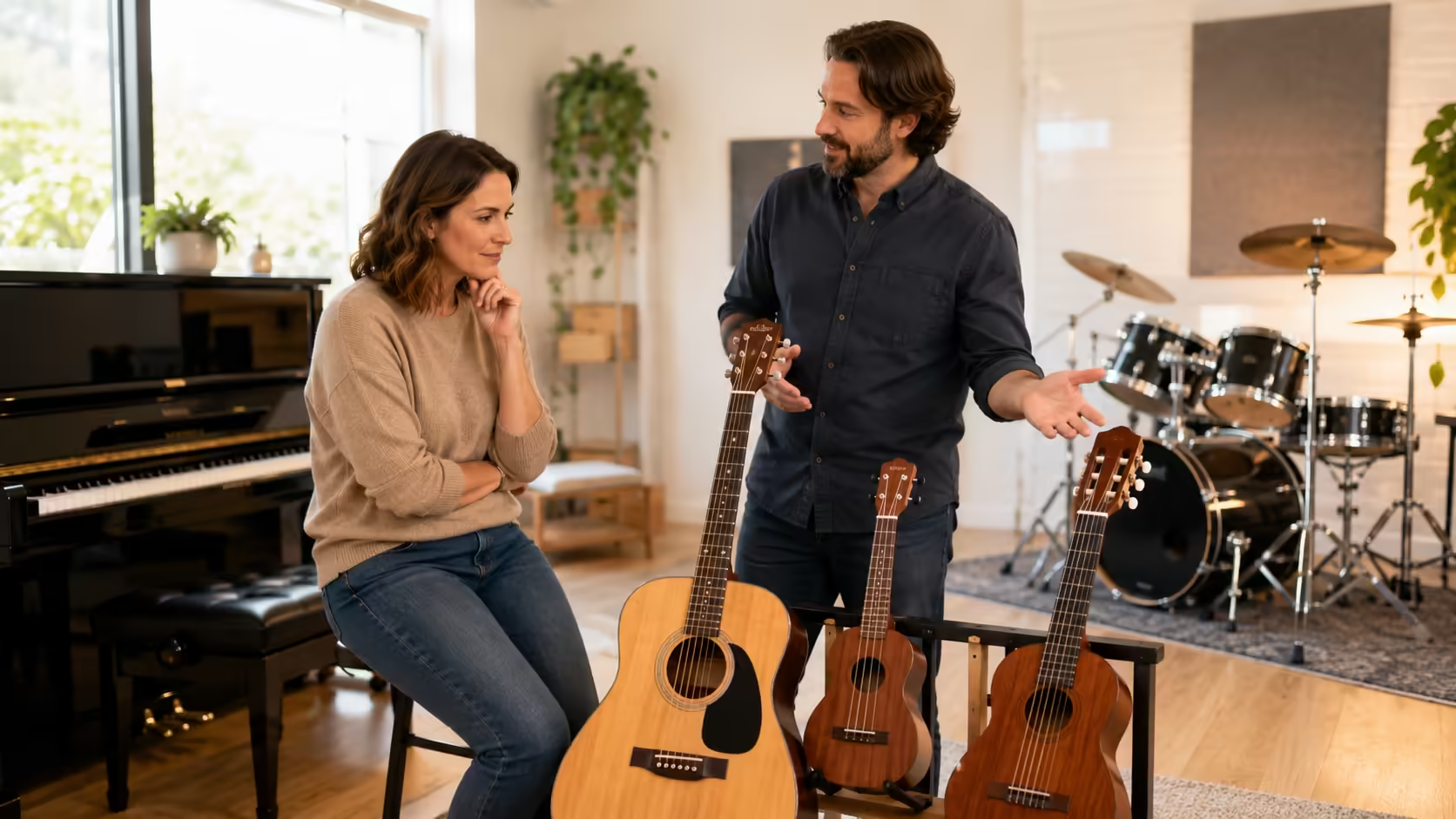
Easiest Instruments to Learn for Adults Who’ve Never Played
Seven instruments that give a complete beginner a real win in the first month — ranked by time to first song and starter cost.
Quick Guide
Ukulele, harmonica, recorder, hand percussion, digital piano, voice, and acoustic guitar are the easiest instruments to learn for adults who’ve never played. Most beginners get through a simple song within a few weeks.
- Ukulele2–4 weeks to first song · $40–$80
- Harmonica1–2 weeks · $20–$40
- Recorder1–2 weeks · $15–$40
- Bongos or cajon1–3 weeks · $40–$200
- Digital piano4–8 weeks · $120–$900
- Voice1–2 weeks · free
- Acoustic guitar8–12 weeks · $100–$250
There are endless instruments to choose from, and that is exactly the problem. An adult who has never played music does not need a list of forty options — they need the three or four that will actually produce a recognizable song before motivation runs out.
So this guide narrows the field. Every instrument below can take a complete beginner from zero to a real song in under three months, most of them in under one. Each pick includes what you’ll play first, what it costs, and the honest drawback nobody mentions in the shop.
How We Picked the Easiest Instruments to Learn for Adults
Every “easiest instruments” list picks a slightly different winner. We ranked ours by five real factors — the same questions adult beginners ask us in their very first lesson at K&M Music Company.
What “easy” means for an adult beginner
An easy instrument needs four traits:
- Quick wins. The learner hears real progress fast, not in month six.
- Short practice sessions. Fifteen focused minutes, not hour-long drills.
- Cheap starter gear. Nobody should risk $900 on a maybe.
- A song library you actually like. The genres you already listen to have to be reachable.
When all four line up, motivation stays high. And what counts most is the instrument, not the calendar — age is rarely the barrier people assume it is.
What “hard” means for an adult learner
A difficult instrument asks for raw finger strength, breath force, or a long theory detour before the first melody. Violin bow control and saxophone embouchure catch a lot of adults unprepared, and the trumpet — a small brass instrument that looks friendly on the shelf — hides a demanding mouthpiece.
Note the difference between easy to start and easy to master. Piano is easy to start and takes years to master. Guitar gives you open chords quickly, then barre chords quietly drain the finger strength of most adult hands. Both are still on this list, because a slow ceiling is fine as long as the floor is low.
Why the “easy” lists all disagree
Piano ranks high on most lists because the layout is visually obvious. Drums rank high because the beat shows up immediately. Voice ranks high because the instrument is free. Each list uses a different lens, so the winner changes. Ours weights time to first song most heavily, because that first song is what decides whether there’s a month two.
Which One Is Right for You?
Find the line that sounds most like you. That’s your starting point — the rest of this guide fills in the detail.
- I want to play a song within two weeksStart with the harmonica or the recorder. Both are under $40, neither hurts your fingers, and a recognizable melody arrives in days.
- I want to sing along to what I playStart with the ukulele. Four soft strings, four chords, and hundreds of songs use nothing more than that.
- I want to actually understand how music worksStart with a digital piano. The keyboard is the clearest visual map of harmony there is, and headphones keep the neighbors happy.
- I want to play with other people as soon as possibleStart with the bass guitar. One note at a time, simpler parts, and bass players get invited to play months before anyone else.
- I want rhythm, and something to unwind withStart with bongos or a cajon. Your hand moves, music happens, and no theory is required on day one.
- I don’t want to spend anything at allStart with your voice. It’s free, it’s always with you, and it improves everything else you go on to play.
- I want the biggest song library and I’ll accept sore fingersStart with the acoustic guitar. It’s the slowest of the easy picks, but nothing else opens up this much music.
Ukulele — the easiest instrument for most adult beginners
The ukulele tops nearly every “easiest” list for good reason, and it is a genuinely fantastic starter instrument for anyone who wants to sing along from week one.
Why it wins
Four soft nylon strings don’t hurt adult fingertips the way steel strings do. The body is small enough that most adult hands hold it without strain. The four core chords — C, G, Am, F — take a few days, and none of them require a barre. Adults regularly play a full song like “Somewhere Over the Rainbow” inside 2 to 4 weeks.
What you’ll play first
- C, G, Am, and F — all open chords, no barre
- A basic down-strum and up-strum pattern
- One finger-picking exercise (the index–thumb roll)
- Two or three short songs end to end
What it costs
- Beginner ukulele: $40–$80
- Mid-range: $100–$250
- Well-known beginner brands (Kala, Martin, Fender): $150–$400
Best first songs
“Somewhere Over the Rainbow” · “Riptide” · “You Are My Sunshine” · “I’m Yours”
One drawback: the small size also means a smaller sound and a narrower range. Plenty of adult players move to guitar after a year or two — which is fine. The ukulele did its job by getting you playing. If you want to skip ahead, our ukulele lessons cover both the fast start and the transition.
Harmonica — the easiest pocket instrument
Small, cheap, and forgiving. If you want the shortest possible distance between buying an instrument and making music with it, this is it.
Why it’s a top pick
- Fits in a pocket or bag — practice happens anywhere
- No finger pain, because your lips and breath do the work
- Clean single notes show up within the first hour
- A good beginner diatonic harmonica costs $20–$40
What you’ll play first
- Single notes with steady, controlled breath
- Bends (the C and D bends on a standard diatonic)
- Simple folk melodies
- 12-bar blues patterns
The limit to know before you buy
Most harmonicas play in one key. Beginners usually start with a C harp, then add G or A to open up more songs. That constraint is also part of why it’s beginner-friendly — you can’t play a wrong note in the key you’re in. Few instruments this cheap unlock this much blues and folk repertoire.
Reliable starter models: Hohner Special 20, Lee Oskar, Seydel Session.
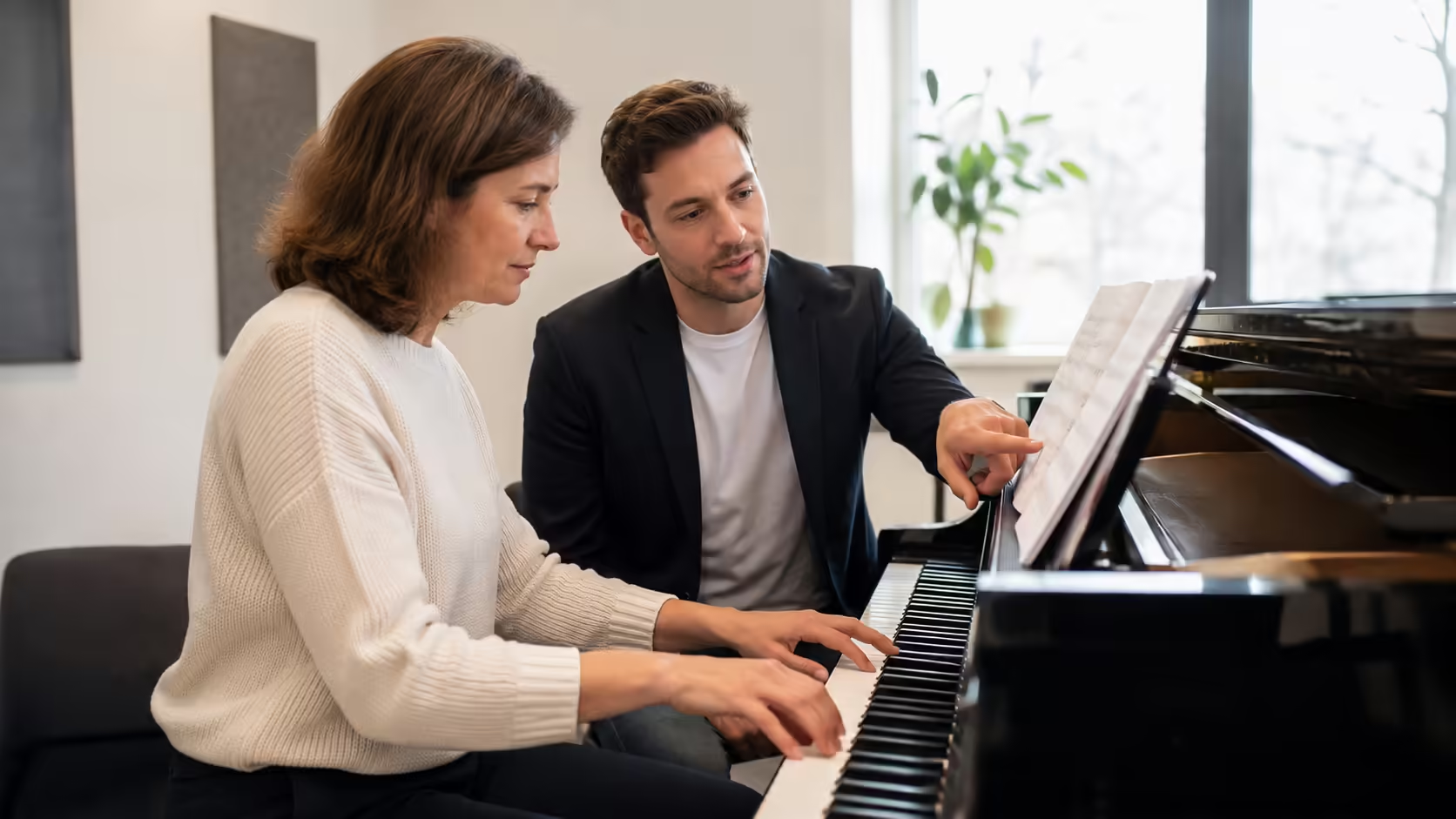
Digital piano — the easiest instrument if you want to understand music
A piano or digital keyboard is the strongest fit for the adult who wants to learn how music actually works, not just how to play one song. It’s also the backbone of classical training for a reason.
Why it lands on every easiest-instruments list
- The keys are laid out in a visible, repeating pattern — which makes reading music far easier
- No finger pain in week one, ever
- Headphones mean you can practice at 11pm in an apartment
- It gives you the clearest picture of harmony and theory of anything on this list
What you’ll play first
- Five-finger position in the key of C
- “Twinkle, Twinkle, Little Star”
- “Heart and Soul” duets
- Basic I–IV–V chord patterns
What it costs
- 61-key beginner keyboard: $120–$250
- 88-key digital piano (grows with you for years): $400–$900
- Used upright acoustic: $800–$2,500
If you’re torn between the two formats, acoustic vs. digital piano for beginners breaks down the trade-off in detail. And if the money feels like a gamble before you know whether you’ll stick with it, renting first is the smarter move — that’s exactly what our rental program is for.
Why take a lesson anyway: a short private lesson builds clean hand shape from day one, and unlearning a bad hand position six months in costs far more time than the lesson would have. Even one session a month beats pure self-teaching on piano. Our adult piano lessons start at the very first note, with no prior experience assumed.
Acoustic guitar — easy to start, harder to master
The guitar absolutely belongs on this list, but it asks for more finger strength than the ukulele, and honest guides should say so.
Why it ranks high but a step below ukulele
Steel strings cause mild fingertip pain for the first 2 to 4 weeks — nearly every beginner goes through tender fingertips before calluses form. Barre chords feel genuinely hard for most adult hands. In exchange, the song library is enormous: rock, folk, country, worship, and jazz all live on the same six strings. The trade is a fast start with a slower long-term climb.
What you’ll play first
- Open chords: G, C, D, Em
- Simple down-up strum patterns
- Folk and pop sing-along songs
What it costs
- Beginner acoustic: $100–$250
- Mid-range name brand: $300–$600
- Common beginner models: Yamaha FG800, Fender CD-60, Martin Road Series
The buying tip that matters most: look for light-gauge strings (12–53) and a slim neck profile. Light strings cut first-month finger pain roughly in half, and a slim neck makes chord shapes reachable for smaller hands. This one decision at the store does more for your odds than anything else. More on the first months in learning guitar after 40.
Don’t overlook the bass guitar
Bass deserves its own mention. You play one note at a time, the parts are simpler than guitar parts, and bass players are perpetually in demand — which means you start playing with other people months earlier than anyone else on this list. That social pull is a real motivator. A starter bass plus a small practice amp runs $150–$300.
Recorder — the easiest woodwind
Yes, the one from elementary school. Set the association aside — it’s the cheapest legitimate path into wind playing and note reading that exists.
Why it makes the list
- A decent soprano recorder costs $15–$40
- Small, light, and needs no reed or mouthpiece setup
- Eight finger holes cover most beginner repertoire
- Note reading comes faster here than on almost anything else
What you’ll play first
- B-A-G songs (“Hot Cross Buns,” “Mary Had a Little Lamb”)
- Simple folk tunes and hymn melodies
- Christmas carols
The limit: the recorder tops out at a modest set of beginner-friendly pieces. Most adults move to flute, clarinet, or saxophone after a year — and the breath control they built carries straight over, which is exactly the point.
Bongos, cajon, hand percussion — the fastest way to feel rhythmic
Hand percussion is easy for adults who’ve never played because the rhythm shows up immediately. It’s a great first instrument for anyone who has spent years tapping along to music but never actually played.
Why it lands on most easy-instrument lists
- Clear cause and effect — your hand moves, the sound follows
- Theory can wait; rhythm takes the front seat
- Strong community around it (drum circles, group classes)
- Noticeable progress after two weeks of short practice
What you’ll play first
- A simple 4/4 pattern
- Easy rock and Latin grooves
- Backing a real song with other people
What it costs
- Beginner bongos: $40–$80
- Beginner cajon: $80–$200
- Used full kit, if you want to grow into one: $300–$900
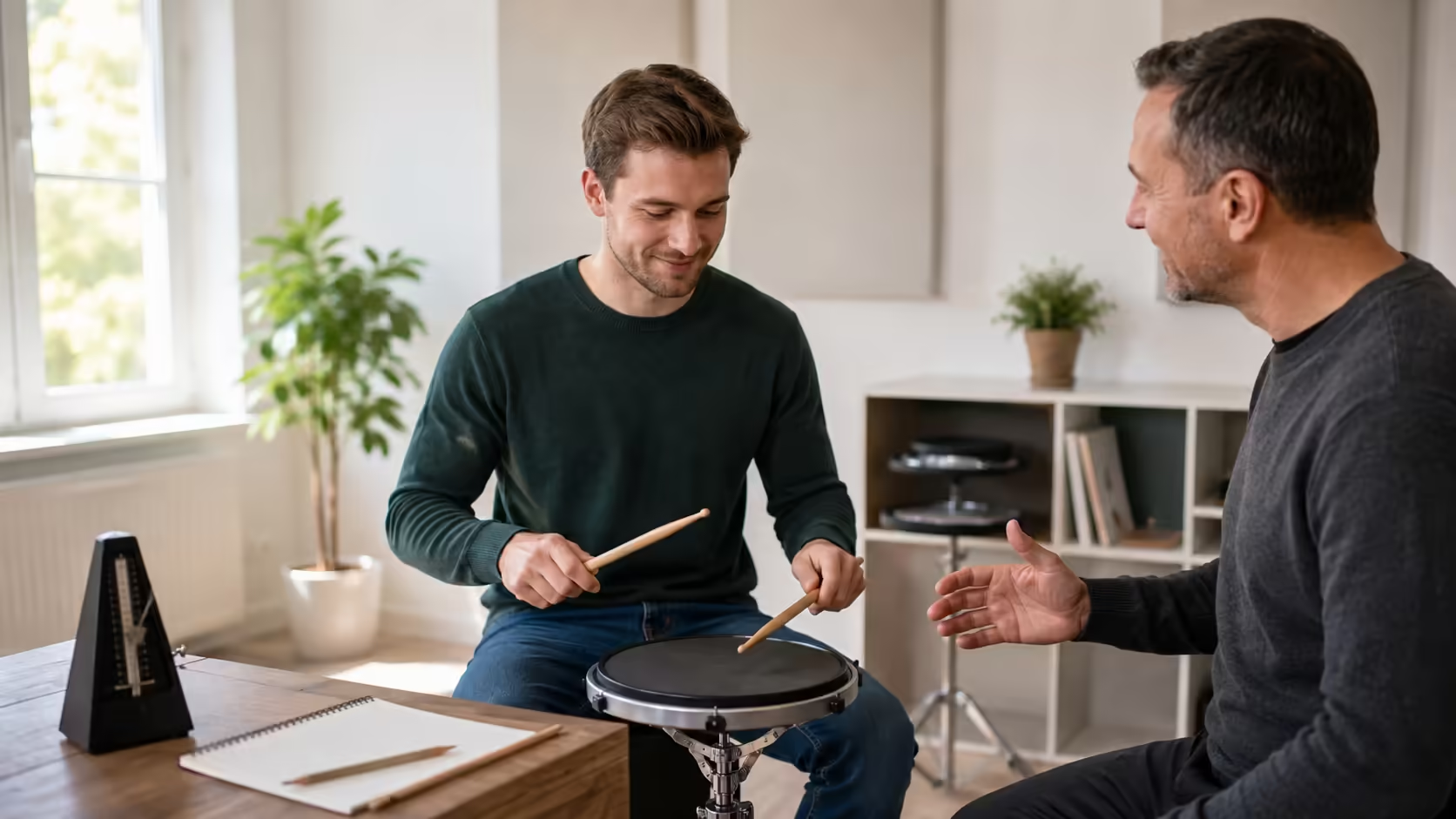
Voice — easiest to start, because you already own it
Singing is easy to begin because your voice is an instrument you already use every day. It’s also the most versatile instrument you’ll ever carry — it fits every style from opera to pop, and it’s always with you.
Why singing counts as an instrument
- Nothing to buy
- No finger pain, ever
- Rhythm comes naturally because you already speak in rhythm
- You can practice in the car
What you’ll learn first
- Breath control and support
- Pitch matching against a piano or keyboard app
- Three or four simple songs, all the way through
The limit: pitch accuracy is the sticky point for a lot of adults, and it’s the one thing that’s genuinely hard to self-diagnose — you can’t hear your own voice the way a listener does. A weekly class or a coach fixes this faster than anything else. Most adults see clear progress within 30 days at 15 minutes a day.
Side-by-Side Comparison of the Easiest Instruments
Every pick lined up by speed, cost, and what it suits best, fastest first. Bass guitar is included because it’s the strongest answer for anyone who wants to play with other people quickly.
| Instrument | Time to first song | Starter cost | Best for |
|---|---|---|---|
| Harmonica | 1–2 weeks | $20–$40 | Blues and folk, anywhere |
| Recorder | 1–2 weeks | $15–$40 | The cheapest real start |
| Voice | 1–2 weeks | Free | Spending nothing at all |
| Hand percussion | 1–3 weeks | $40–$200 | Rhythm and stress relief |
| Ukulele | 2–4 weeks | $40–$80 | Easy songs and quick progress |
| Bass guitar | 3–6 weeks | $150–$300 | Playing with other people |
| Digital piano | 4–8 weeks | $120–$900 | Long-term depth and theory |
| Acoustic guitar | 8–12 weeks | $100–$250 | Pop and folk, huge song list |
How Long Does It Take an Adult to Learn an Instrument?
Timelines depend on practice, instrument, and what “learn” means to you. Here are honest ranges rather than marketing ones.
| Milestone | Realistic range | What it looks like |
|---|---|---|
| First song | 1–12 weeks | Recognizable, start to finish, slowly |
| Comfortable beginner | 3–12 months | A small repertoire, no panic reading chords |
| Intermediate | 1–3 years | Learning new songs mostly on your own |
| Performance-ready | 3–10 years | Playing for other people on purpose |
What speeds an adult up
- Daily practice of 15 to 30 minutes — consistency beats duration every time
- A concrete 90-day goal, like one new song per week
- A patient teacher, or one very well-structured course
What slows an adult down
- Long gaps between sessions — a week off costs more than three days of practice gained
- Skipping rhythm work and ear training because they’re less fun
- Jumping to harder songs before the basics are solid
For a per-instrument breakdown, see how long it really takes to learn an instrument.
How to Choose the Easiest Instrument for Your Goals
Still weighing two options? Here’s the same logic sorted three different ways.
Pick by goal
- I want songs fast: ukulele or harmonica
- I want to understand music theory: piano
- I want long-term depth: piano or guitar
- I want to join a band quickly: bass guitar
- I want rhythm and stress relief: bongos or cajon
- I want to spend nothing: voice
Pick by budget
- $0: voice
- $15–$50: recorder or harmonica
- $40–$250: ukulele, hand percussion, beginner guitar
- $400–$900: digital piano or a full drum kit
Pick by living situation
- Apartment with thin walls: harmonica, recorder, keyboard with headphones, cajon
- House with space: ukulele, guitar, hand percussion
- Strict noise rules: anything you can play through headphones — this is where digital piano quietly wins
Torn between the two most common picks? Piano vs. guitar settles it properly. And if you’re eyeing two at once, read can you learn two instruments at the same time first — the honest answer is “yes, but not in month one.”
Common Mistakes Adult Beginners Make on Easy Instruments
Every adult beginner runs into the same four traps. Spot them early and the road stays smooth.
1. Buying the wrong starter instrument
A cheap guitar with high action, or a ukulele that won’t hold tune, kills motivation faster than any lack of talent. Buy from a known brand and read recent reviews. A $40 Kala ukulele or a $200 Yamaha guitar beats a no-name bundle every single time — and if you’re not sure yet, renting sidesteps the decision entirely.
2. Skipping the boring foundations
- Skipping rhythm drills on percussion
- Skipping chord-transition practice on ukulele and guitar
- Skipping slow, deliberate finger work on piano
These are the exact things that feel like a waste of time in week two and pay for themselves in month three.
3. Practicing hard with no goal
Adults will happily practice for an hour and then not be able to name a single thing they improved. A weekly goal of one short song beats aimless noodling every time. The related principle: short sessions build skill faster than long ones.
4. Quitting after one bad week
The first month is the hardest month you will ever have. Sore fingers, missed chords, shaky timing — all completely normal, none of it a verdict on your ability. Week five or six is usually where the first real breakthrough shows up. It’s worth knowing why most beginners quit, because almost none of the reasons are “lack of talent.”
Free and Cheap Ways Adults Can Learn a First Instrument
The cost of starting music has dropped sharply. Here are the low-cost paths that actually work.
Free video lessons
There is a genuinely enormous amount of free beginner instruction online for ukulele, guitar, and piano. The catch is sequencing: free videos teach individual things well but rarely in a useful order, so pick one instructor and work through their beginner series start to finish rather than hopping between twenty channels.
Subscription apps
Beginner apps that listen to your playing and give instant feedback are genuinely useful for piano and guitar, especially for rhythm accuracy. Budget roughly $10–$20 a month. They’re strongest in the first 90 days and least useful once you need someone to watch your hands.
Low-cost community resources
- Library music events and instrument-lending programs
- Community center drop-in classes
- College continuing-education music courses
- Renting your instrument for the first few months instead of buying
Do Adult Beginners Need a Teacher?
Sometimes yes, sometimes genuinely no. Here’s the honest split.
| Instrument | Teacher needed? | Why |
|---|---|---|
| Piano | Yes | Hand shape and posture are hard to self-correct, and expensive to fix later |
| Violin, sax, brass | Yes, from week one | Bow control and embouchure don’t come from watching video |
| Drums | Helpful | Stick control and timing benefit enormously from feedback |
| Guitar | Helpful | Self-teaching works, but a teacher shortens the first six months |
| Ukulele | Optional | Self-teaching works well |
| Harmonica | Optional | Self-teaching works well |
| Recorder | Optional | Self-teaching works well |
| Voice | Recommended | You can’t hear your own pitch the way a listener can |
The hybrid option most adults should consider
A 30-minute check-in once a month, paired with self-study in between, keeps you on track without the cost of weekly lessons. It’s the best value in adult music education and almost nobody thinks of it. Adult lessons at K&M Music Company run weekly, biweekly, or monthly depending on what you need — and if the whole idea makes you nervous, here’s exactly what to expect at a first lesson.
Your First 30 Days, Week by Week
Fifteen minutes a day is the whole plan. Here’s what each week should actually contain, whichever instrument you picked.
-
1Week
Get comfortable holding it. Learn two things only: how to hold the instrument without tension, and one single sound you can make cleanly and repeatedly. No songs yet. This week is about the instrument stopping feeling foreign in your hands.
-
2Week
Add the second and third thing. A second chord, a second note, a second drum stroke. Then practice moving between them slowly — the transition is the skill, not the shapes. Expect this week to feel clumsy. It is supposed to.
-
3Week
Play something recognizable. Pick the simplest real song your instrument allows and play it badly, all the way through, every day. Do not stop to fix mistakes mid-song. Playing it start to finish is the goal; accuracy comes next.
-
4Week
Clean it up and play it for someone. Same song, slower, with the rough spots isolated and repeated. Then play it for one person — a partner, a friend, a phone camera. That’s the moment it stops being an experiment and becomes something you do.
The only rule that matters: a missed day is fine, two missed days in a row is where people quietly stop. If you miss one, play for five minutes the next day rather than skipping to “catch up later.”
Final Verdict: The Best Easy Instrument Picks for 2026
- Ukulele — if you want fast, satisfying wins and to sing along
- Harmonica or recorder — if you want the cheapest possible pocket-sized start
- Digital piano — if you want music theory to grow on a clear visual layout
- Voice — if you want a free start with the instrument you already have
- Acoustic guitar — if you want folk and pop with an enormous song library
- Bass guitar — if you want to play with other people fast
- Hand percussion — if you want rhythm and stress relief
Every instrument on this list shares one feature: a real win inside the first month. That’s precisely why they’re the most popular choices among adult beginners, and why the fear of being “too late” tends to dissolve about six weeks in.
Conclusion: Pick One, Set a Goal, Start This Week
Choosing the right first instrument makes learning easier and considerably more fun. Ukulele, harmonica, recorder, hand percussion, piano, voice, and guitar are all legitimate starting points for an adult who has never played a note.
Pick the one that fits your goal, your budget, and your living space. Then choose one simple song and practice fifteen minutes a day for thirty days, following the week-by-week plan above. Regular practice matters more than talent, and it isn’t close. Start simple, notice your progress, and keep going.
Ready to Start? Learn With K&M Music Company
We teach adult beginners every week — complete first-timers included. Private lessons in piano, guitar, ukulele, voice, strings, winds, and percussion, built around your schedule and the music you actually want to play. Not sure it’s worth buying an instrument yet? Rent one from us for the first few months and decide later.
FAQs About the Easiest Instruments to Learn for Adults
What is the easiest instrument to learn for adults who’ve never played?
The ukulele tops most lists because of its soft nylon strings, small body, and simple open chords — most adults play a full song within 2 to 4 weeks. Harmonica and recorder come in close behind on speed and cost. Voice wins on price, since you already own it.
Is the ukulele really easier than the guitar?
Yes, for most adults. Four nylon strings mean far less fingertip pain than six steel ones, the smaller body is easier to hold, and the core chords need no barre. Guitar’s payoff is a much bigger song library, but it takes longer to reach.
Can adults really learn piano with no prior experience?
Yes. The keyboard layout is the most visually logical of any instrument, and beginner apps give instant feedback on accuracy. A teacher helps most in the first six months, mainly for hand position — but the notion that piano requires a childhood start is simply not true.
What is the hardest instrument for an adult to start with?
Violin and French horn typically rank hardest for beginners. Both demand significant technique before the first recognizable melody — bow control on one, pitch accuracy with no visual reference on the other. Adults generally need a teacher from week one for these.
How long does an adult beginner take to play a full song?
Between 1 and 12 weeks, depending mostly on the instrument. Harmonica, recorder, and voice are the fastest at 1 to 2 weeks. Ukulele lands around 2 to 4. Guitar takes the longest of the easy picks at 8 to 12 weeks, because calluses take time.
Do I need to read music to learn an instrument as an adult?
Not to start. Ukulele, guitar, and most pop repertoire run on chord charts and tablature, which take an afternoon to understand. Piano and recorder benefit from real notation sooner. If you want it, our beginner’s guide to reading music notes covers it from zero.
Am I too old to start playing music?
No — and this is the single most common worry we hear. Plenty of working musicians started as adults, and a committed amateur can reach a genuinely satisfying level in a few years. What decides the outcome is practice habit, not age. Adults also bring patience and self-discipline that most children don’t have.
How much should an adult beginner spend on a first instrument?
For a starter ukulele, guitar, or hand percussion, $40 to $300 is the right band. A digital piano with weighted keys runs $400 to $900 and will last years. If you’re not certain you’ll stick with it, renting for the first few months costs a fraction and removes the risk entirely.
Katherine Dvoskin
Katherine is a professionally trained pianist who studied at the Gnessin School of Music in Moscow. She has spent decades teaching students of every age, and a large share of her adult students walked in convinced they had missed their window. Most of them were playing a real song within two months.
She writes beginner guides for K&M Music Company with one goal: make the first step small enough that anyone will take it. See all lessons at K&M Music Company →